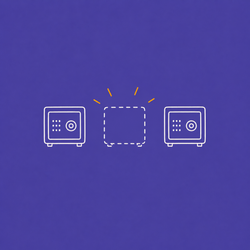


If you're a VC with capital to deploy, or an agency holding company looking for a competitive edge, training an AI model specifically for creative divergence makes complete sense.
It's a real problem.
Springboards, a Sydney-based AI platform and one of the most established players in AI-driven creative thinking, recently put a number on it. Frontier AI models score an average of 2.88 on the Novelty Bench — meaning that out of ten responses to the same prompt, fewer than three are functionally distinct.
In response to this, Springboards has built Flint, a purpose-built creative AI trained to generate more divergent, less predictable thinking. Given their funding, it's a reasonable place to start.
But it's not the only way to solve the problem.
Because the reason most AI creative work feels generic isn't just a processing failure. It can be seen as a direction failure too.
Ask AI for campaign ideas, and you'll get ten variations of the same three answers dressed differently. Ask again tomorrow, and you'll get them again. This isn't a bug. It's how these models are built. They optimise for the most statistically likely answer. For a lawyer, that's a feature. For a creative team, it's a slow death.
Yet, all too often, the AI model being used isn't the problem.
It's what goes into it that is.
Here's what most people miss.
They assume a better prompt is enough.
It isn't.
Tell AI to "find the enemy", and it will. But its definition of "enemy" is the internet's definition of "enemy" — vague, broad, averaged across everything it has ever read. You'll get competitors. Villains. Obstacles.
What you actually need isn't the question.
It's the specificity behind the question.
Because "the enemy" in advertising isn't one thing. It's ten different mechanics (and counting), each with its own logic, its own family of campaigns, its own rules for when it works.
There's Rival Framing that makes the gap between you and a competitor impossible to ignore. There's Expose the Real Enemies Benefiting, which reveals who profits when your audience does nothing. And then there's Dismay an Antagonist that gives the enemy a face and lets the audience take sides.
During the Paris Olympics, Heetch ran a campaign actively directing tourists to use Uber instead. The antagonist wasn't a competitor. It was the tourists themselves; an entire audience segment Heetch was willing to publicly dismay and redirect to a rival to prove whose side they were on. That move is a specific sub-tactic with its own logic, its own creative rules, its own family of campaigns.
Ask AI to "pick an enemy", and it will suggest a competitor, a cultural norm, an industry villain. It will never arrive at "make your potential customers the antagonist." That requires a highly detailed creative roadmap for AI to follow.
Not necessarily a better model.
The same is true across every tactic in this database.
Ask AI to "use an unexpected spokesperson", and it will suggest a celebrity who doesn't fit the brand. Mildly surprising. Quickly forgotten.
Give it the Unlikeliest Ambassador mechanic, and it gains an understanding of how to creatively apply contrast to build credibility, with each route offering its own sub-tactics, questions to ask, and paths to follow. Hostelworld casting Mariah Carey to promote basic, affordable accommodation is a different creative move from Solo Stove announcing Snoop Dogg was going smokeless. One uses a diva to make budget travel aspirational. The other uses misdirection to let the audience draw the wrong conclusion before the reveal lands. Same mechanic. Completely different routes. And your current AI model will only creatively think of these routes if someone has mapped a clear path for it to follow.
At this point, I should introduce myself. I'm George, the founder of BITW. Since 2014, I've been cataloguing, tagging and categorising thousands of ads for fun. I'm aware that from the outside it might look like a cry for help, but I began to really enjoy going down creative rabbit holes, splitting campaigns into sub-tactics and those tactics into sub-tactics. And so forth. Luckily, AI came along, and I realised my obsession could prove useful.
But my biggest revelation (which I admit is not that impressive) is to see how completely different creative routes can lead to similar strategic territory. A brand can earn the loyalty of locals through antagonism, through ritual, or through an unexpected voice — three different lenses, three different thought processes, often arriving at the same emotional space.
What the BITW database does is map as many of those routes as possible and give AI enough creative direction to travel down roads it would never find on its own. The more specific the routes, the further from the dull average the output lands.
From this perspective, generic AI output isn't a model problem.
It's a fuel problem.
That's what Big Ideas That Work is built around.
Not a proprietary model. Simply a library of proven creative lenses — drawn from thousands of verified campaigns — packaged into Engines that give any AI precise creative direction to follow.
When a strategist loads the Pick An Enemy Engine, the model isn't working from the internet's average definition of opposition. It's working from a set of eleven specialist enemy tactic guides written in markdown and structured for AI to assimilate, with over one hundred AI-structured campaign examples to reference.
The output changes. Not because the model changed. Because the road it's travelling down has changed. Big Ideas That Work is an unashamedly simple approach that gives your AI better creative engines to power it.
Want to explore some of the tactics further? Start with these free subscriber guides to help you and your AI think like the smartest dumb person in the room.