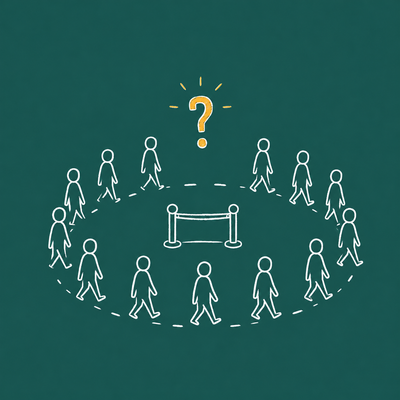

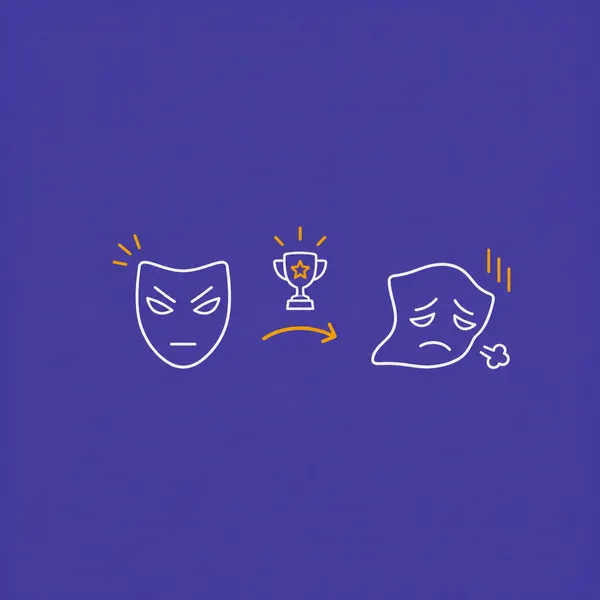
Most brand positioning asks the same question: what do we stand for? Mark Ritson calls this the "about" position — promoting your features, your benefits, your story. It works. It's just not always the fastest route. The "versus" position defines you by contrast. You pick the enemy, make the audience watch them lose, and let the shared contempt do the bonding work. The villain doesn't have to be real. They just have to be recognisable. Here are six tactics from the Enemy Engine that turn your least-wanted audience into your best asset.
- Anti Target Audience
- Consumer Antagonists
- Brand Antagonists
- Status Quo Antagonists
- Thwarted Antagonists
- Hateable Heroes
1. Anti Target Audience
Exclude someone publicly — and the right audience self-selects.
1/JBR: It's Not for Everyone — Dubai Properties, FP7, 2017
The brief: reposition a luxury property in a market where glitz is the default language. FP7's answer was a campaign that deliberately repelled the wrong buyers. Using the line "It's Not for Everyone" across OOH, digital, and print, the campaign dismissed loud luxury in favour of studied discretion — signalling to high-value clients with minimalist tastes that this was the property that understood them. It didn't try to win everyone. It repositioned 1/JBR for exactly the people who pride themselves on not needing to be impressed.
Volkswagen's City Boy (BBH, pre-2000) featured a brash, shallow test-driver rejecting the car as boring — which made everyone who valued reliability feel completely seen. Heetch (BETC Paris, 2024) asked Olympic tourists to use Uber instead, protecting its local audience's wait times and deepening brand loyalty through deliberate self-sacrifice.
2. Consumer Antagonists
Give your audience permission to reclaim something from a relatable irritant — then watch them enjoy the victory.
Oreo Thins Protection Program — Oreo, The Community, 2022
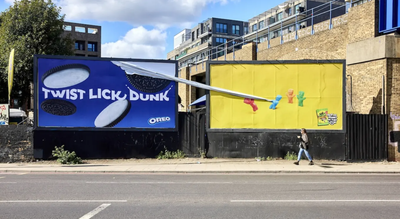
The brief: build identity around Oreo Thins as a distinctly adult product. The answer was decoy packaging — camouflaging Thins as boring household items like a cauliflower rice bag, so adults could hide them from snack-thieving children. It's a product benefit reframed as a conspiracy. Oreo sided with the adults, validated their frustration, and turned a mild domestic grievance into a shareable campaign. Talkability and social sharing among adults increased. See campaign ->
Skyn Baby Blocker (McCann, 2019) launched a Chrome extension replacing baby photos on Facebook with more appealing content — timed to the royal baby news cycle, rewarding the deliberately child-free. Halo Top's Ice Cream for Adults (72andSunny, 2019) featured a deadpan ice cream man refusing to serve children: "You don't deserve it." Audi's Clowns (BBH, 2018) dramatised 85% of drivers thinking they're above average by populating the road with literal clowns — before Audi's safety tech glided past them all.
3. Brand Antagonists
Name the bad actor and unite the audience against them.
The Lost Class — Change The Ref, Leo Burnett, 2021
The brief: expose the human cost of gun lobby inaction. The execution was a sting. Change The Ref deceived former NRA president David Keene and gun rights lobbyist John Lott into giving graduation speeches to a stadium of 3,044 empty white chairs — each representing a student killed by gun violence. The men thought it was a rehearsal. The footage showed them encouraging students who would never follow their dreams. The campaign sparked widespread media debate, drew condemnation from NRA figures, and generated a viral advocacy moment. See campaign ->
E-FARSAS' Foolitzer Prizes (Leo Burnett, 2019) parodied the Pulitzer Prize format to publicly shame Brazil's worst fake news sites — making embarrassment the message rather than correction. OVO's Renewable Is Unstoppable (Uncommon, 2018) cast a Trump lookalike attempting to smash a solar panel, turning climate inaction into a shareable villain. KFC's Clean Eating Burger (Mother London, 2017) dismissed a fake wellness influencer mid-pitch and replaced her with the gloriously calorie-busting Dirty Louisiana burger.