

Uber · Serviceplan · August 2026
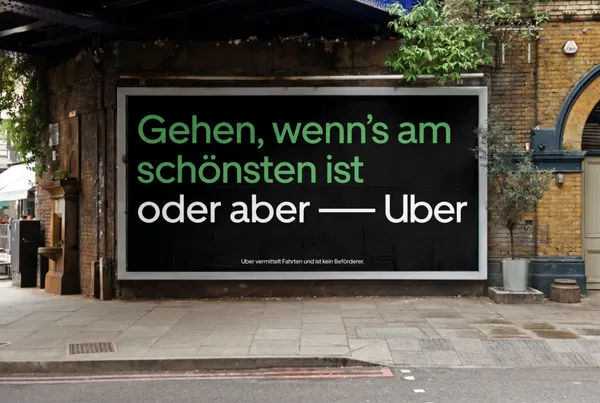
Most habits survive because nobody stops to examine them. Uber’s new German campaign does exactly that, observing familiar everyday routines with the detached fascination of a nature documentary until perfectly normal behaviour starts to look faintly ridiculous. Created by Serviceplan, “Add another layer" (oder aber Uber) is built around a simple question: why do people persist with inconvenient routines when an easier alternative is already available?
The challenge
Uber is available in more than 90 German cities, but availability does not automatically create consideration. The larger obstacle is behavioural: people make everyday journeys almost automatically, following routines they have repeated for years without reconsidering whether there might now be an easier option. The job was therefore bigger than reminding people that Uber exists. It was to interrupt habitual thinking and make Uber enter situations where people might never previously have considered opening the app.
The strategy
Instead of attacking those habits directly, Serviceplan changed the perspective from which they were viewed.
The campaign treats humans with the same intrigued distance that nature documentaries normally reserve for animals. Ordinary German behaviours become curious rituals deserving careful observation: carrying heavy shopping bags home, for example, or relying on the distinctly German Zwiebellook, dressing in multiple removable layers to prepare for unpredictable weather.
Take something people regard as normal. Observe it as though nobody has ever encountered it before. Suddenly its logic becomes much easier to question.
The execution
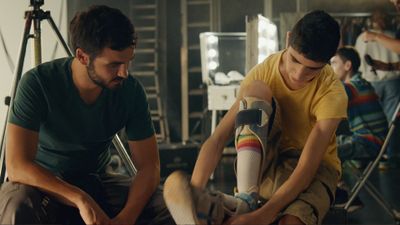
Four cinematic films observe everyday human behaviour in a documentary-inspired style. Director Nick Ball keeps the performances and environments recognisable and naturalistic, while actor Axel Milberg provides the dry observational narration that gives the films their nature-documentary distance.
Rather than portraying the audience as stupid, the films gently marvel at humanity's ability to make life unnecessarily complicated.
The resolution is “oder aber Uber”. The German phrase oder aber is itself a slightly redundant way of introducing an alternative. Serviceplan turns that linguistic oddity into an invitation to reconsider equally automatic mobility habits: you could continue doing all of this... or alternatively, Uber.
The campaign is running nationally across TV, digital OOH, digital and social.
Campaigns That Used Similar Tactics
Make Normal Behaviour Look Strange - Take a behaviour, belief or judgement people accept without thinking and change the perspective until its logic becomes difficult to defend.
What’s the Matter with Owen? — GE made the accepted hierarchy of tech careers look ridiculous by surrounding Owen with people more impressed by novelty apps than software solving consequential industrial problems.
You Are Not A Duck — Virginia DMV used nature-documentary logic to make an everyday pedestrian assumption look strange, exposing the absurdity of humans behaving as though they can safely cross roads like a visible group of ducks.
Spoof the Format - Borrow the conventions of a familiar format and use them to make a different argument.*
Nature RX — Nature RX recreated the clichés of pharmaceutical advertising to prescribe spending time outdoors, using the absurdity of the format to make commercialised wellness culture look stranger.
Trebek Initiative — Royal Canadian Geographical Society / National Geographic Society used the nature-documentary format but removed the expert knowledge, imagining narrators unable to explain animal behaviour to dramatise what could disappear without field research.
Make the Alternative Absurd - Show what people would have to do without the easier solution until the alternative defeats itself.
The Long Swim Home — Coastguard New Zealand challenged boaties to confront the prospect of swimming kilometres back to shore, making the alternative to Coastguard membership physically and obviously unreasonable.
Feel Like a New Home — SC Asset invented absurd products designed to compensate for bad housing, from noise-blocking clothing to fake scenic windows, making the workarounds so ridiculous that moving home became the sensible conclusion.
The Question That Could Get You There
What would people have to do if our solution didn’t exist, and how could we make them experience the absurd alternative?