


Often, a creative brief can stop one step too early. The product has a benefit, the benefit gets communicated, job done. Off to the pub (or goat yoga session). However, often the more fun question to ask is: what does the benefit actually make people do? How does it change their behaviour, their swagger, their relationships, their decisions, their lives. That behaviour is almost always more interesting than the benefit itself. Here are six tactics from the Consequences Engine that show what happens after the benefit lands.
- Turn the benefit into a lifestyle flex
- Show the obnoxious behaviour that the benefit creates
- Show the relaxed behaviour that affordability enables
- Hijack an old story with a new solution
- Let the benefit create a human moment that couldn't exist without it
- Show the emotional overwhelm the place creates
1. Show the Relaxed Behaviour Affordability Enables
Show what people stop worrying about because the product exists — and make the freedom visible.
Pets — IKEA, Ingo, 2024
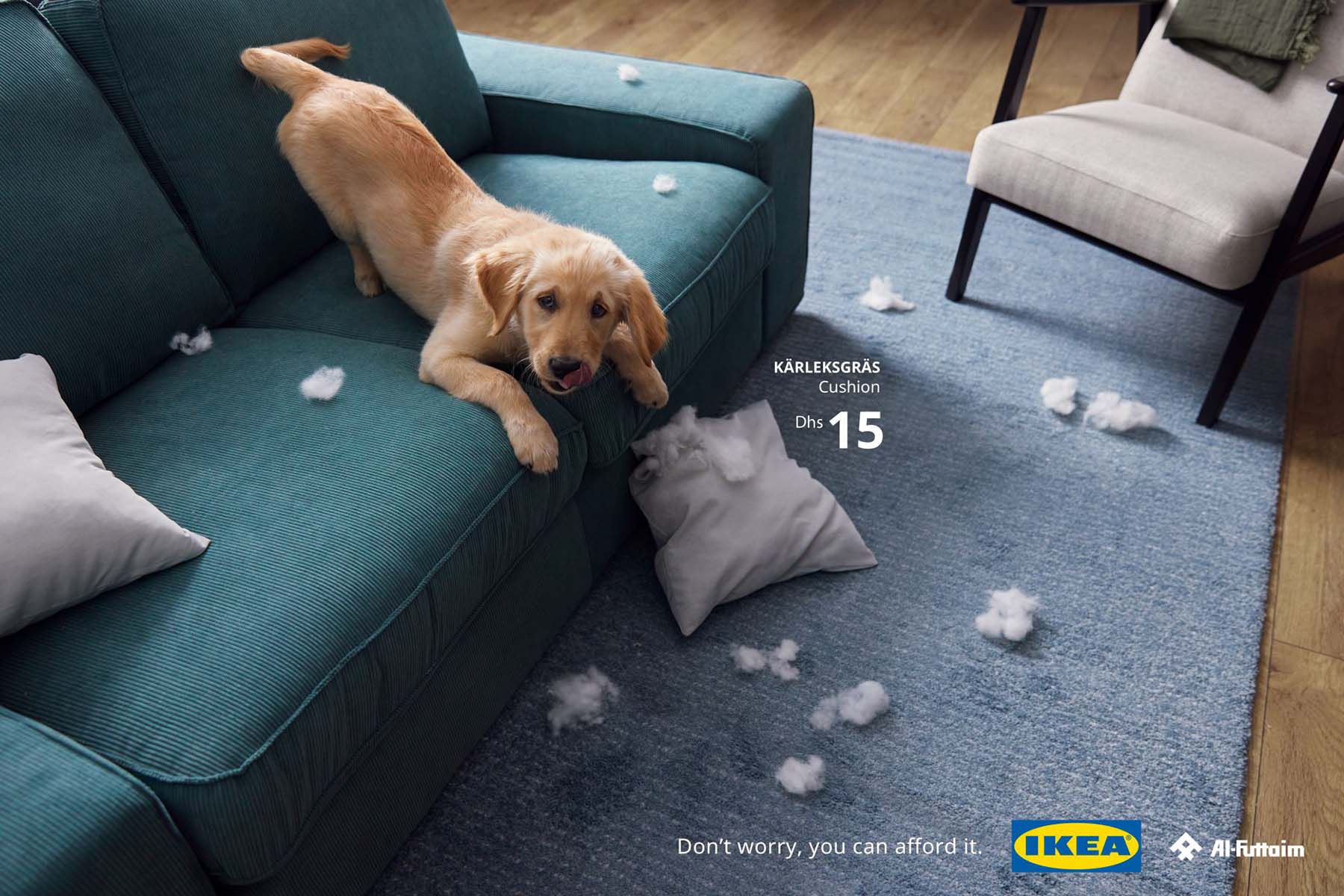
IKEA needed to drive sales of affordable homeware in the UAE while making the brand feel genuinely relevant to everyday life. Ingo's answer was to show what IKEA's price point actually gives pet owners: the ability to watch their animals cause chaos without flinching. Print, OOH, and social executions showed pets gleefully destroying furniture, paired with the line 'Don't worry, you can afford it.' The product benefit — affordability — never needed stating. The behaviour it enabled said everything.
2. Turn the Benefit into a Lifestyle Flex
Reframe the product advantage as something people brag about rather than merely use.
Big Flex — Southwest Airlines, Spark Foundry and GSD&M, 2024
Southwest needed to differentiate in a crowded travel market and reach younger, passion-led travellers. The answer wasn't to list the perks — free bags, flexible rebooking — but to show what those perks make people become. A series of humorous ads filmed in Mexico showed travellers boasting about their Southwest benefits with unabashed swagger, while influencers showcased destinations the airline serves. Changing plans, once something people apologised for, became something to perform. Adaptability stopped being a feature and became an identity. See campaign ->
3. Show the Obnoxious Behaviour the Benefit Creates
Lean into the most annoying thing your benefit makes people do — and make it the campaign.
Holiday Spam — Three, Wieden+Kennedy, 2014
Three's free international roaming was a genuine product advantage. The creative question was: what do people actually do with it? They bombard their friends with hot dog legs, beach feet, plane wings, and tedious sunsets from the Grand Canyon. W+K didn't sell the roaming feature — they issued a mock nationwide apology for it. A TV spot narrated with dramatic gravitas, print apologies in national newspapers, OOH posters, and social activations all warned the British public to brace themselves for the holiday spam Three's customers were now fully equipped to produce. Three became the brand honest enough to apologise for what its product makes people do. See campagin ->