

Telling people not to do something is famously ineffective. They already know better. The drink-driver knows the risk. The person who forgets their reusable bag knows about the environment. The illegal streamer knows the content is not theirs. What changes behaviour in these cases is not more information. It is making the consequence impossible to dismiss. The strongest campaigns do not lecture. They make the wrong choice feel stupid, costly, embarrassing or simply not worth it. Here are eight tactics from the Consequences Engine that do exactly that.
- Make the behaviour pay — literally
- Bait the behaviour. Switch the experience.
- Make the wrong choice carry the consequence
- Show the behaviour at its most ridiculous
- Make the punishment live
- Use what they value most against them
- Dramatise the risk in the genre of fear
- Make them feel what they're missing
1. Make the Behaviour Pay — Literally
Attach a direct financial cost to the bad behaviour — and make the link impossible to miss.
The Cost of Bullying — Samsung, Cheil, 2021
Online bullying in Chinese gaming was endemic — more than 79% of gamers reported being bullied while playing. Samsung worked with the developer of Magic Quest to embed a consequence directly into the game's economy: an abusive language detection system monitored chatroom behaviour and raised the price of in-app purchases — weapons, armour, upgrades — in direct proportion to the bullying detected. The bully paid more for everything. The worse the behaviour, the higher the cost. The mechanism required no moderation, no warning, and no lecture. It just made cruelty expensive. See campaign ->
The Punishing Signal (Mumbai Police, FCB, 2020) made impatient honking cost time — the most valuable currency in a traffic jam. Decibel meters reset the traffic light every time noise exceeded 85 decibels, meaning the loudest drivers waited longest. Make the behaviour cost something the audience actually values and the calculation changes immediately.
2. Bait the Behaviour. Switch the Experience.
Let people do the wrong thing — then make sure what they find there changes their mind.
The Pirate Match — DIRECTV GO, Mirum Brazil, 2022
Over 30 million Brazilians regularly streamed sports illegally. Mirum Brazil didn't try to stop them — they targeted football fans actively searching for illegal streams of a UEFA Champions League match and redirected them to a full 90-minute live broadcast of their own making. The Pirate Match featured lookalike players with modified names — "Rolando," "Suado" — amateur play, fake commentators, and a bicycle on the pitch. While viewers watched, DIRECTV GO served ads and banners directing them to a legitimate seven-day free trial where they could watch the real game in HD. The campaign achieved a 300% lift in ad engagement and a 43% increase in trial sign-ups. The illegal stream delivered exactly the experience it deserved to. See campaign ->
Game of Torrents (MediaMarkt, Wunderman Thompson, 2018) targeted the billion-plus illegal downloads of Game of Thrones Season 7 by releasing subtitle files that confronted the piracy, delivered spoilers, and directed viewers to buy the series legally at MediaMarkt's prices. The bait was the download itself. The switch arrived in the subtitles.
3. Make the Wrong Choice, Carry the Consequence
Redesign the product of the bad behaviour so that choosing it becomes its own punishment.
Embarrassing Plastic Bags — East West Market, Rethink, 2020
East West Market, a Vancouver grocery store, wanted to break the habit of customers forgetting their reusable bags. Rather than a reminder poster or a nudge at the till, they redesigned their single-use plastic bags to look like they came from somewhere far more embarrassing — "Dr. Toews' Wart Ointment Wholesale," "The Colon Care Co-op," "Into the Weird Adult Video Emporium." Customers who forgot their bags had to walk home carrying the consequence. Ninety-six percent brought their own bags instead. The story broke internationally, and the local grocery store sparked a global conversation about single-use plastic by adding shame to the checkout experience. See campaign ->
The Cost of Bullying (Samsung, Cheil, 2021) embedded a consequence directly into the game: an abusive language detection system in the chatroom of Magic Quest raised the price of in-app purchases — weapons, armour — in direct proportion to the amount of bullying detected. The bully paid. Literally, and immediately.
4. Show the Behaviour at Its Most Ridiculous
Exaggerate the effects of the bad behaviour until the audience can't unsee how absurd it looks.
Blood Alcohol Level — Volkswagen, DDB Argentina, 2019
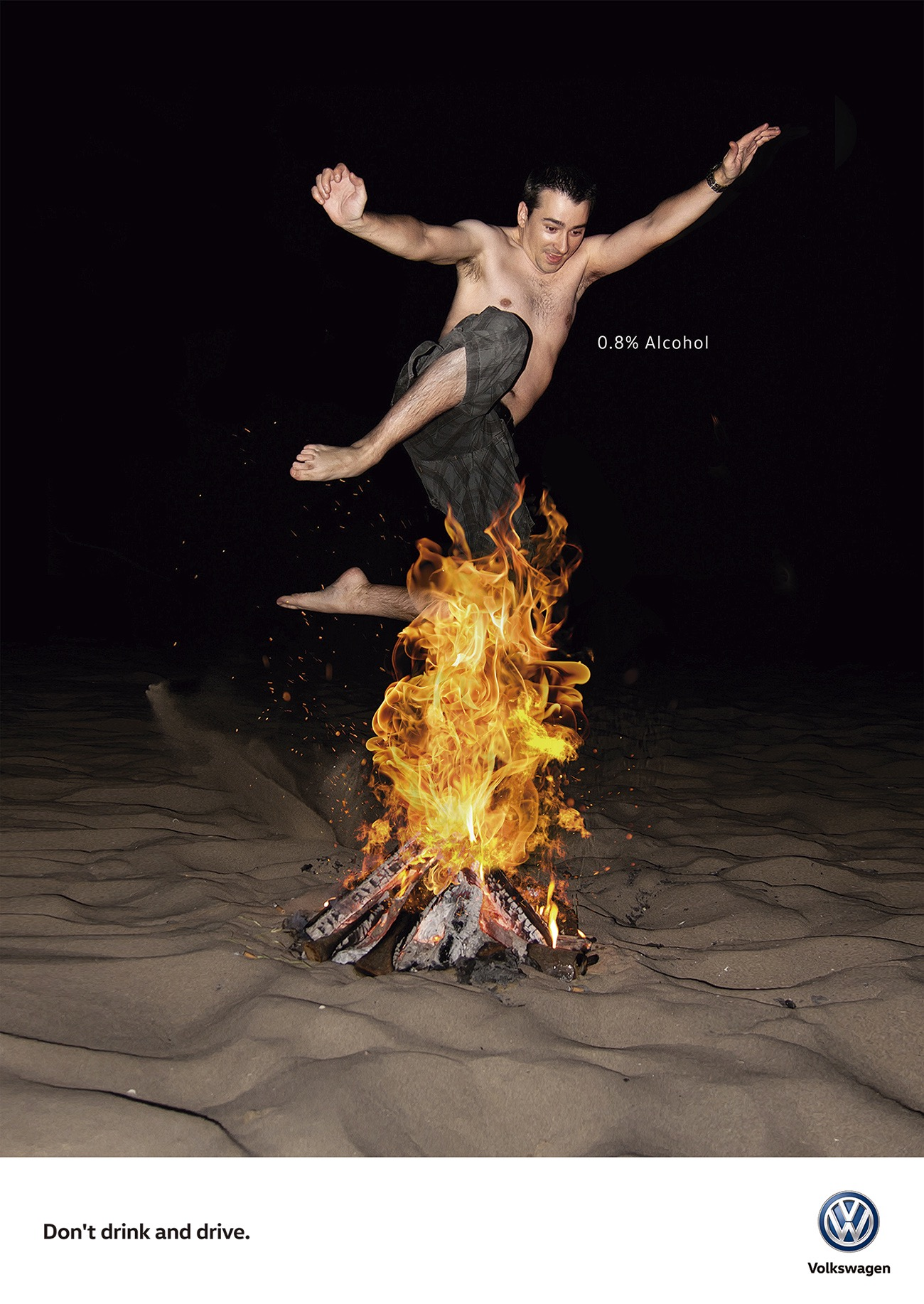
Drink-driving campaigns had spent decades on dramatic crashes and graphic consequences. Volkswagen Argentina wanted to reach the people who genuinely don't think a few drinks is a big deal — without producing another campaign they'd already learned to ignore. DDB Argentina focused on the real danger: alcohol doesn't just impair driving, it destroys inhibition and inflates confidence. Each execution held up a mirror and showed people doing spectacularly stupid things — then revealed their blood alcohol content at that moment. The point was surgical: if this is what that level does to your judgement, imagine what it does behind a wheel. See campaign ->
Get Almost Anything (Uber Eats, Special Group, 2023) dramatised the perils of a delivery service that could bring literally anything — with Tom Felton discovering what happens when Uber Eats delivers a magic wand, and Nicola Coughlan facing the fallout of ordering a period romance. The campaign made the ridiculous consequence of "anything" the argument for "almost anything." Show the behaviour at its logical extreme and the right choice becomes obvious.
5. Make the Punishment Live
Deliver the consequence in real time, in public, where the audience can't look away.
Social Savvy Burglar — Allstate Insurance, Leo Burnett, 2016
Oversharing location online was a widespread habit with a real and underappreciated risk. Rather than a cautionary ad, Allstate's Mayhem character sold a real couple's home contents live on a stadium screen during a football match — in real time, as punishment for the location they'd posted publicly. The audience watching wasn't just the stadium. The stunt generated significant word-of-mouth and strengthened Allstate's brand relevance as an insurer that understood the real risks people were facing. See campaign ->
The Punishing Signal (Mumbai Police, FCB, 2020) installed decibel meters at traffic lights across Mumbai. When honking exceeded 85 decibels, the traffic light reset — meaning the noisiest drivers waited longest. The punishment arrived the moment the behaviour did, with no delay, no lecture, and no media budget. The campaign generated 6.6 billion impressions. Honking, literally, got you nowhere.