

Rational arguments for behaviour change have a ceiling. People know smoking is harmful, know cable is overpriced, and know single-use plastic is a problem. Knowing doesn't move them. What moves them is consequence — made specific, made immediate, made impossible to laugh off without laughing at yourself first. Catastrophic Consequences is the tactic that takes the bad decision and follows it, step by absurd step, to its logical conclusion. The escalation doesn't have to be realistic. It has to land. Here are five tactics taken from the Consequences Engine that make the consequence impossible to ignore.
- Slippery Slope Logic
- Social Death by Embarrassment
- Career and Identity Threat
- Spoiler as Punishment
- Dark Redirect
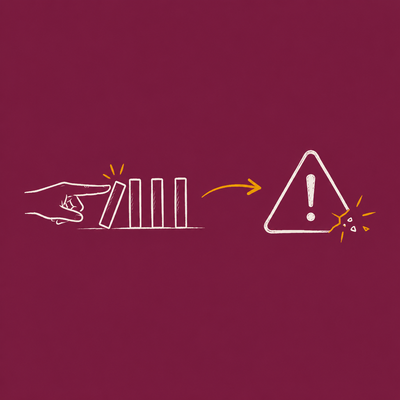
1. Slippery Slope Logic
Follow the bad decision to its most absurd extreme — in rapid, deadpan steps.
Get Rid Of Cable — DIRECTV, Grey, 2012
The brief: drive switching from cable in a category where every competitor was making sensible, comparable claims. Grey's answer was to take one bad cable experience and follow its consequences relentlessly forward. A signal dropout leads to frustration. Frustration leads to a bad decision. The bad decision leads to something worse. The something worse escalates again. By the end the viewer has watched a mild domestic inconvenience spiral into crime, imprisonment, and total life destruction — each step delivered with deadpan precision and perfect internal logic. The absurdity earned cut-through that a product comparison never could.
The format works because the logic is airtight even when the outcome is surreal. Once the audience accepts the first step, they're committed. The escalation pulls them through.
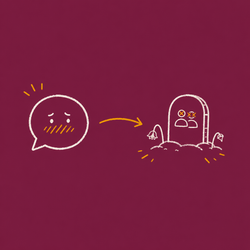
2. Social Death by Embarrassment
Make the consequence social rather than rational — and watch the behaviour change faster..
Embarrassing Plastic Bags — East West Market, Rethink, 2020
The brief: reduce single-use plastic bag uptake at a Canadian grocery store. Rethink's answer wasn't environmental messaging. It was social humiliation. Plastic bags handed out at checkout featured fake, mortifying brand logos — "Into the Weird Adult Video Emporium," "Wart Ointment Wholesale," "Colon Care Co-op" — turning forgetfulness into a public spectacle. Ninety-six percent of customers brought reusable bags. The campaign generated global PR coverage and spawned imitations worldwide. The environmental argument had failed. The social consequence landed in a single transaction. See campaign ->
Kleenex's Save The Sleeve (FCB Inferno, 2023) dramatised the cringe of using your own sleeve as a tissue — every grimace, every sidelong glance — making the absence of a tissue feel publicly reckless. The rational case for change asks people to think. The social consequence asks them to feel. The social consequence wins.
3. Career and Identity Threat
Frame the bad decision as a threat to how the audience sees themselves — not just what they do.
I Never Read The Economist — The Economist, AMV BBDO
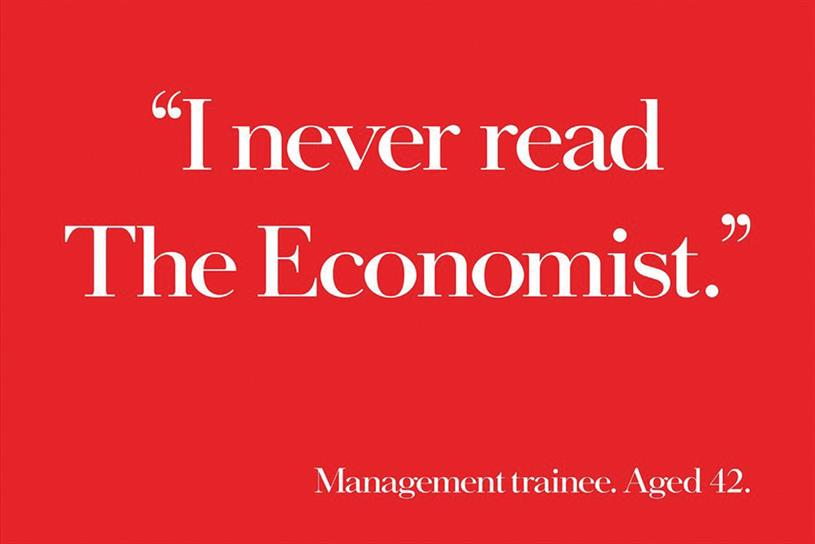
The brief: grow readership among ambitious professionals. AMV BBDO didn't argue for the quality of the journalism. They made not reading it feel like a career epitaph. The campaign featured the immortal line "I never read The Economist" attributed to a management trainee, aged 42. The quote didn't accuse. It just implied a life trajectory, and let the audience do the maths. The campaign doubled readership and set the tone for a generation of challenger intelligence advertising — by making inaction feel like proof of something the audience never wanted to be.
Adobe's Click Baby Click (Goodby Silverstein & Partners, 2014) opened on a company celebrating record click-through rates before revealing every click came from a baby smashing a keyboard. It drove a 25% lift in Marketing Cloud interest by making data illiteracy feel professionally ridiculous — not just technically wrong.coincide with when the bad decision is