

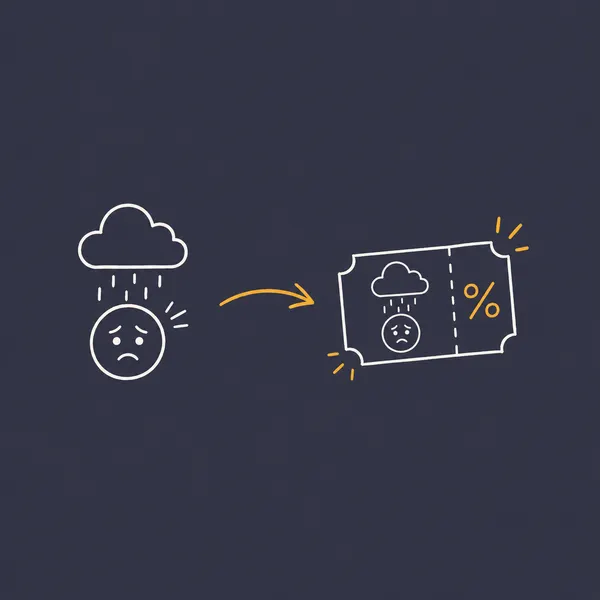
A pain point discount waits for the moment something is annoying, goes wrong, stays boring, breaks down, or turns expensive, and shows up inside it. The worse the experience, the more the offer is worth. It helps deepen brand equity as the brand becomes known for noticing, acknowledging, and meeting you at the exact moment you need it most. Here are four tactics from the Discount Engine that turn the pain into the pricing.
- The Collective Endurance Discount — a shared experience gets worse; the discount scales with the suffering
- The Personal Hardship Discount — a private difficulty is acknowledged and priced into the offer
- The Damage Discount — something has already gone wrong; the evidence of the problem is the entry mechanic
- The Risk Discount — external data signals elevated risk; the discount arrives to reduce exposure at the moment it's highest
1. The Collective Endurance Discount
Name the shared ordeal — and make the discount scale with how bad it gets.
Score 0.0 — Heineken, Publicis, 2023
Heineken wanted to stay relevant during the World Cup without competing for attention during ad breaks. They found the brief inside the most universally dreaded outcome in football: a goalless match, which happened to be a cultural distinctive asset they could appropriate. The crowd, who had been groaning at the scoreboard, found themselves invested in continued boredom. During 0-0 World Cup games, Heineken tracked live match data and activated escalating discounts on Heineken 0.0 through retail partners, app, and social — the discount growing with every goalless minute. The crowd who had been groaning at the scoreboard found themselves invested in continued boredom. Dull became exciting. The worse the match, the better the deal. Brand sentiment spiked during the games that would otherwise have been rather boring. See campaign ->
VAR Discounts (Elgiganten, 2019, Nordics) activated flash sales on television sets the moment a VAR review - the signal for which resembled the shape of a TV -was called during a live football match — the review period, typically two to five minutes of groaning, became a buying window. Dead time became transaction time; TV sales spiked during matches with multiple reviews. Flybabies (JetBlue, 2016) turned the universally dreaded in-flight baby cry into a collective discount trigger — every cry gave all passengers a reduction on their next JetBlue flight; the shared suffering became a shared stake, and the in-flight atmosphere transformed from silent fury into something closer to a collective game.