
Most brands treat mistakes as something to correct quickly and quietly. Mistakes as Marketing Assets does the opposite. It creates or exploits an error, misprint, misunderstanding or apparent accident, then uses the reaction it produces to carry the campaign.
A cheaper fare looks like a pricing fault. A giveaway appears to contain an extra 999 million points. An insurer runs advertising filled with typos, broken screens and missed deadlines. The mistake earns attention because people want to spot it, correct it or take advantage of it before anyone else does. What matters is what happens next. The brand must turn that attention into a reward, product truth, useful lesson or credible act of repair.
Here are seven tactics that put mistakes to work.
- Disguise the reward as a mistake
- Make the campaign itself go wrong
- Turn a real mistake into the product
- Turn misnaming into fame
- Use mistakes to prove the need
- Reframe mistakes as progress
- Own and correct a past mistake
1. Disguise the reward as a mistake
Make an offer look like an error people have found before the brand can fix it.
Fare Errors — Flybondi, Hoy Buenos Aires, 2021
Argentina had endured one of the world’s longest lockdowns. Airlines had spent more than nine months grounded, while frustrated passengers filled Flybondi’s social channels with complaints. When flights resumed, the airline wanted to rebuild goodwill and get people booking again.
The answer was to make cheaper fares look like pricing errors. Flybondi quietly reduced selected ticket prices for a limited period, while travel influencers alerted followers to the apparent mistake. People rushed to buy before the airline corrected it.
Only after the fares had sold out did Flybondi reveal that it had deliberately let passengers beat the system. Ticket sales increased by 60% during the first three days of the campaign, while traffic to its ecommerce platform rose by almost 40%. The discount was useful. Disguising it as an error made it exciting.
Velocity Frequent Flyer used the same tactic in The Billion Point Giveaway. It claimed an intern had accidentally added 999 million points to a planned million-point promotion, then honoured the “mistake”. The accompanying mini-series received more than seven million views, and the costly error helped rebuild trust in the loyalty scheme.
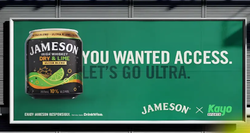
Jameson Ultra Access updated the idea for creator culture. Login details left visible in Dan Gorringe’s content gave fans two months of Kayo SPORTS access. The code spread through fan pages, Reddit and OzBargain before Jameson revealed that the leak had been planned.
2. Make the campaign itself go wrong
Build the mistake into the media so the apparent failure delivers the message.
The Most Disastrous Campaign Ever — Hiscox, Uncommon, 2023
Small-business insurance usually talks about risk through polished promises. Hiscox made the advertising suffer the kinds of mistakes its customers face instead.
A Metro cover appeared blank because someone had missed the supply deadline. Outdoor ads were installed upside down, duplicated or printed at the wrong size. The brand name contained typos. One poster was wrapped in a ripped envelope that appeared to expose confidential information. Other executions featured broken screens, coding errors, burst pipes and exposed wires.
Every apparent production failure pointed to a recognisable business risk. The campaign did not need to explain that mistakes can be expensive. It made the media look as though somebody was already paying for one. Hiscox later extended the idea into television ads that glitched, ran upside down, played in the wrong language or appeared without a picture.
Stern’s Dyslexia Unedited used deliberate spelling mistakes in a different way. Serviceplan produced a newspaper edition filled with the kinds of reading and writing difficulties people with dyslexia experience. The errors made the medium temporarily difficult to read, giving the audience a small experience of the problem.
3. Turn a real mistake into the product
Give an unplanned slip-up a physical or commercial afterlife.
Huh? — Vaseline, Brilliant & Million, 2026
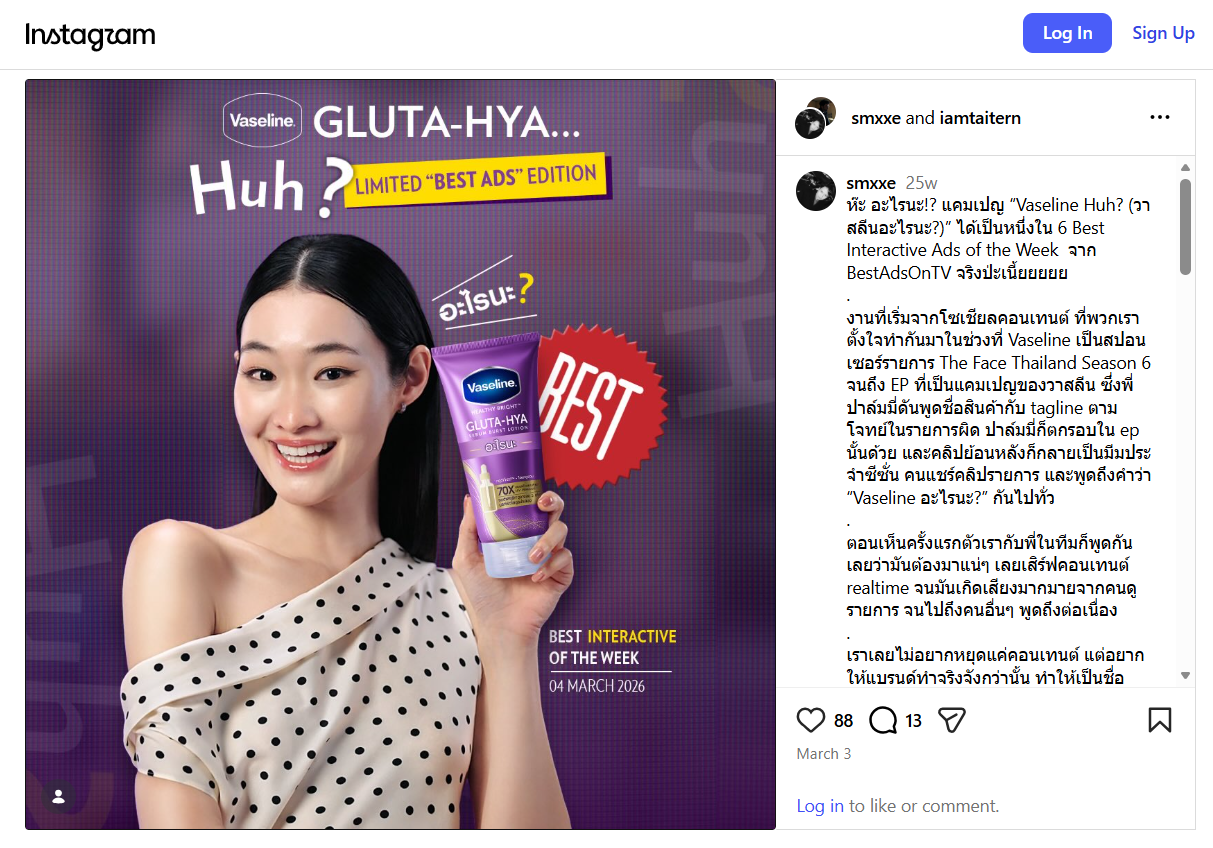
During an episode of The Face Thailand, finalist Palmy stumbled while delivering the long name of Vaseline Gluta-Hya Spotless Glow. Her confused “Huh?” became an immediate social joke. The usual response would have been to move on, edit around it or protect the product language.
Vaseline stood with Palmy and turned the stumble into a limited-edition pack. “Huh?” replaced the technical name people had struggled to remember, putting the audience’s joke onto real retail shelves.
The move worked because the brand did more than post a knowing reply. It changed the product. A moment that could have embarrassed the contestant became evidence that Vaseline was paying attention and confident enough to join in. The error moved from broadcast clip to meme to packaging without losing the human moment that made people care.
IKEA’s Co-Worker for the Day began with another real misunderstanding. Customers who arrived wearing clothes similar to IKEA’s staff uniform were mistaken for employees. Rather than simply correcting them, IKEA invited them to experience being co-workers for the day. The accidental resemblance became the qualification.