

Behavioural commerce works best when the action is authentically part of the purchase idea. A bank redirects impulse spending into saving because hesitation at checkout is the moment that matters. A metal band makes fans headbang because physical intensity is the proof of fandom. A razor brand turns a public bet into a grooming trigger because changing your look is easier when your mates are watching. That’s the trick: the behaviour should not just lead to the sale, it should be the transaction trigger. Here are eight tactics from the Commerce Engine in which what people do makes the sale happen.
- Commerce Interception
- Behaviour as Pricing Trigger
- Compliance as Lottery
- Physical Action Unlocks Access
- Negative Reframed as Reward
- Personal Data as Participation
- Passion Unlocks Social Good
- Commitment as Purchase Trigger
1. Commerce Interception
Insert the brand at the exact moment a decision is being made — not before it, not after it.
VUB Saving Button — VUB Bank, Triad, 2021
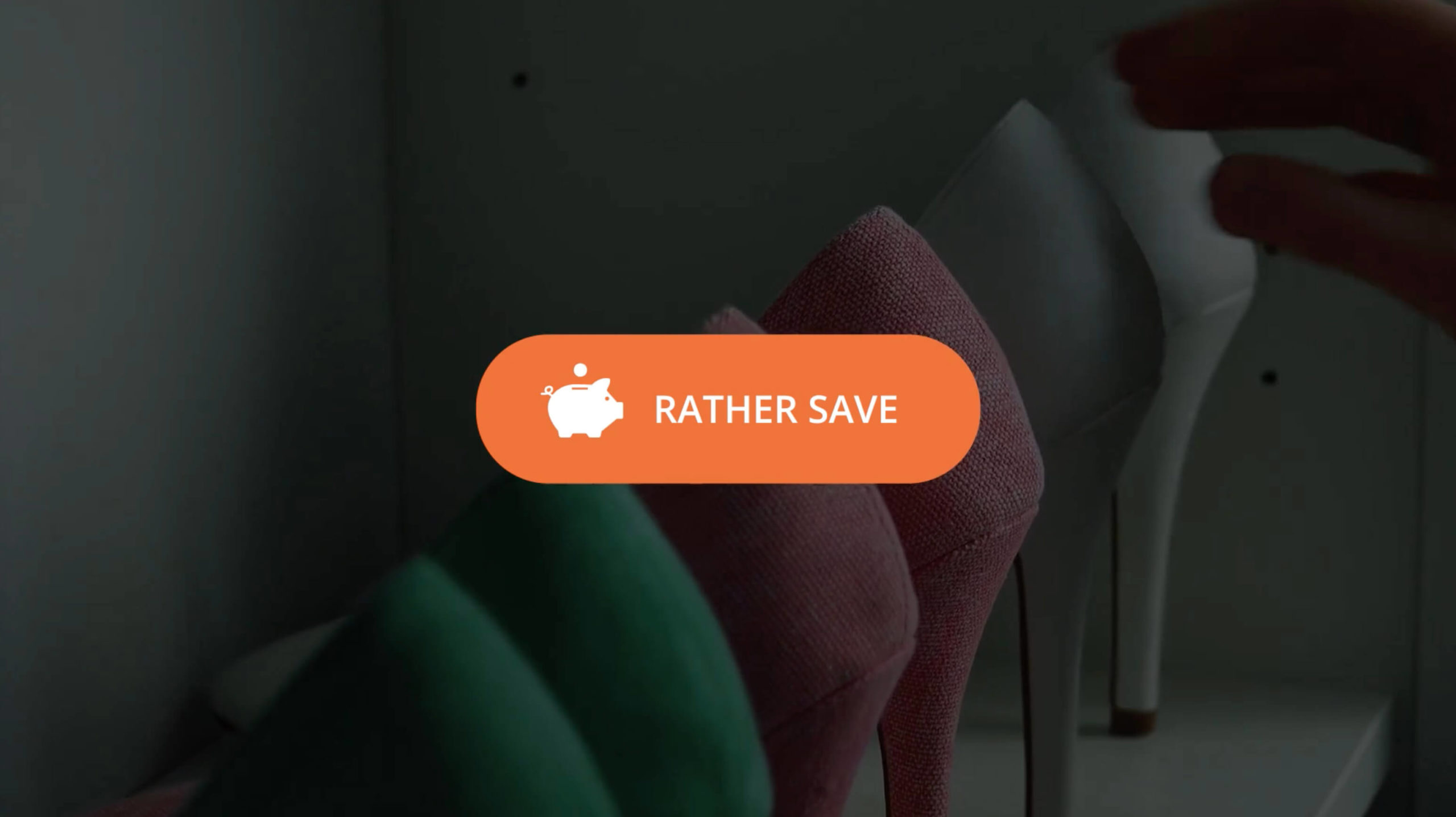
VUB needed Slovaks to open savings accounts. Rather than running a campaign about saving money, Triad showed up at the precise moment Slovaks were about to spend it. A browser plugin placed a "Rather Save" button next to every "Add to Cart" button across Slovak e-commerce sites. Hovering over a checkout triggered a second option: redirect that money into a VUB savings account instead. One click. One account. The plugin was distributed through a TV and social campaign featuring comedian Petra Polnínová in a satirical savings-addiction therapy format. Slovaks saved three times as much as in the prior year, and new accounts exceeded the target by 150%.
2. Behaviour as Pricing Trigger
Let a real-world signal — a condition, an index, an event — set the price in real time.
The Index Shirt — Eton, Valtech Radon, 2022
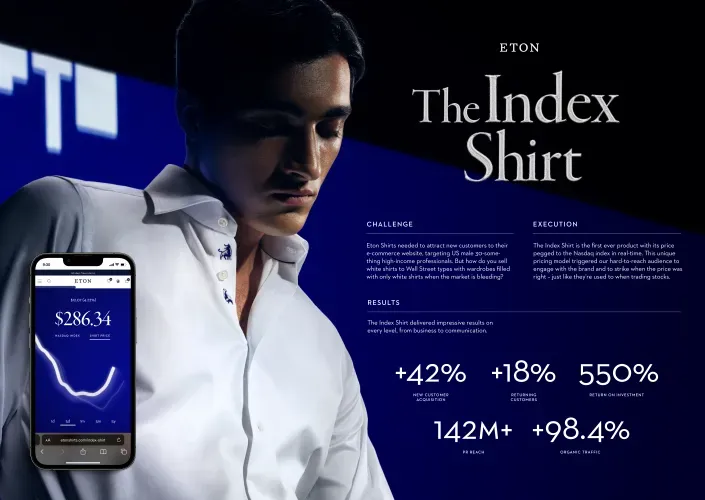
Eton makes premium shirts for people who spend their days watching financial markets. Valtech Radon connected the two directly. The price of the Index Shirt was tied to the NASDAQ — updating every five minutes on trading days, with bull and bear market symbolism embedded in the product itself. The shirt's price moved in line with the market. Buying it was a considered call. The mechanic turned a luxury purchase into a live position.
Hungerithm (Snickers, Clemenger BBDO, 2016) tracked the collective anger level of the internet in real time and tied it directly to the price of a Snickers bar at 7-Eleven Australia. The angrier the internet, the cheaper the chocolate, updating every ten minutes. The VAR Discounts campaign tied TV discounts to VAR decision time during live football. In each case, a signal the audience already lived inside became the pricing mechanic — and the product became part of the moment, not an interruption to it.
3. Compliance as Lottery
Reward the right behaviour with hope, not obligation.
Lucky Yatra — Indian Railways, FCB India, 2023
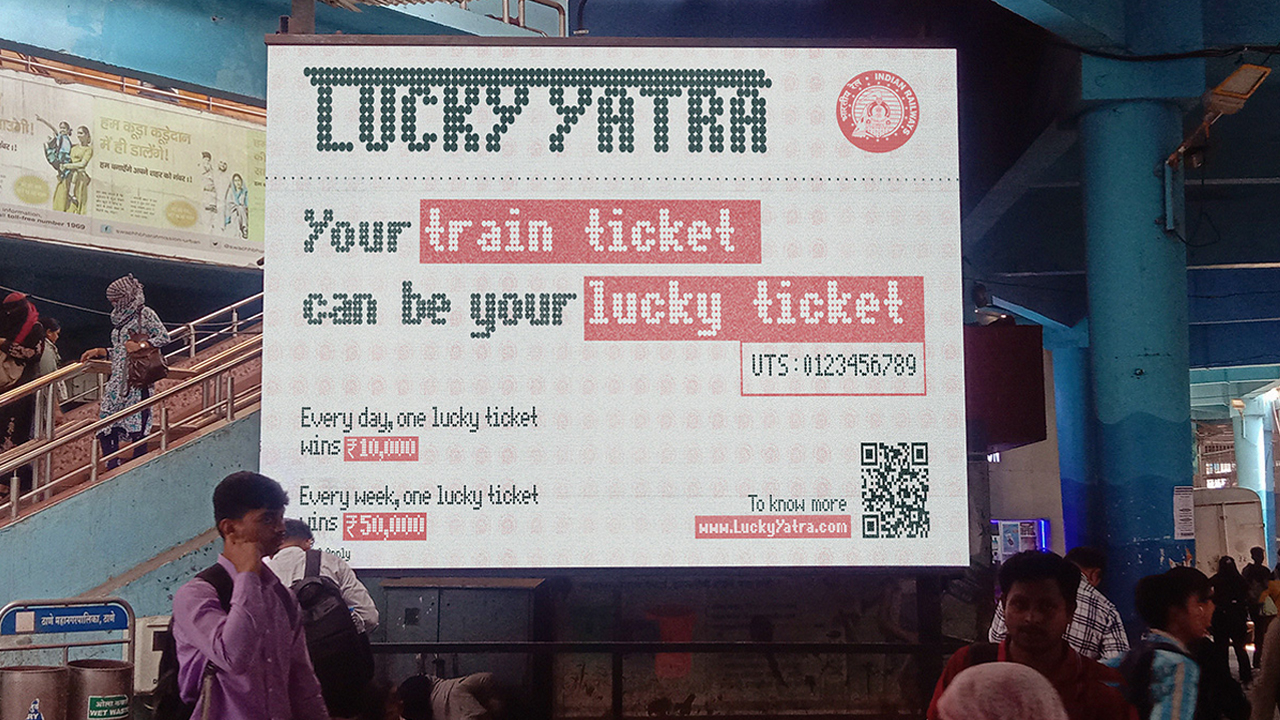
Mumbai had chronic fare evasion. Fines and enforcement hadn't moved the numbers. FCB India reframed the brief: not how to punish non-compliance, but how to make compliance feel worth doing. Every valid train ticket became an automatic entry into a daily cash prize draw. No app, no sign-up, no friction — the ticket was the lottery ticket. The campaign ran across physical tickets, platform media, train announcements, and radio, embedding the reward into the daily commute. Fare compliance improved, ticket sales rose, and Indian Railways shifted from enforcer to entertainer.
Punishment was replaced with possibility. One reframe shifted the whole relationship between commuters and the rules.
4. Physical Action Unlocks Access
Make the body do the thing — and let the reward follow the effort.
Make It Metal — Sony Music Japan / CROSSFAITH, Ogilvy, 2018
Ogilvy needed to launch CROSSFAITH's new album and expand the Japanese electro-core band's fanbase internationally. Rather than a standard digital rollout, they built a headbang-activated microsite. To unlock the band's new live-stream track, fans were required to headbang in front of their webcam for the entire duration. Stop headbanging — the track stopped too. Fans who made it through received a personalised artwork generated from their own headbanging motion, shareable on social. Within the first few hours, 20,000 fans across 114 countries had engaged. Projected sales increased 80%. The campaign generated $3M in media attention. Every show on the tour sold out.
Drop Sales (Motorola) asked customers to drop their shatterproof phones to earn a discount — the product claim and the purchase mechanic were the same action. In each case, the effort isn't a barrier. It's proof of genuine interest, and the brand rewards exactly that.
5. Negative Reframed as Reward
Take the irritant, flip it, and make everyone win when it happens.
Flybabies — JetBlue, MullenLowe, 2017
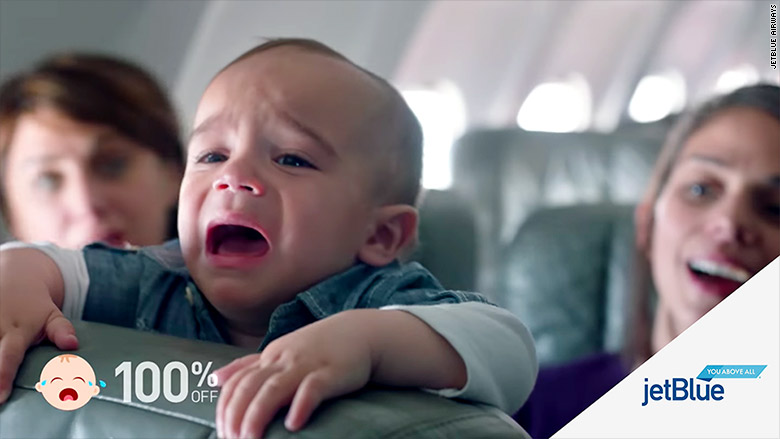
A crying baby on a flight is one of those tiny airborne dramas everyone dreads, and nobody wants to name. JetBlue named it and made it pay off. On a special Mother’s Day flight, every time a baby cried, every passenger earned 25% off a future fare. The more the babies cried, the better the deal became. Suddenly, the sound people normally pray won’t happen was the sound of money off. A shared irritant became a shared incentive, and the whole cabin had a reason to root for the mums, not resent them.
The Passion Calculator (FC Home & Décor, Wunderman Thompson, 2022) monitored 128,000+ tweets during Argentina's World Cup matches, tracking passion intensity across 30+ match events — last-minute goals, red cards, near-misses. The more intense the reaction, the higher the discount on furniture. Broken things, ruined sofas, knocked-over lamps: the risk of fan passion was turned into the reason to replace them. The brand didn't just acknowledge the negative — it priced it.