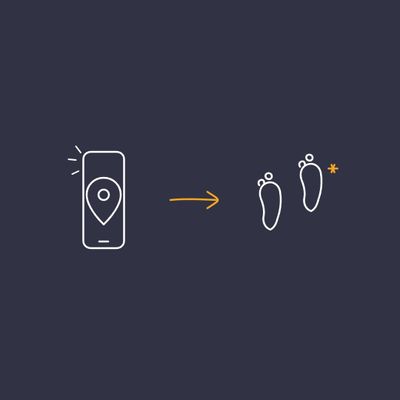



Promotional discounts have a design flaw: they require nothing. The customer finds the code in their inbox, applies it at checkout (if they remember), and feels nothing except mild satisfaction at having done something obvious. The brand gives away margin and gets back a transaction with no attachment to it. Any competitor who spots the deal can match it before lunch.
The campaigns in this guide make the discount contingent. A chase through live sports photography. A shaking phone. A licence plate number entered on a website. A pair of shoes worn that must be worn to leave the shop. In every case, the mechanic that delivers the discount is also the thing that makes it worth having. You don't receive it. You earn it.
Here are five ways from the Discount Engine to make that happen:
- The Chase
- Performance
- The Good Act
- Endurance
- Commitment
1. The Chase
Hide the discount inside something moving, live, or scarce — and make finding it the point.
Coupon Rain — Mercado Livre, GUT São Paulo, 2024
At the final of a major Brazilian football championship, Mercado Livre replaced traditional confetti with 50 different printed coupon codes. The trophy lift — the image guaranteed to flood every sports outlet, social feed, and newspaper front page — carried live discount codes embedded in the paper falling around it. Because 50 different codes were distributed across the confetti shower, different deals appeared in different photographs, driving fans to hunt across sports portals, social shares, and the official champions poster to find the best ones. The media ecosystem became the game map. 54,000 coupons were redeemed in four days. 847 million earned impressions. $3.8 million USD in extra sales — from confetti.
Cetrogar's Size of Your Envy (Ogilvy Argentina, 2026) asked Argentinians to WhatsApp a photo of a neighbour's TV box ahead of the World Cup. An AI tool read the box dimensions and replied with a personalised discount on a larger Quantic model. The trigger — neighbour envy — was already in the culture. The campaign gave it a destination. Volaris hid discount codes on aircraft wings (W1ng Cod3s, Havas HOY Mexico, 2024). Passengers who spotted the codes mid-flight, photographed them, and shared them online received valid vouchers. No campaign instructions — just curiosity and a phone camera. The plane was the creative. The passengers were the media.
2. Performance
Make skill, speed, or effort the variable — and let the reward scale with it.
KFC Shakin' Shakin' — KFC, 2022
KFC needed to drive app engagement in Asia. The answer was the phone's accelerometer. The KFC app measured shaking intensity — the harder the customer shook, the deeper the discount they unlocked. The shaking method mirrored KFC's own product preparation: shaking is how you make the food, and shaking is how you earn the deal. The physical interaction gamified the mechanic while keeping it rooted in product behaviour. No fixed percentage — the reward was entirely determined by effort. A standard app promotion became a participation event.
Samsung's Focus Face Off used a Snapchat lens to track sustained eye contact with the phone screen; longer gaze earned a deeper price drop — and simultaneously demonstrated the Smart Pause eye-tracking feature the product was built around. The demo and the discount were the same moment.
The performance mechanic fails when the skill required has nothing to do with the brand. Shaking a phone to earn a KFC deal is product behaviour. Shaking a phone to earn a car insurance discount is friction. The effort has to point somewhere.
3. The Good Act
Make the discount contingent on doing something the brand genuinely believes in.
Car-2-Bike — Veloretti, G-t Amsterdam, 2019
Veloretti wanted to convert Paris car owners to cycling. The mechanic: enter your car licence plate number on the campaign site and receive a personalised discount code for a Veloretti bike. The plate number — the identifier of the pollution-causing behaviour — became the key to moving away from it. The personal marker of the problem was the instrument of the solution. No lecture. No call to action. Just a one-to-one link between what the customer currently does and what they might do instead.
IKEA's Buy Back Friday (2020–ongoing) inverts Black Friday's logic entirely: on the peak day for consumption, IKEA offers to purchase used furniture back from customers in exchange for store credit. The sustainable act funds the next purchase. Counter-programming the biggest retail moment in the calendar rather than competing within it.