

A pun is the lowest form of wit, allegedly. Someone forgot to tell the agencies behind some hugely effective campaigns. When language itself becomes the metaphor — when a word does double duty, when absence speaks, when a brand name contains its own brief — the audience feels clever for getting it. That complicity is the whole mechanism. You're not just receiving the message. You're completing it. Here are five tactics from the Metaphor Engine where the words — or the absence of them — do the work.
- The Double Entendre
- Linguistic Subtraction
- Semantic Hijack
- The Name as the Idea
- Tone as the Argument
1. The Double Entendre
Find the word or phrase that means two things simultaneously — one about the brand, one about the world — and put it somewhere both meanings land at on
Nothing Fills a Hole Like a Pot Noodle — Pot Noodle, adam&eveDDB, 2023
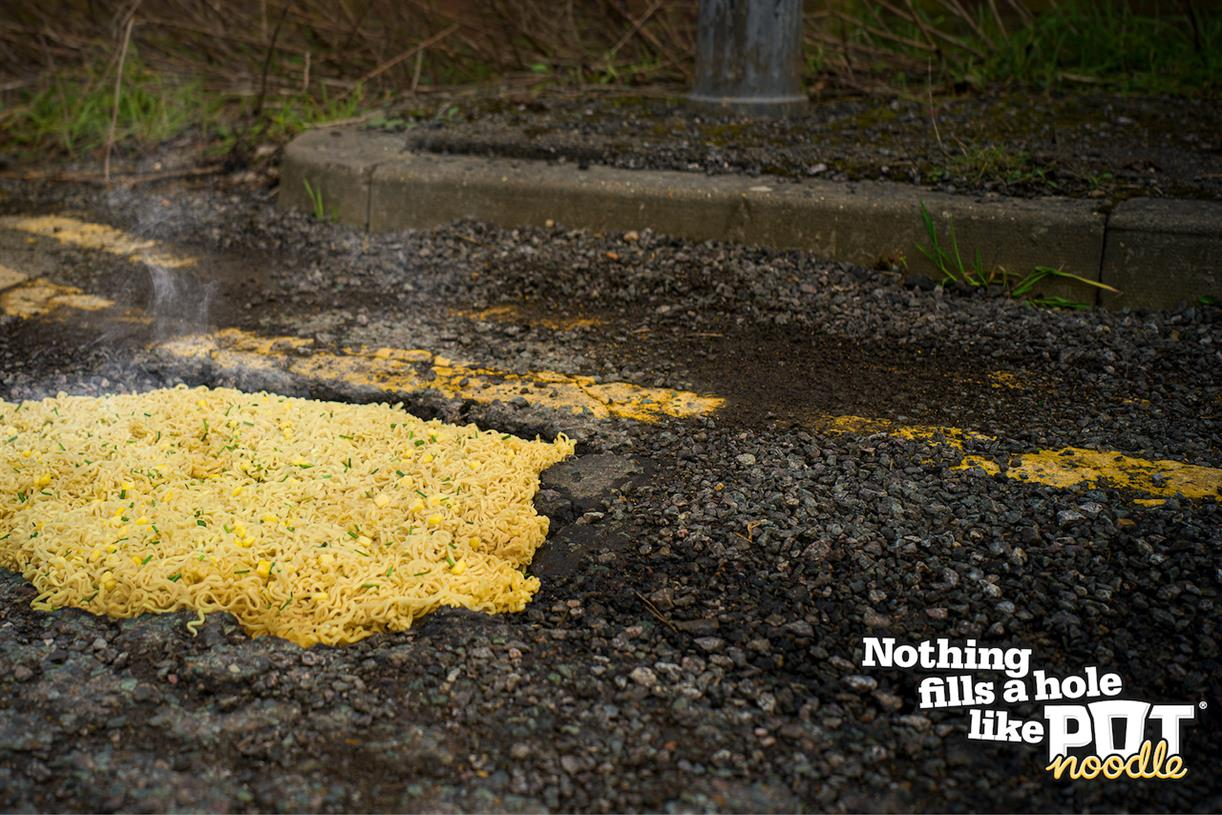
Britain's pothole crisis had become a genuine national grievance — road surfaces collapsing, councils under fire, drivers furious. Pot Noodle's response: don't fix the roads. Just fill the holes. The line operated on three levels simultaneously: a physical description of what the product does, a visual pun on potholes, and a wry cultural wink at a nation in mild collective meltdown. Placed in outdoor sites near the worst-affected roads, it made the brand feel embedded in real life rather than floating above it.
Delight's 'Not Very Sweet' (Ogilvy, 2023) built a campaign around Thai cultural expressions of care that sound harsh on the surface — sharp words that, once the cultural context landed, revealed the depth of love. The product's low-sugar benefit was proved through the same semantic twist: unsweet language as the most genuine form of sweetness. Two meanings. One landing. The double entendre is at its sharpest when both readings are equally true.