


Comparative advertising has a trust problem with many categories full of brands claiming superiority. What actually moves people is when the comparison does the work itself: a vehicle that demonstrates the speed gap, a screen that hides the rival, a geo-fence that turns 14,000 McDonald's into Burger King's acquisition engine. Here are five tactics from the Enemy Engine that turn the competitor into the evidence.
- Turn the Product into the Punchline
- Make It a Character Showdown
- Use Real-Time Proof in the Real World
- Turn Competitor Strength Into Thir Weakness
- Flip Live Moments Into Win-Backs
1. Turn the Product into the Punchline
Design the comparison so it lands without a word of copy.
FedEx vs. DHL — FedEx, 2000
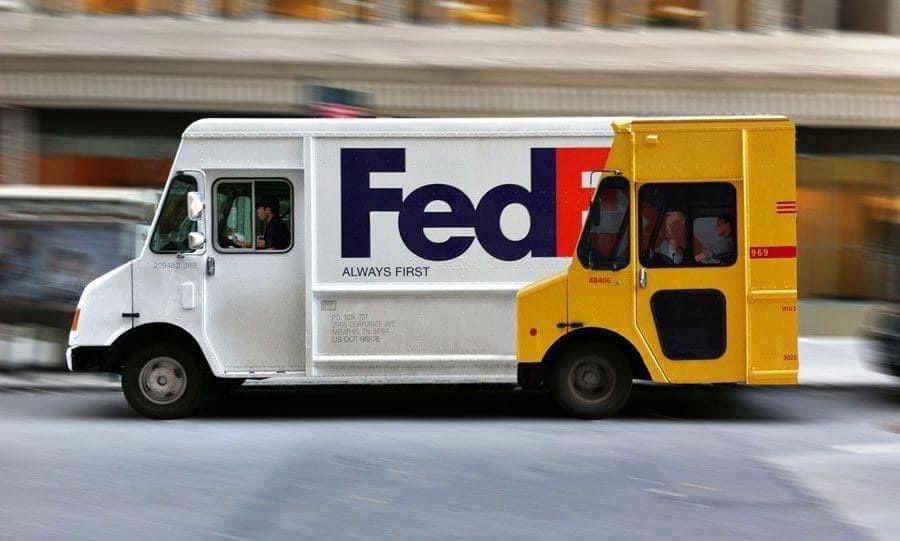
The brief: communicate delivery speed advantage over DHL with minimal media spend. The execution was a single visual idea: paint the front half of a DHL van onto the rear of a FedEx van. Every time the vehicle moved, it looked like FedEx was overtaking its rival in real time. No headline. No voiceover. The message was the vehicle. It generated wide PR coverage and maximum impact from a format that cost almost nothing to produce.
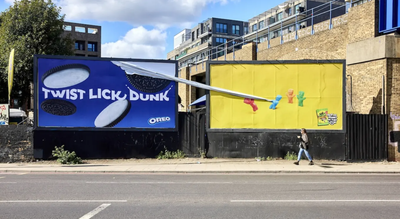
Burger King's Whopper of a Secret (BBH London, 2019) embedded a Big Mac physically behind the Whopper in every ad that year — print, TV, bus wraps — before revealing the stunt publicly to show the Whopper was so large it blocked the rival from view entirely. The passive comparison became a media moment the moment it was exposed.