


Every dominant culture has something it's stopped questioning. An aesthetic that's become a status trap. A behaviour that's normalised cruelty. A mindset so ubiquitous nobody's examined it recently. This tactic looks at what everyone's doing — and asks what it's hiding. Not to reject it outright, but to surface the absurdity, the cruelty, or the hypocrisy clearly enough that the audience can't unsee it. The brand's job isn't to preach. It's to create the moment of recognition — and then hand the audience a way out. Here are five Enemy Engine formats that turn cultural norms into creative briefs.
- Light the Fuse
- Mirror the Culture
- Hijack the Platform
- Reward the Opposite
- Cliché for Contrast
1. Light the Fuse
Find the cultural tension your audience is already sitting on — and be the brand that sets it off.
Nobody Does Football Better Than Us — Paddy Power, BBH, 2026
The brief: make Paddy Power culturally relevant ahead of a World Cup hosted in America. BBH London's answer wasn't to celebrate England's prospects or mock the tournament format. It was to name something British fans already felt — that American sporting spectacle (the pyrotechnics, the cheerleaders, the halftime showmanship) just isn't football. The campaign title says "us" and leaves the audience to decide who that includes. It's launched in Britain, fronted by Danny Dyer, the voice of England, with Rob Lowe cast as the embodiment of America. Paddy Power didn't pick the side. The casting, the timing, and the pronoun did it without the brand having to commit. The comments sections went exactly as designed: fans debating halftime culture, chant authenticity, what a proper football atmosphere actually means. The brand lit the fuse. Social media did the rest.
2. Mirror the Culture
Use the language, look, and rituals of a cultural trend — then replace the content with something that stings.
#LastSelfie — WWF, Uncle Grey
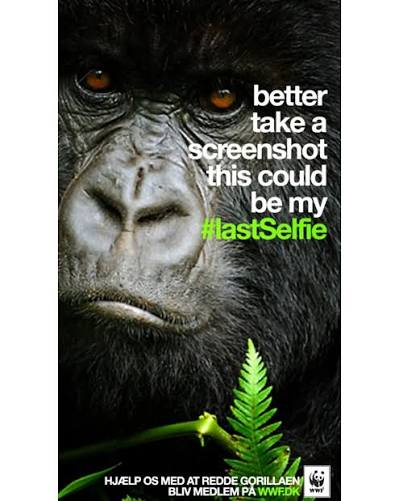
The brief: raise awareness of endangered species with an audience that scrolls past conservation content. Uncle Grey's answer was to meet the audience inside the behaviour they already had — Snapchat selfies — and flip its defining mechanic against itself. Disappearing animal selfies were posted under #LastSelfie with messages like "Don't let this be my last selfie." The medium's throwaway quality — images that vanish in ten seconds — became the emotional point. WWF raised a month's worth of donations in three days. See campaign ->
Dove's #TurnYourBack (Ogilvy & David) used Instagram's own tools to reject Instagram's values — encouraging women to literally turn their backs on the Bold Glamour filter, making refusal a visual act performed on the platform promoting the norm. See campaign ->