

Getting to an idea worth fighting for rarely begins from an obvious starting point. Inspired by former Wieden+Kennedy Creative Director Jason Bagley, this series uses provocative questions to mine the Big Ideas That Work Engines for repeatable creative tactics that can help answer them.
What else might people use to get our product’s benefit?
Here are seven campaigns that probably weren't thought of by asking this question and a few others, but they could have been...
- Show the Desperate Workaround
- Take False Economy to Its Logical Conclusion
- Make People Attempt the Alternative
- Convert the Dupe Into Trial
- Find the Benefit Closer to Home
- Trap People Inside the Inferior Version
- Become Your Own Knock-off
1. Show the Desperate Workaround
Find the makeshift solution people invent when they want the benefit but lack the proper product.
Cool Idea — Fortum, TBWA, 2023
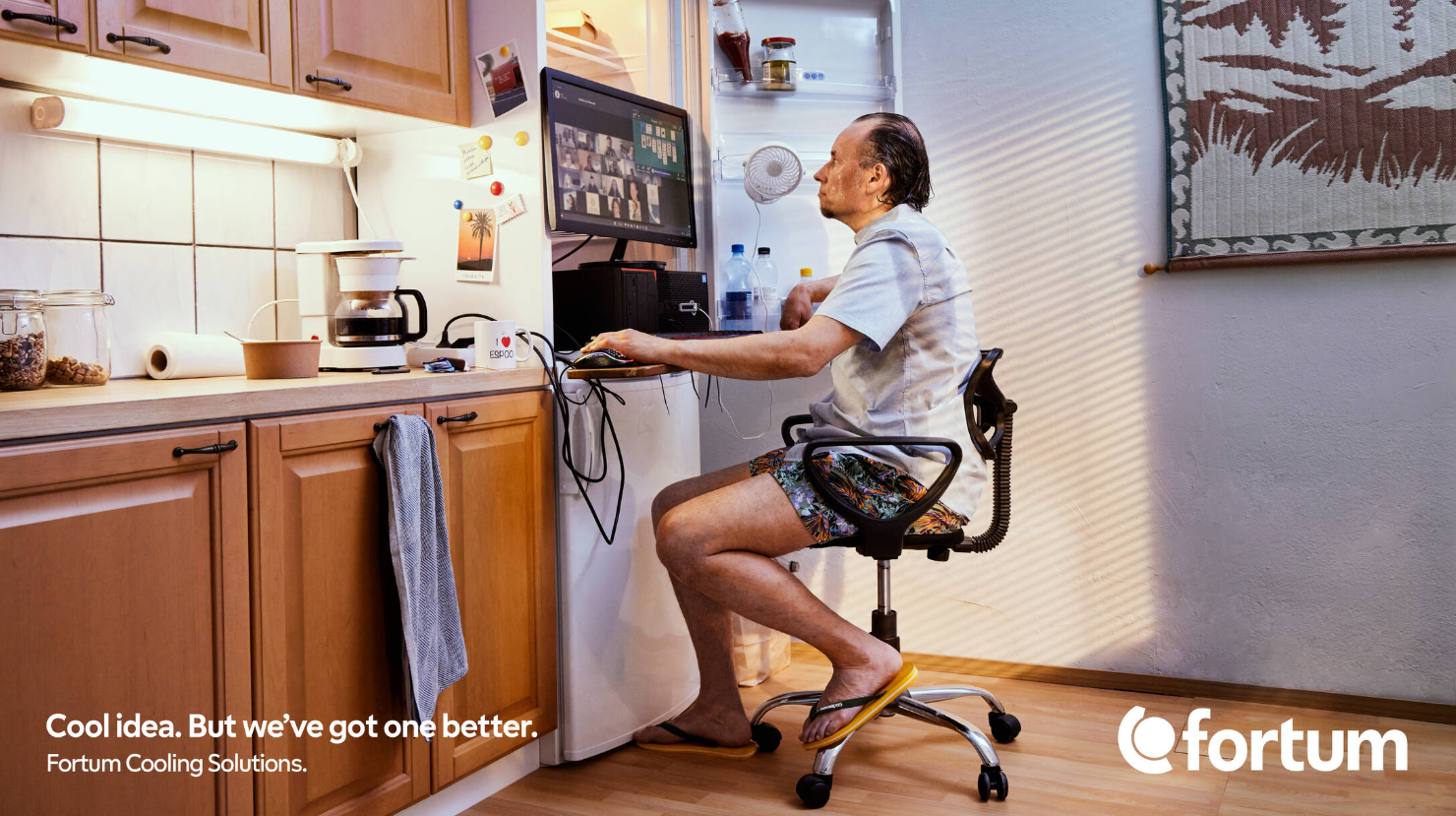
When summer heat becomes unbearable, people find inventive ways to cool their homes. Fans are combined with ice, windows are covered with foil and household appliances are pushed into jobs their manufacturers never intended.
Fortum made these improvised cooling systems the subject of a spoof innovation campaign. The homemade devices appeared ingenious until their inconvenience, unreliability and faint absurdity became impossible to ignore.
Rather than explaining the technical virtues of a proper home energy solution, the campaign started with the lengths people would go to without one. The bad alternative performed the product demonstration in reverse.
The important observation was not merely that people wanted cooler homes. It was that their determination to create the benefit themselves had already produced a recognisable behaviour. Fortum only needed to give those contraptions the attention usually reserved for genuine inventions.
The question that could have produced it:
What homemade version of our benefit are people already attempting to create?
The creative move: Brand Benefit Behaviour Consequences from the Consequences Engine
2. Take False Economy to Its Logical Conclusion
Find another place people might try to save the same money—and reveal what that bargain really costs.
Don’t Save on Mosquito Repellent — Trainline, Dude, 2023
Trainline’s benefit was saving money on travel. But “saving money” does not automatically make every economical decision intelligent.
The campaign followed a holidaymaker trying to avoid buying mosquito repellent by constructing his own elaborate alternative. What began as thrift became a time-consuming DIY project that failed spectacularly and left the supposedly canny traveller paying for his decision in discomfort.
The mosquito repellent was deliberately unrelated to train booking. It allowed Trainline to make a broader argument about false economy: saving money in the wrong place can require more effort, create more trouble and ultimately feel less intelligent than paying for the proper solution.
Instead of repeatedly announcing that the app offered good-value fares, Trainline showed what bad saving looks like. The ridiculous substitute helped distinguish sensible economy from indiscriminate cheapness.
The question that could have produced it:
Where else might people try to save the same money—and regret it?
The creative move: Name the Assumption, from the Reframe Anything Engine
3. Make People Attempt the Alternative
Turn the theoretical replacement into a real experience and see whether anyone still considers it reasonable.
The Long Swim Home — Coastguard New Zealand, VMLY&R, 2021
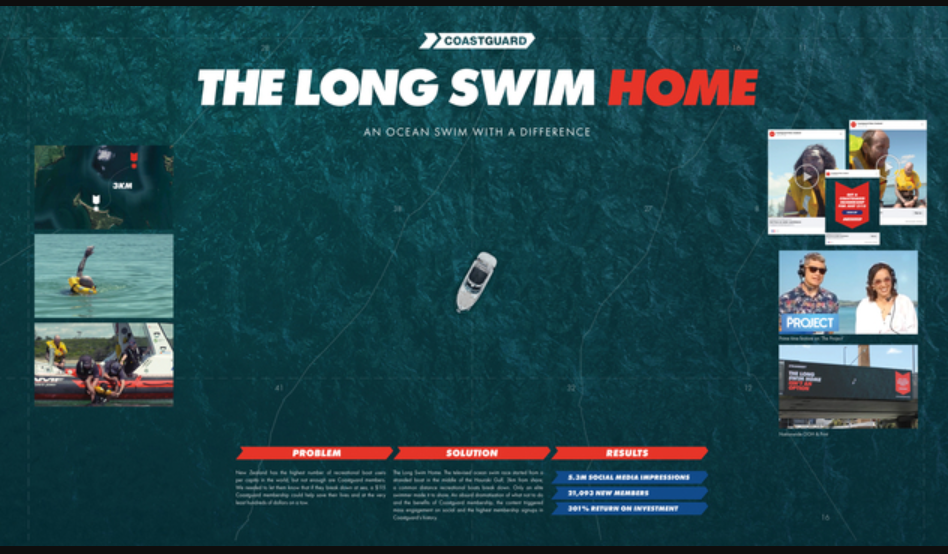
A Coastguard membership promises help when something goes wrong at sea. Without it, stranded boat owners still have an alternative. They could always swim home.
Coastguard New Zealand took that technically available option literally. Boaters were challenged to complete a three-kilometre open-water swim from a stranded vessel to shore, experiencing the physical reality behind a sentence that might otherwise sound flippant.
The value of the service emerged through its absence. Rescue cover was no longer an abstract precaution. It became the thing standing between someone and a cold, exhausting and potentially dangerous journey.
The question that could have produced it:
What would people physically have to do to replace the service we provide?
The creative move: Make the Alternative Absurd, from the Consequences Engine