


Most brand strategies try to say something better. The best ones change what something means. Reframing doesn’t argue harder — it shifts the frame around a product, behaviour, category, or cultural moment until the audience is looking at something different entirely. This guide maps nine reframing tactics to the strategic questions that unlock them — so you can identify which type of reframe fits your brief and why the right shift makes a straight argument unnecessary.
What is reframing in advertising?
Reframing changes the invisible logic that determines how something is perceived. It changes the context — the reference point, the narrator, the status signal, the cultural occasion, the category assumption — until the same product or truth lands completely differently.
When does reframing outperform conventional advertising?
Use it when the real problem isn’t awareness — it’s the invisible frame around the product that determines what kind of thing it is before anyone reads a word of copy.
Reframe Who’s In The Frame:
What if you put someone else in the role the category has always reserved for a specific person? Advertising defaults to the winner. The most aspirational version of whoever uses the product. The audience already has a picture in their head of who belongs in this kind of ad. Putting someone else there — shot identically, treated with the same seriousness — creates a gap the audience has to resolve.
What if the person the category ignores became the proof of the brand’s values?
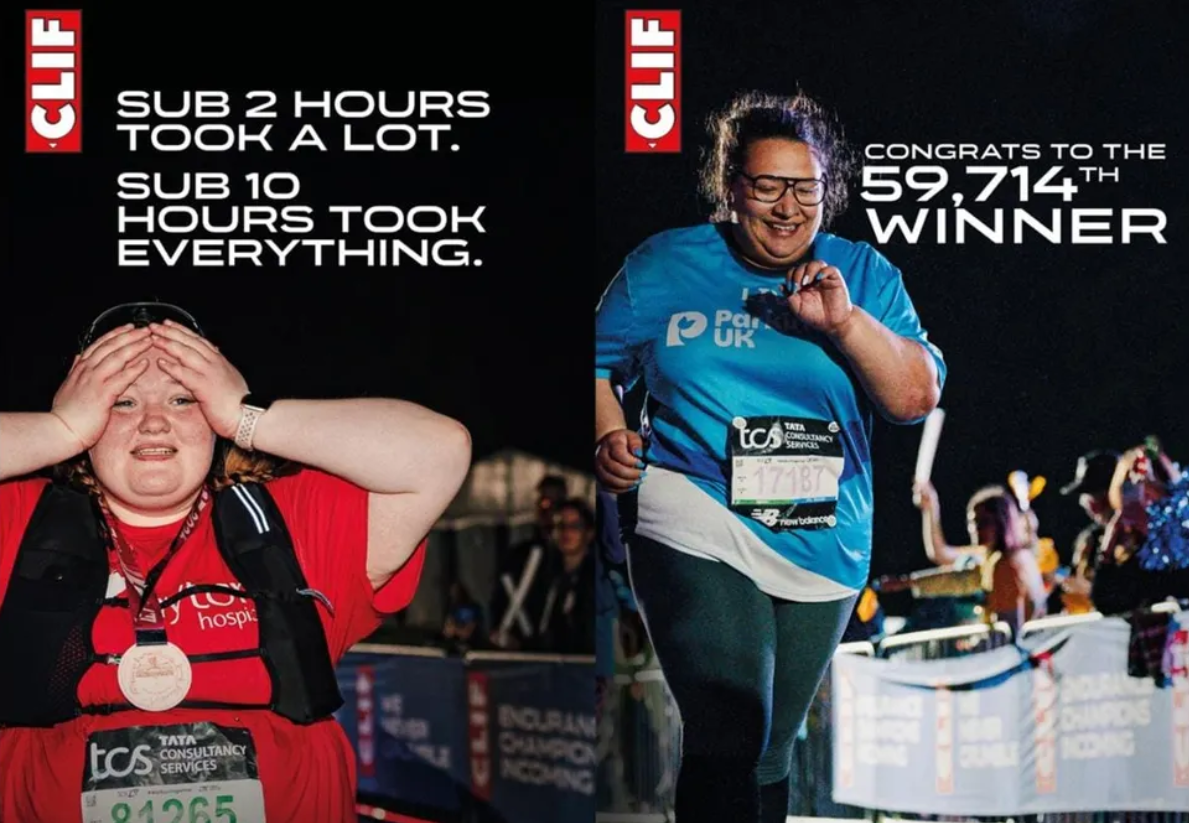
That’s Reframe Who’s In The Frame — the most structural reframe available. CLIF Bar’s Final Finishers photographed the slowest TCS London Marathon runners — many over eight hours in — in a high-editorial style that mirrored premium sports advertising. The taglines made the equivalence explicit: “First place took 1:59. Last place took everything.” The brand didn’t argue these athletes deserved recognition. It photographed them as if they already had it. Pedigree’s pUp Syndrome employed people with Down Syndrome to care for shelter dogs in Russia — a country where they were widely assumed to be unemployable. The care was real, the dogs were real, the competence was visible. The product’s brand territory found its most specific proof in exactly the people the culture had written off.
What if the celebrity’s heroic status was the thing the campaign deliberately violated?

Clash of Clans didn’t put Erling Haaland on a pedestal. They invited players to destroy the village he’d built since he was ten. The sponsorship convention was replaced with its opposite: pay famous person to be attacked. The audience became the protagonist. Wilkinson Sword’s Any Hair Anywhere cast the exact people traditional shaving ads had always edited out — a wide range of individuals showcasing body hair with no airbrushing and no idealisation.
Reframe the Cultural Moment: What if you redirected the emotional charge of something the audience already cares about?
Every culture generates moments that already carry emotional charge — songs people know by heart, formats so familiar the audience finishes your sentences, events the whole world is watching. Trying to create that kind of recognition from scratch is a thankless task. The smarter move is to find it where it already exists and change what it points at.
What if you took a format loaded with a specific emotion — and made it carry the opposite?
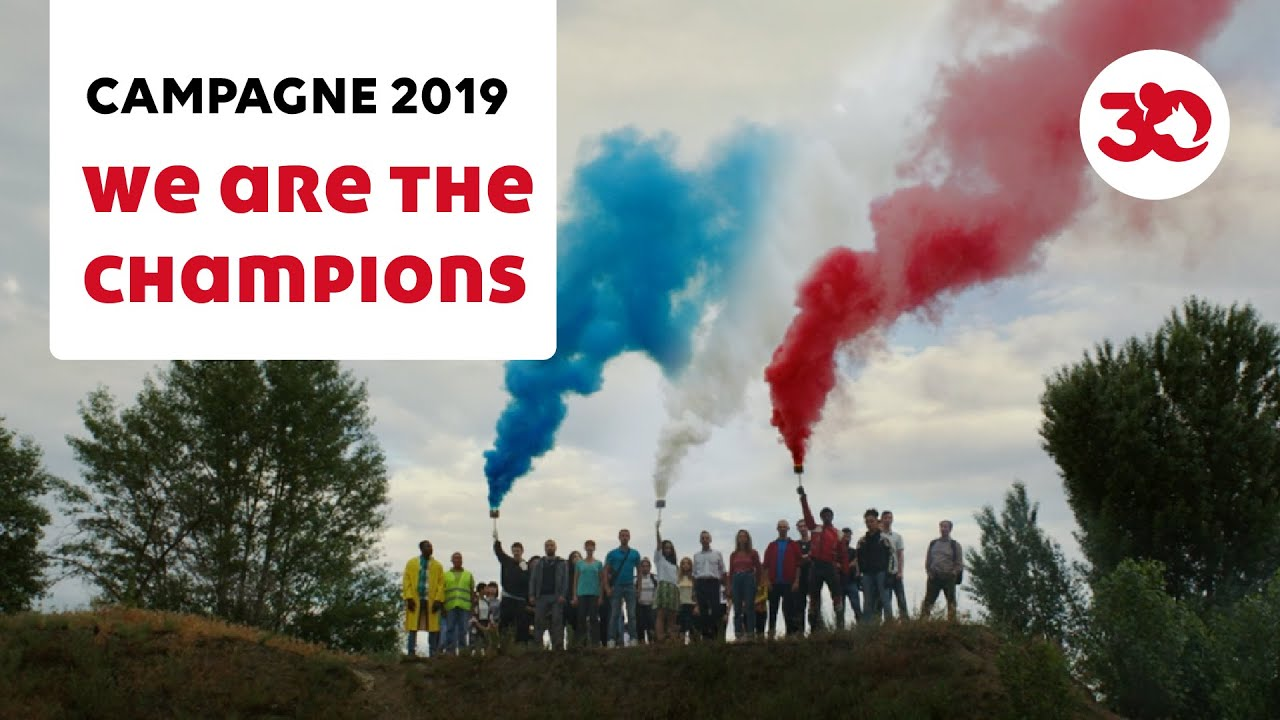
That’s Reframe the Cultural Moment at its most precise. Fondation 30 Millions D’Amis used Queen’s We Are The Champions — a song so thoroughly associated with collective triumph that its meaning felt fixed — to show French pet owners abandoning their animals while a stripped-back version played. The same song, the same national association, now repointed at collective shame. Newcastle Brown Ale couldn’t afford a Super Bowl slot, so Droga5 built an entire campaign around the ad they hadn’t made — teasers, trailers and behind-the-scenes footage for a fictional spot that didn’t exist. The Super Bowl’s cultural gravity did all the media work. Newcastle just pointed at it from the outside.
What if you entered a live cultural conversation from the opposite direction entirely?
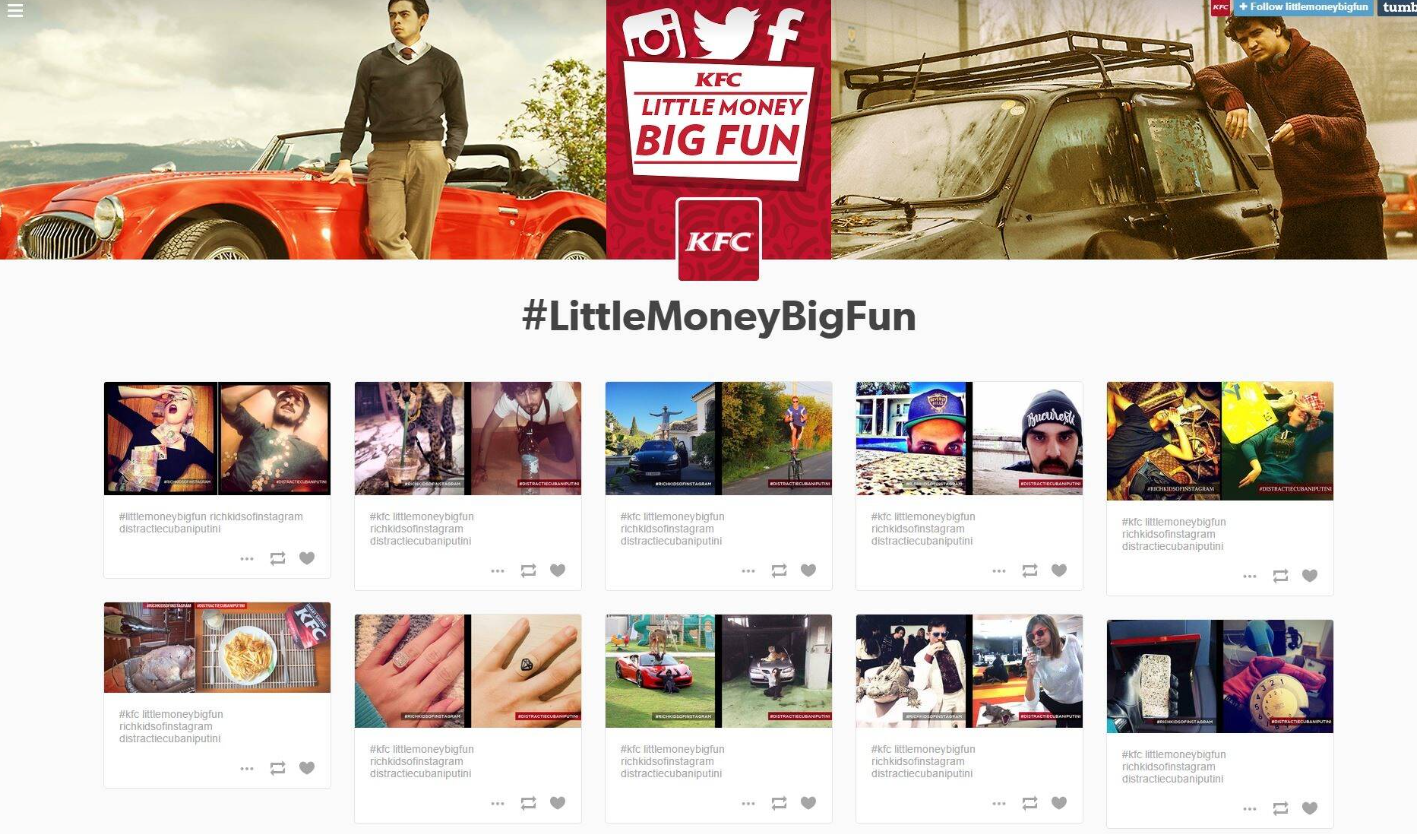
KFC Romania’s #LittleMoneyBigFun entered the #RichKidsOfInstagram trend not by arguing against it, but by joining it from the other end — inviting fans to recreate lavish rich-kid shots with low-budget versions, turning the same social logic toward something more accessible. The brand didn’t correct the trend. It gave the audience a better seat in it.
Reframe the Language: What if you changed what a word means — and let that shift carry the entire argument?
The best reframe campaigns don’t invent language. They find a word, a phrase, or an expression that already exists inside the culture — loaded, familiar, often damaging — and change what it means. The shift can be as small as a different inflection or as large as a dictionary edit.
What if the insult or phrase being used against your audience became the thing that proved them right?

That’s Reframe the Language — the most durable reframe in the toolkit because it outlasts the media spend. Mitsubishi Motors worked to change the official Michaelis dictionary definition of “pilota” — the feminine form of driver, previously defined as meaning defeat and loss — to refer to women who drive vehicles in competitions, pilot aircraft, and lead in various fields. A dictionary edit is the longest-running media placement a brand can make. Always’ #LikeAGirl exposed how the phrase functioned as an insult by showing how children interpreted it, then redefined it as a symbol of strength. OkCupid reframed “DTF” by making the F stand for anything a user’s profile suggested they cared about — turning a phrase associated with hook-up culture into a celebration of dating with depth.
What if you took a cultural occasion and used its own format to expose the contradiction underneath it?
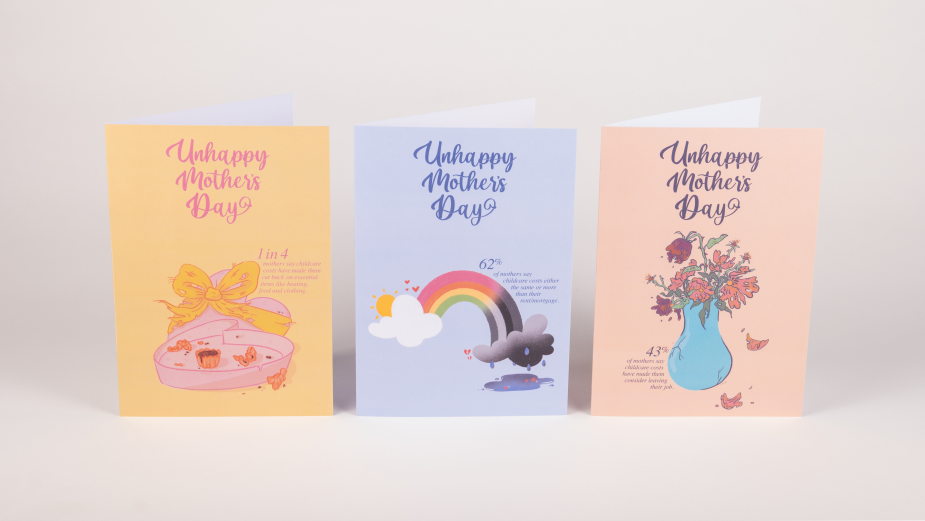
Pregnant Then Screwed’s #UnhappyMothersDay turned Mother’s Day cards into an indictment — using the occasion’s visual language and familiar seasonal warmth as the container for a message that directly contradicted what the day was supposed to celebrate. The cultural occasion did the targeting. Everyone already knew what Mother’s Day was supposed to feel like — which was exactly what made the reframe land.
Reframe the Value: What if you changed what the price is being compared to?
Price objections are not always about money. They’re about your price measured against whatever the audience is using as their invisible benchmark. Your job isn’t to lower the number. It’s to change the thing the number is being measured against.
What if the barrier to purchase became the proof that the value is real?

That’s Reframe the Value — changing the reference point until the offer looks completely different. IKEA Dubai converted drive time directly into store credit using Google Maps data — the longer your journey, the bigger your discount. The drive stopped being wasted time and became something you could spend. The barrier became the currency. MoneySuperMarket’s Epic Action Man cast saving money on insurance as a full-throttle Hollywood triumph — not financial caution but earned swagger. Price comparison stopped being embarrassing and became something to brag about.
What if you surfaced the hidden cost the category had been concealing — and made fairness obvious?
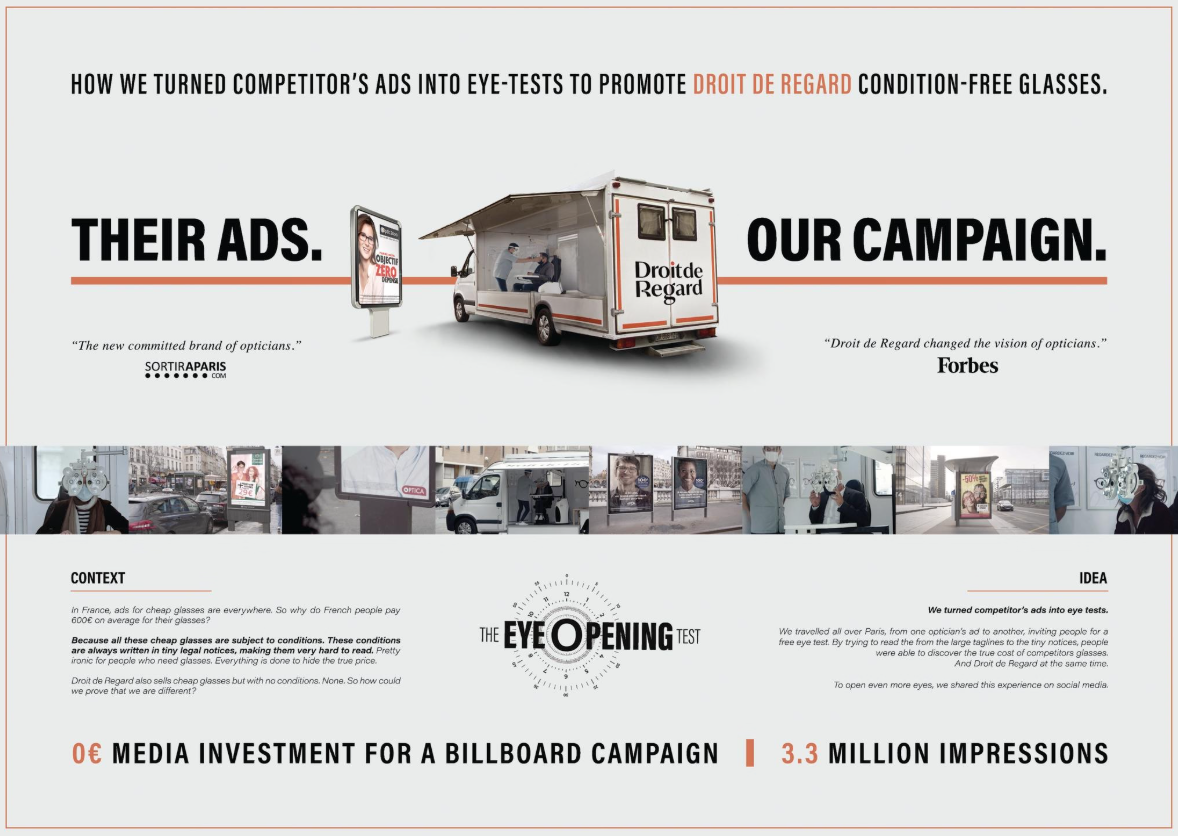
Droit de Regard parked a mobile eye-test van directly in front of competitors’ misleading ads, tested people’s vision, and showed them what that €29 headline would actually cost after upgrades and hidden fees. They didn’t argue the category was deceptive. They demonstrated it, in public, on the category’s own terms. Intermanché took a 10% loyalty discount and had a child narrator list every major human achievement made possible by just 10% — turning a modest mechanic into an emotional point of power without changing the number.
Reframe the Role: What if you swapped who holds power in the story — and let the reversal reveal what the original arrangement was concealing?
Most campaigns place their subject in the expected position. The moment you swap who holds power, who experiences the consequence, or who the camera follows, you force a completely different emotional response from the same material.
What if you put the wrong person in the right role — and made the experience itself the evidence?

That’s Reframe the Role — structural and irrefutable. Telefónica’s #MyGameMyName gave top male gamers female aliases and sent them online. They experienced the sexist abuse first-hand. The campaign’s argument wasn’t statistical — it was testimonial, delivered by exactly the people the gaming community wouldn’t dismiss. The role swap created advocates by changing who had to live the experience. Animalife’s The Walk reversed the emotional journey of pet abandonment entirely — rather than showing a dog’s experience, the film showed a man experiencing exactly what an abandoned dog would feel. The role reversal turned a statistic into something lived.
What if disguising who someone is forced the audience to form a judgement before the reveal?
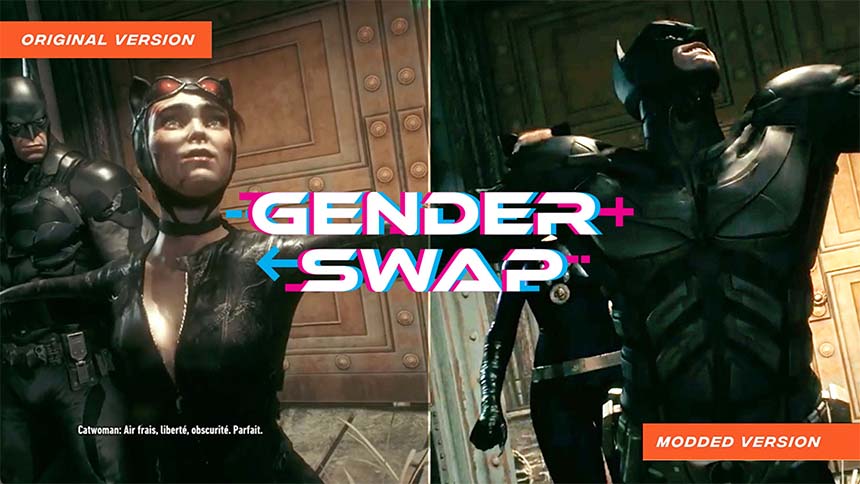
Women in Games’ #GenderSwap applied the postures, movements, and camera angles typically used for female gaming avatars to male ones instead. The familiar objectification applied to male bodies made the audience see it for what it was — a deliberate creative choice made thousands of times across the industry — before they understood what they were looking at. The disguise hid who was experiencing it, long enough for the full weight to land.
Reframe the Ritual: What if you showed up inside something the audience already does — and changed what it means?
Advertising fights for attention by interrupting. More effective campaigns find ways to insert themselves into something the audience is already doing and rewire what that thing represents. The ritual is already happening. The brand’s job is to show up inside it without disrupting what it is.
What if you took a rooted social ritual and evolved it to preserve its symbolic meaning while delivering modern impact?
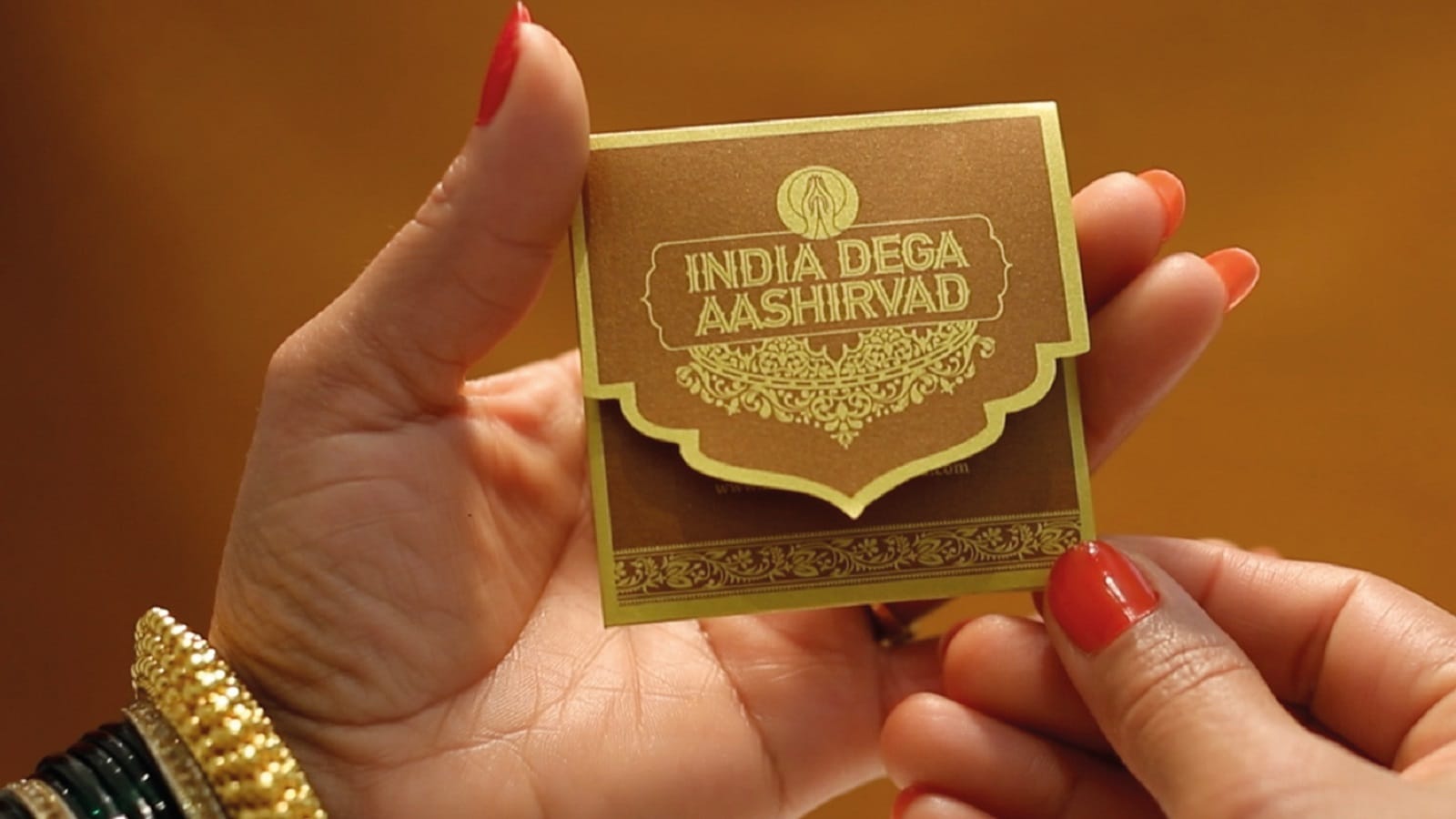
That’s Reframe the Ritual — and it works because the audience is already emotionally invested before the brand arrives. India Gate recognised the wedding tradition of throwing rice as a blessing and redirected it — creating special rice packs that transformed the throwing gesture into a food donation. Sixteen thousand packs ordered in ten days. Six hundred and forty kilograms of rice donated. The brand didn’t interrupt the tradition. It evolved it. Oreo used its circular cookie shape — which mirrors the phases of the moon — to help parents teach children about Ramadan’s lunar calendar. The daily ritual of eating a cookie became a moment of cultural education. Sales rose 14%.
What if you positioned the brand as the thing that crashes a high-stakes ceremony and saves it?
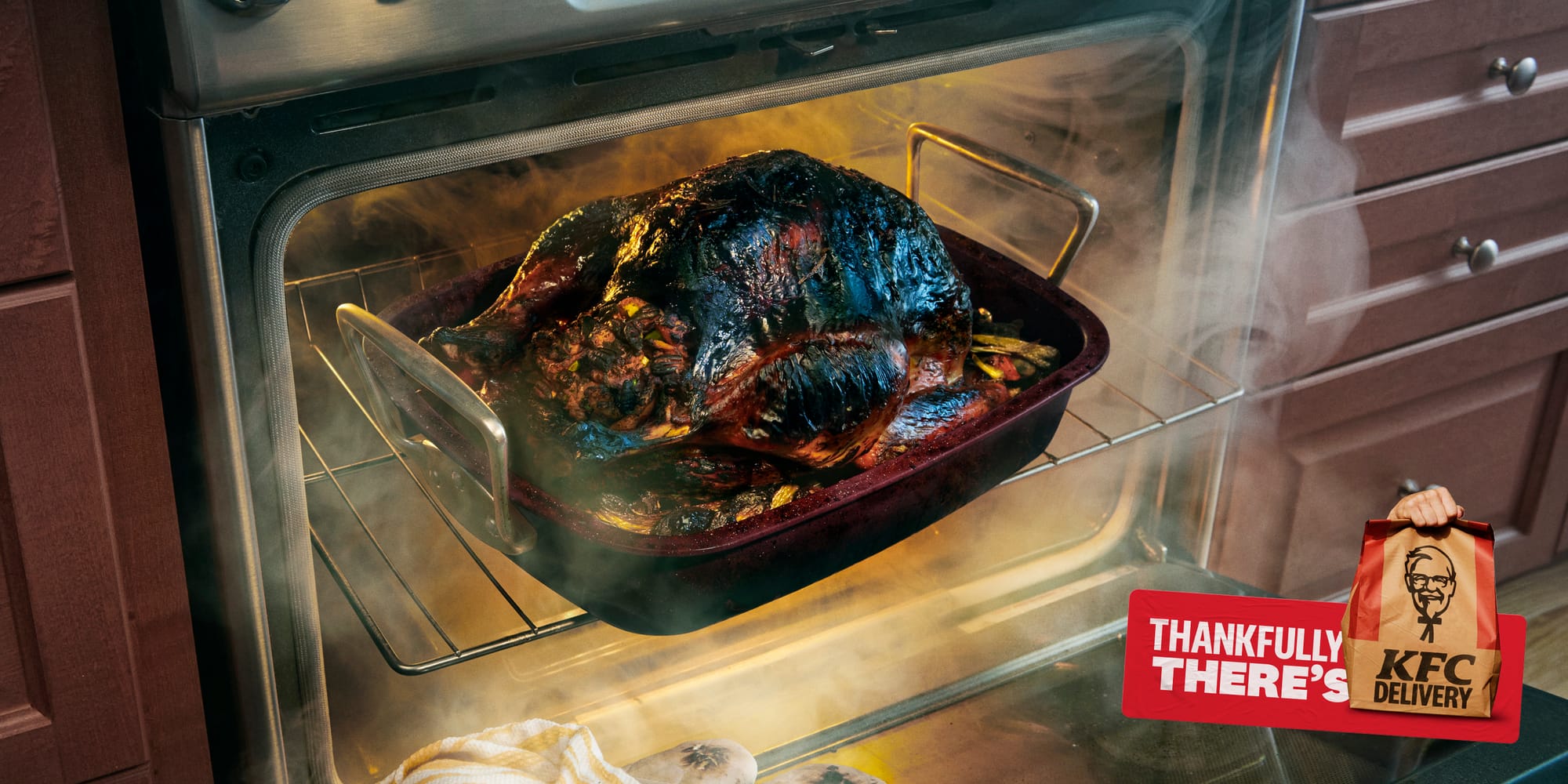
KFC Canada ran real photographs of burned turkeys and catastrophic kitchen failures with the line “Thankfully, there’s KFC Delivery” — positioning the brand as the ceremony’s rescue vehicle. The ceremony’s emotional stakes were what made the brand’s arrival matter. Lucky Charms invented a new ritual from scratch — giving each marshmallow shape a fortune-telling significance and partnering with astrologers to make breakfast cereal a divination ceremony. The most successful invented rituals feel discovered rather than manufactured.
Reframe Who’s Talking: What if you shifted the narrator — and let the incongruity do the persuasion?
Most brand communications fail not because the message is wrong but because the audience already knows who’s sending it. The moment you shift who holds the mic — put the message in the mouth of someone the audience never expected to hear it from — the brain attends differently. The message is the same. The messenger changes everything.
What if the enemy confessed — and made inaction feel complicit?
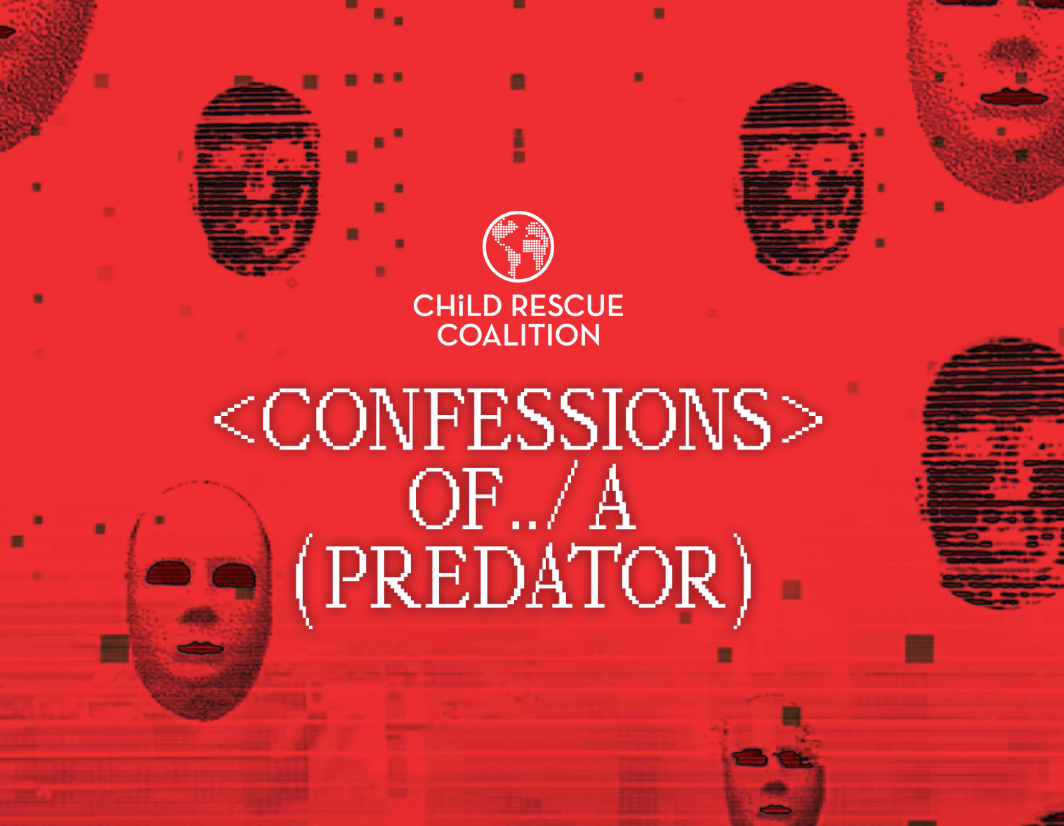
That’s Reframe Who’s Talking at its most structurally powerful. Child Rescue Coalition’s Confessions of a Predator sent automated emails written in the first person as predator confessions — triggered by real abuse data, sent directly to local politicians’ desks. The discomfort was structural: the message arrived from the last possible source anyone wanted to hear it from, to the people who could act. Inaction became harder the moment the enemy started narrating. PETA’s Behind the Leather created a fake luxury store where the products themselves revealed the reality of their own making — the objects became the narrator, and the desirability that would normally dismiss an advocacy message instead became the vehicle for the horror.
What if the unlikely ambassador made the reappraisal happen before a single product claim?
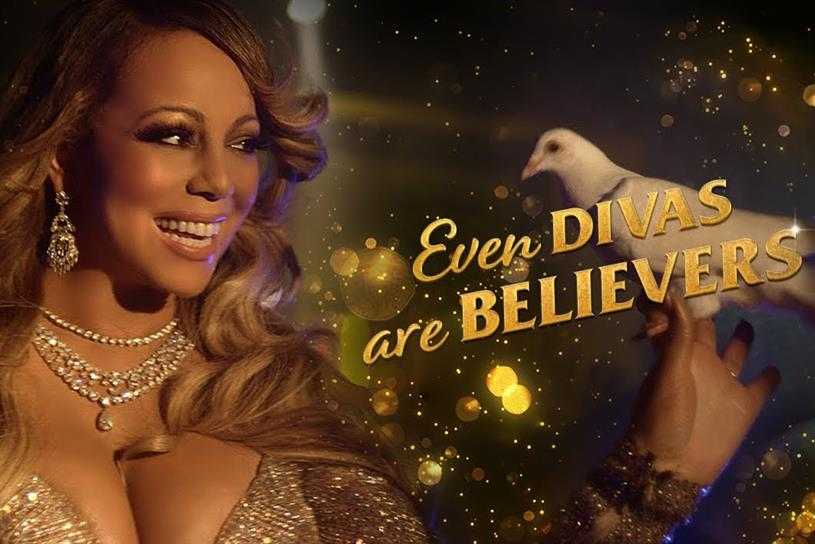
Hostelworld cast Mariah Carey — filmed at a hostel with all her usual demands, then embracing it on camera. The contrast between the world’s most pampered star and budget accommodation was the entire argument. The unlikeliest possible ambassador made the reappraisal happen. White Ribbon’s I Knew All Along had a father imagine saying misogynistic phrases directly to his daughter — the same language that felt acceptable in one context became indefensible in another. The role reversal created empathy through discomfort.
Reframe Category Logic: What if the category’s own assumptions were the brief?
Categories are built on conventions everyone obeys without examining. The category says budget means bad quality? Follow that logic to its absurd conclusion. The category says fitness brands reward effort? Launch the tracker that rewards inactivity instead. The assumption isn’t a constraint — it’s the brief.
What if you exposed the convention everyone in the category obeys — and were the first to say it out loud?

That’s Reframe Category Logic — naming the thing everyone knows but nobody says. The Ordinary’s Cost of Influence opened a pop-up where price tags showed not what the product cost, but what the influencer endorsement behind it cost — piles of fake money as décor, the gap between formula and fame made physical and unavoidable. The category’s invisible logic became the exhibit. Miller Genuine Draft fake-launched a seltzer — credible rollout, full production values — then detonated it live on stream in front of a million viewers. The explosion wasn’t a stunt grafted onto a product decision. It was the product decision, communicated in the only register that made it unmissable.
What if pushing the category logic to its absurd conclusion made the real alternative feel obvious?

Flyadeal invented a fake Cargo Passenger Class — no seats, no dignity, passengers standing in the hold — then revealed that Flyadeal offered genuinely low fares with actual seats. The category’s worst assumption followed to its logical extreme made the real product feel sane by comparison. Trainline’s campaign followed a man who builds his own mosquito repellent system from scratch to save a few euros — it fails catastrophically — to name the precise category assumption: people scrimp on the wrong things and overpay on the right ones without noticing.
Reframe Status: What if you changed the context entirely — without changing the product?
There is a category assumption in almost every brief: that the product occupies a fixed rung on the cultural ladder. Reframe Status doesn’t argue for a higher position — it changes the context until the product is seen differently before anyone has processed the mechanics.
What if you borrowed the visual language or prestige of an elite category and applied it to your product?
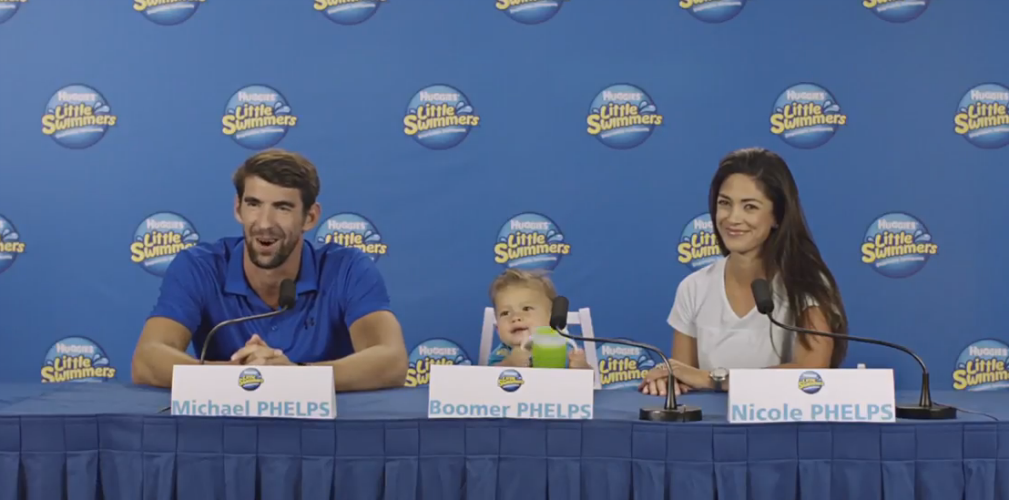
That’s Reframe Status — and it works because the brain notices incongruity and leans in. Huggies borrowed the entire prestige architecture of elite sport — positioning babies in the pool as future Olympians in training, with Michael Phelps as validation. A functional swim nappy became training gear. A bath became a lane. The status of Olympic sport transferred directly onto the product through sheer commitment to the frame. Midttrafik created a full Hollywood action trailer for a local bus service — dramatic voiceover, impossible stunts, the complete grammar of blockbuster filmmaking applied to a municipal transit route. The bus didn’t change. The context did.
What if you disguised the product as something more prestigious — and let the reveal do the work?
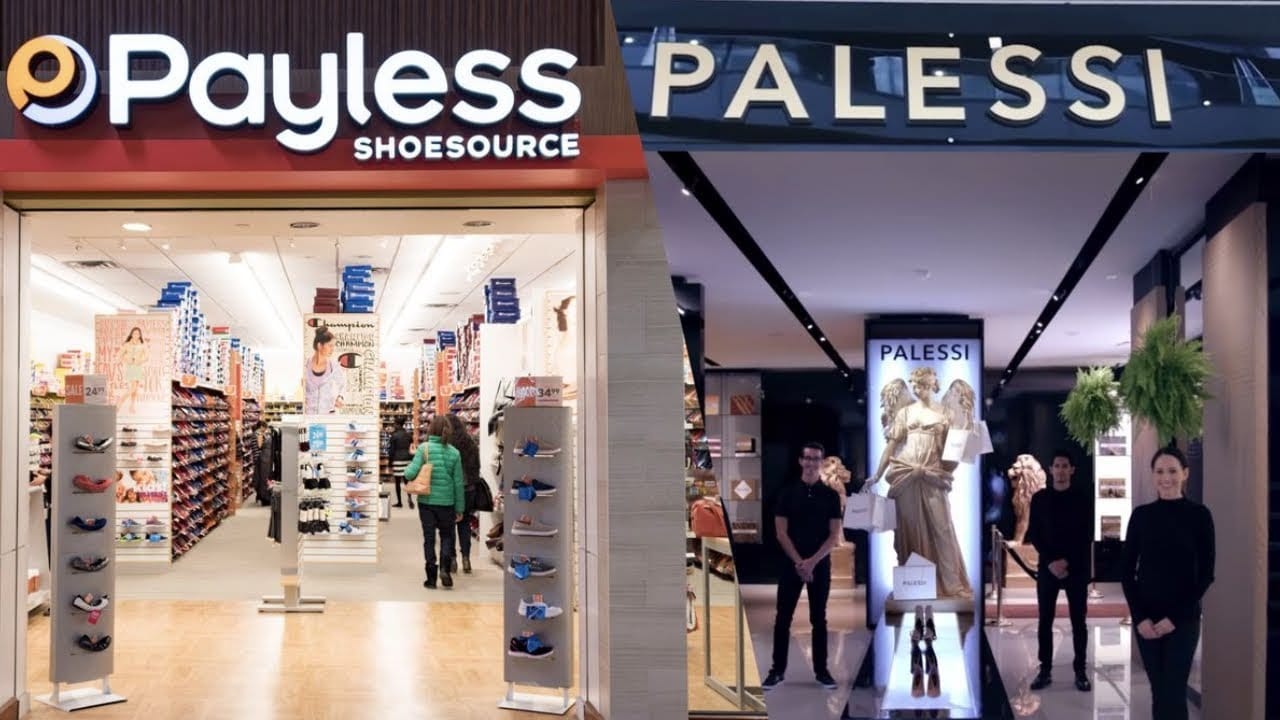
Payless opened a fake luxury boutique called “Palessi,” stocked it with regular Payless shoes, and invited fashion influencers to admire the “designer” collection. They praised the craftsmanship and paid up to $640 for shoes retailing under $30. The reveal turned judgement into reconsideration. Call of Duty invited real war photographers to shoot inside the game’s engine and displayed the results as war photojournalism in museum settings — no stunt, no reveal, just a sustained adoption of art world codes that repositioned the franchise without changing a single frame of gameplay.
The nine reframing tactics
The questions above unlock nine distinct tactics, each shifting a different invisible logic. The first campaign example in each article is free. Members get the full set.
Reframe Who’s In The Frame — put someone else in the role the category always reserves
Reframe the Cultural Moment — redirect the emotional charge of something the audience already cares about
Reframe the Language — change what a word means and let the shift carry the argument
Reframe the Value — change the reference point the price is being measured against
Reframe the Role — swap who holds power and let the reversal reveal what was concealed
Reframe the Ritual — show up inside something the audience already does and change what it means
Reframe Who’s Talking — shift the narrator until the incongruity does the persuasion
Reframe Category Logic — name the category’s own assumptions and make them the brief
Reframe Status — change the context entirely without changing the product
Want Your AI to Think Like This?
These tactics come from the Thinking Engines — a library of strategic and creative guides built to be uploaded into your AI. Drop one into Claude, ChatGPT or Gemini, and it becomes a thinking partner trained on real campaign logic: generating territories, reframing briefs, and pressure-testing ideas.