



Brands often fail not because the message is wrong but because the audience already knows who's sending it. They recognise the voice, discount the source, and move on. The moment you shift the narrator and put the message in the mouth of someone the audience never expected to hear it from, you create what Orlando Wood calls right-brain incongruity: the brain's alert signal, the thing that makes it attend differently. A bag that reveals the cruelty in its own making. A predator who confesses to politicians. A Viking who admits helmets are smart. The message is the same. The messenger changes everything.
Here are four creative reframe tactics from across The Thinking Engines that shift who holds the mic.
- Let the Object Speak
- Let the Enemy Confess
- Let the Unlikely Ambassador Front It
- Let the Role Reverse
1. Let the Object Speak
Give the product, the problem, or the thing itself a voice — and let it say what the brand can't.
Behind the Leather — PETA, Ogilvy
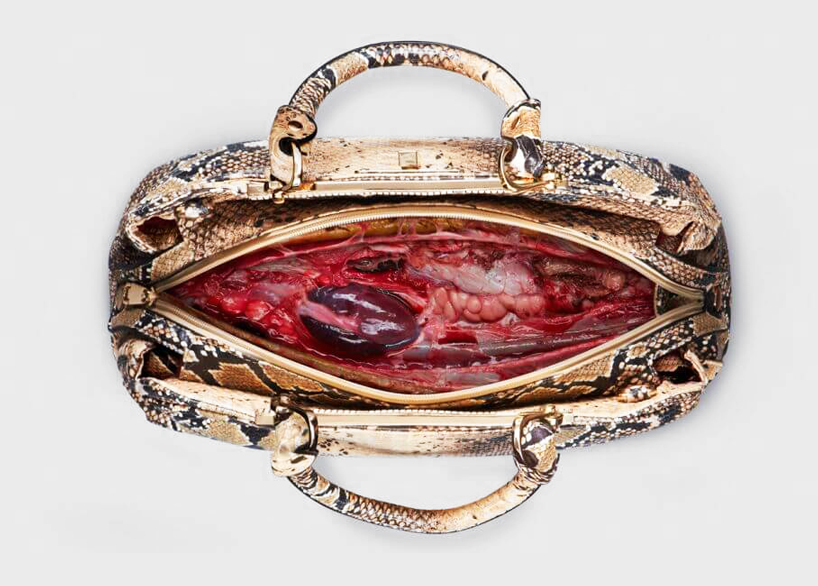
The brief: make the cruelty behind luxury leather goods impossible to ignore in a fashion world that glorifies surface beauty and hides the realities of production. Ogilvy created a fake luxury store where the products themselves revealed the gory truth — the bags, as if speaking, showed the brutal reality of their own making. The objects became the narrator. The desirability that would normally make an advocacy message easy to dismiss instead became the vehicle for the horror.
The tactic works because objects carry no apparent agenda. When something that's been silent starts talking — and what it says is damning — the audience has no pre-loaded defence against it. The narrator shift is total.keeps the audience from looking