


The Reframe Anything guide is part of the Shift Perception Engine. It contains 20 reframing approaches — each one a different way to shift how people feel about a brand, product or behaviour. This page shows the guide in action against this simple brief:
Product: Ergonomic Office Chair
Audience: Remote tech workers aged 35–50
Context: Preventing back pain during long work-from-home hours
All 20 reframes have been run against this brief using Claude, though you could use whichever AI you prefer. Each reframe was scored for fit, sharpened into a concrete campaign idea, and paired with a strategist prompt to take it further. The seven below are among those Claude flagged for further exploration.
Claude's Summary
This brief has a deceptively interesting strategic problem. The product is completely rational — everyone who sits for nine hours a day should own one — and yet most of the audience won't buy one. That gap between knowing and doing is where the real work is.
The reason is identity, not information.
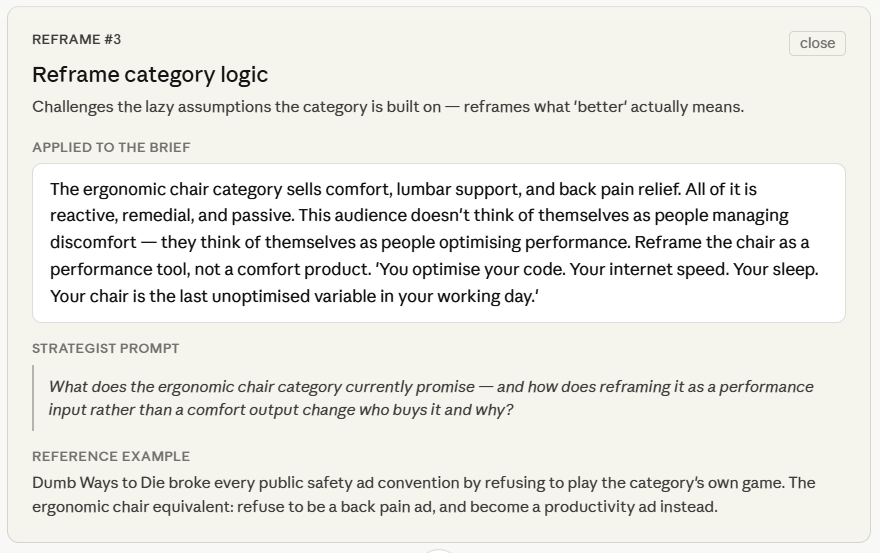
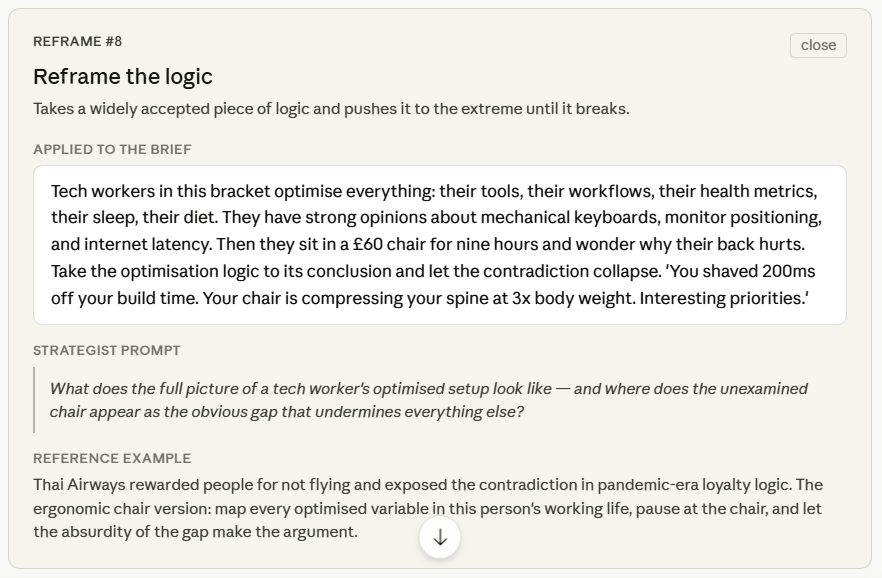
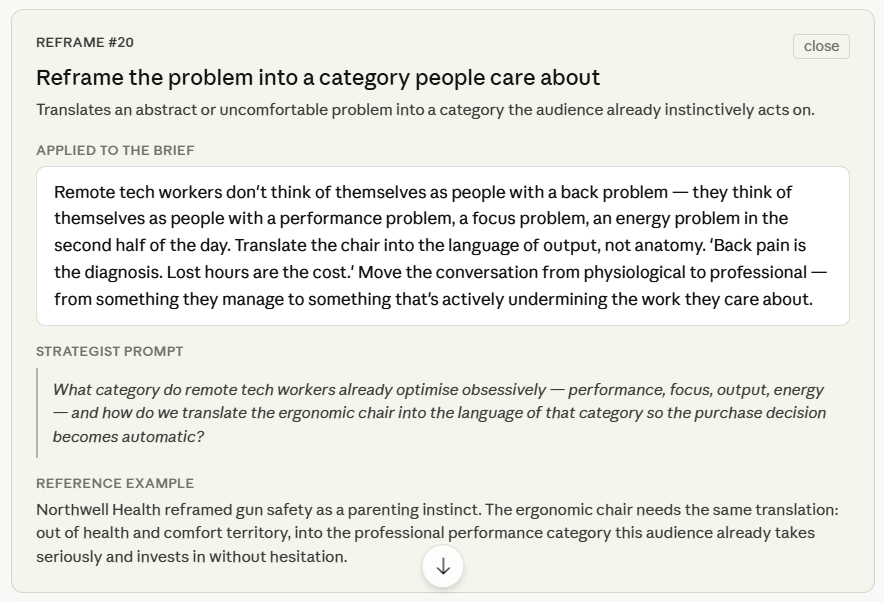
Remote tech workers aged 35–50 don't think of themselves as people with a back problem. They think of themselves as optimisers. Which means the brief isn't really "tell them chairs prevent back pain" — it's "translate the chair into the language of optimisation, and the purchase becomes automatic."
Reframes 3, 8, and 20 all attack that from slightly different angles and are probably the strategic core of any campaign worth running.
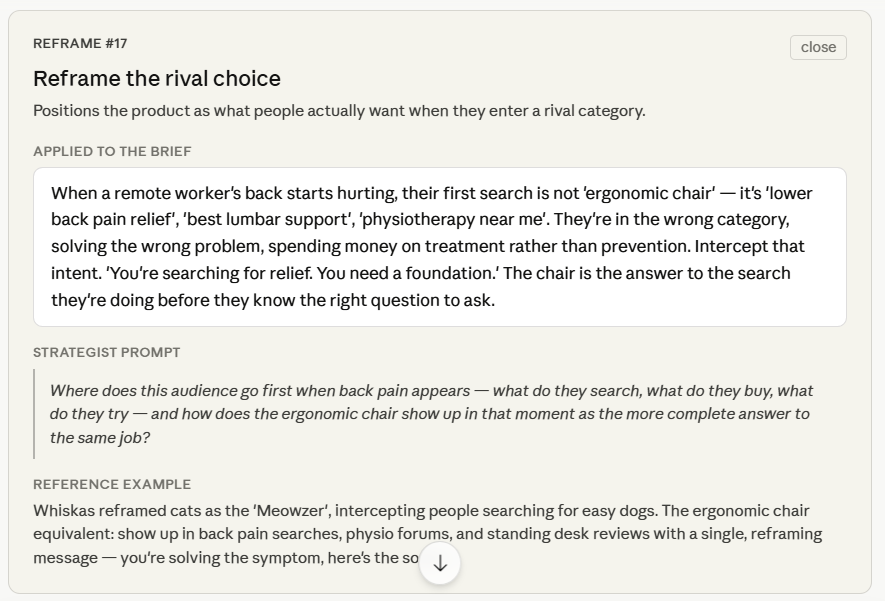
Reframe 17 is the sharpest acquisition play by some distance. This audience is already searching — but they're searching in the wrong category, looking for back pain remedies rather than the chair that makes the remedies unnecessary. Showing up in those searches with a reframing message is both cheap to execute and likely to convert already-motivated people.
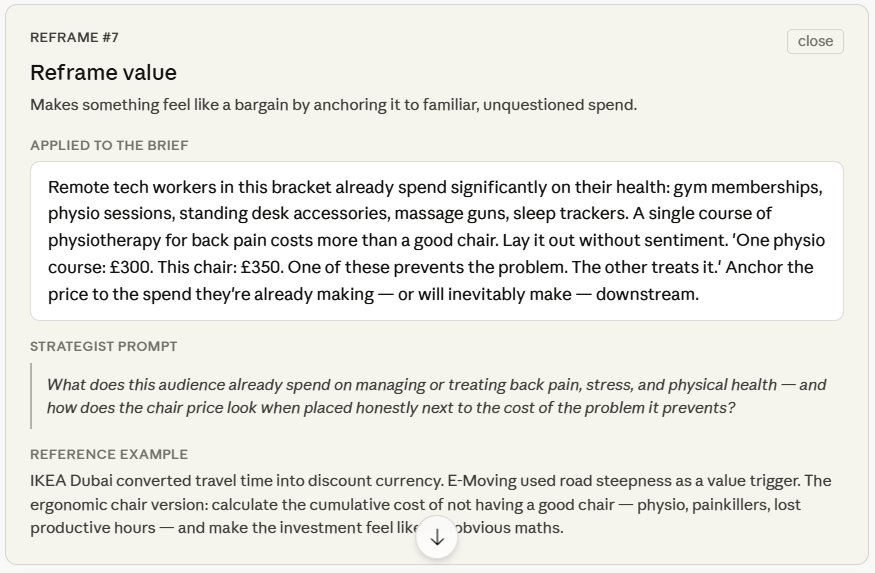
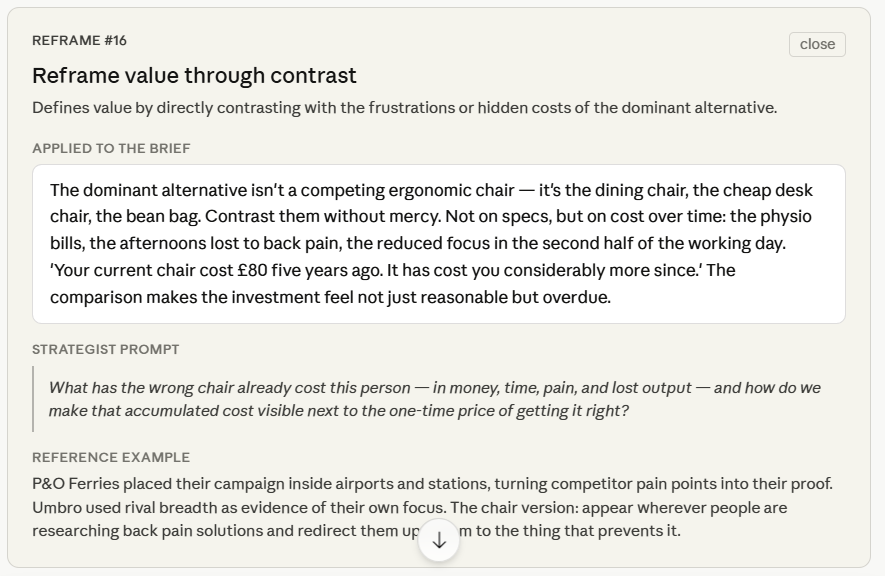
Reframes 7 and 16 are the rational anchors that make the emotional work credible. The physio comparison (#7) is particularly potent because it reframes the price conversation entirely — the chair isn't a luxury spend, it's the cheaper alternative to what happens if you don't buy it. That's a genuinely different way to think about a £400 chair.