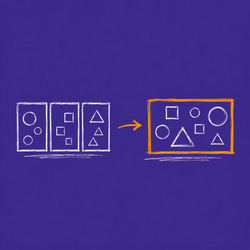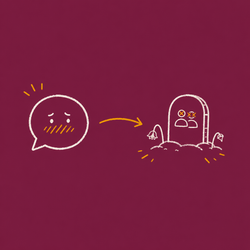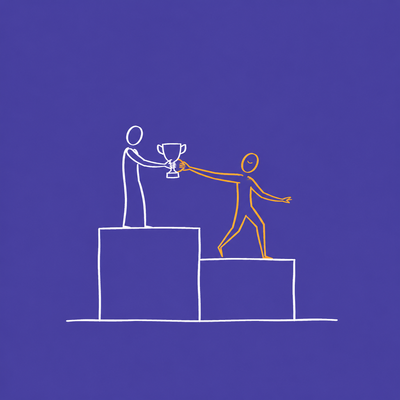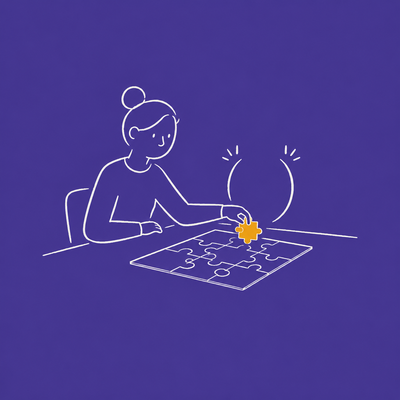


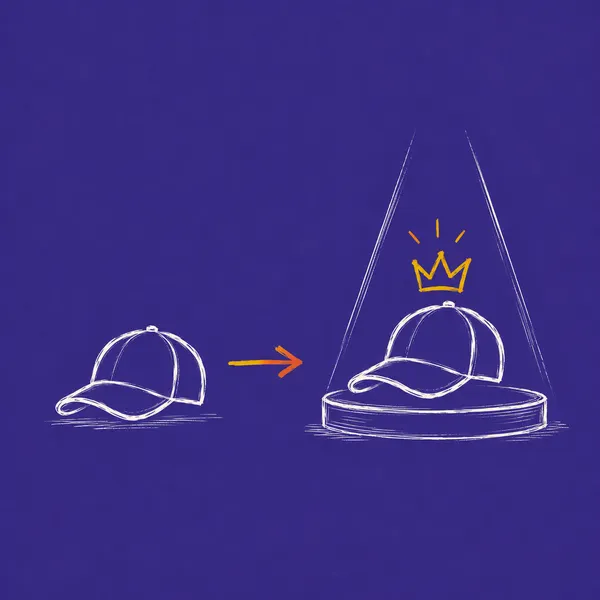
There's a category assumption in almost every brief: that the product occupies a fixed rung on the cultural ladder. Functional products sit below aspirational ones. Budget sits below premium. Practical sits below desirable. Reframe Status doesn't argue for a higher position — it changes the context entirely. Put Payless shoes in a luxury boutique and invite fashion influencers to admire them. Put a municipal bus in a Hollywood action trailer. Serve KFC at a Michelin-starred dinner. The product doesn't change — but the frame around it does, and the brain attends to incongruity. Here are four creative reframe tactics that shift where a brand lives in the cultural imagination.
- Borrow From a High-Status World
- Disguise as a Higher-Status Brand
- Put It in a High-Status Environment
- Elevate the Codes
1. Borrow From a High-Status World
Take the visual language, rituals, or prestige of an elite category — and apply it to your product.
#TrainingFor2032 — Huggies, Ogilvy, 2018
The brief: reframe a swim nappy — one of the least glamorous products in the baby category — as something aspirational. Ogilvy borrowed the entire prestige architecture of elite sport. The campaign positioned babies in the pool not as infants needing waterproof protection but as future Olympians in training, with Michael Phelps — the most decorated swimmer in Olympic history — as the validation. The product didn't change. What changed was the world it was placed in. A functional nappy became training gear. A bath became a lane. Parents became coaches. The status of Olympic sport transferred directly onto the product through sheer commitment to the frame.
Call of Duty's War Photography (2022) displayed in-game screenshots in museum settings as war photojournalism — elevating gameplay to the cultural register of art and history. CP Foods' Go For Launch (2024) sent its chicken to the International Space Station, meeting NASA's food safety standards and making "aerospace quality" the product claim.
2. Disguise as a Higher-Status Brand
Temporarily dress your product in the codes of a more prestigious rival — then let the reveal do the work.
Palessi — Payless, DCX Growth Accelerator, 2018
The brief: challenge the perception that Payless shoes were low-quality and unfashionable. DCX Growth Accelerator opened a fake luxury boutique called "Palessi," stocked it entirely with regular Payless shoes, and invited fashion influencers to shop and review the "designer" collection. The influencers praised the craftsmanship, the aesthetic, the feel. They paid up to $640 for shoes that retailed for under $30. The reveal turned judgement into reconsideration — and the entire fashion industry's reliance on label over product into the punchline.
IKEA's Museum of Romanticism (McCann, 2017) placed IKEA furniture among 18th-century antiques and challenged visitors to spot the IKEA pieces — collapsing the gap between timeless design and budget furniture. KFC France's The Original Master (Sid Lee) served KFC secretly at a fine-dining event hosted by Michelin-starred chef Jean Imbert. Guests loved it. Then came the reveal.
3. Put It in a High-Status Environment
Place the product physically or contextually inside a world it doesn't normally occupy — and let the contrast and the humour create the reappraisal.
Epic Bus — Midttrafik, Falkenberg
The brief: make public bus travel feel exciting and desirable in a market where it was seen as dull, inconvenient, and uncool. Falkenberg created a spoof Hollywood action trailer for the local bus service — full cinematic production, dramatic voiceover, impossible stunts, the full grammar of blockbuster filmmaking applied to a municipal transit route. The bus didn't change. Its context did. The contrast between the mundane subject matter and the elite production codes created exactly the incongruity Orlando Wood identifies as a right-brain attention signal — the brain notices the mismatch and leans in.
Greggs' Gregory & Gregory (Taylor Herring, 2018) opened a fake artisanal pop-up under a luxury-sounding name and served Greggs food to London food snobs who praised it enthusiastically before the reveal. IKEA's Eureka (thjnk) used the tone and visual codes of scientific breakthroughs to announce stackable chairs and soft-close drawers — making the ordinary feel like moments of genius.
4. Elevate the Codes
Adopt the language, aesthetics, and register of a higher-status world — without the disguise, without the stunt.
War Photography — Call of Duty, DAVID Madrid, 2022.
The brief: elevate Call of Duty's cultural positioning beyond gaming into art and history. DAVID Madrid invited real war photographers to shoot inside the game's photorealistic engine — and displayed the resulting images as war photojournalism, in museum settings, treated with the same gravity as Pulitzer-winning work. No stunt. No reveal. Just a sustained adoption of art world codes applied to a video game. It gave players cultural and emotional recognition — and repositioned the franchise in the cultural imagination without changing a single frame of gameplay. See campaign ->
Tommy Hilfiger's The 4 Great American Designers (pre-2000) placed an unknown Hilfiger alongside Calvin Klein on a New York billboard — the visual code of peer-level comparison doing the positioning before anyone knew who Hilfiger was. NHS UK's Speed Donating (2017) reframed organ donation sign-up through the urgency and emotional charge of speed dating — a single code swap that transformed a bureaucratic admin process into a human connection.
The One Rule
Reframe Status works when the product can survive the reframe — when the incongruity creates attention rather than just confusion. Shift the frame. Make sure the product deserves it.
Want Your AI to Think Like This?
These tactics sit inside the BITW Creative Operating System — five specialist Engines, Better Questions, campaign precedents and operating instructions built to work with the AI you already use.