
Three ways to make a purchase pay for what was lost.
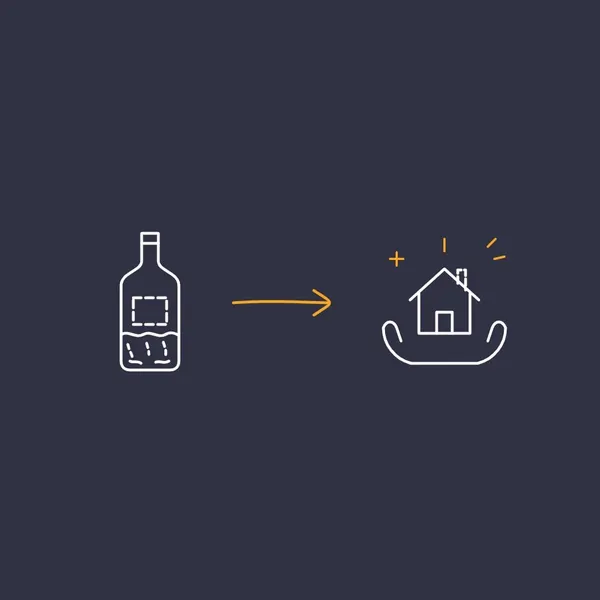
After a flood, fire, or failed harvest, this tactic sells something so the payment funds recovery. The product carries the loss: a burger box with nothing inside, a wine bottle still caked in flood mud, a beer brewed from a struggling farmer's crop. Buyers get something to hold, and the money has a visible route back to the people affected. The campaigns that make this tactic work are made with the people who were hit, and say where every payment goes.
- Sell What's Missing
- Sell the Damage
- Buy from the People Who Were Hit
1. Sell What's Missing
Sell a deliberately empty, missing, or intangible product through a real purchase, so the absence represents the loss and the payment funds recovery.
The Burger That Could Not Be — McDonald's, TBWA Spain, 2022
The 2022 wildfires were among the worst in Spain's recent history, and more than 275,000 hectares of farmland burned. Restaurant customers saw the fires on the news but never felt the loss on their plates. McDonald's Spain bought part of the farmers' failed harvests and added a new menu item: a virtual burger, sold for €1 as packaging with nothing inside, with the money going to the relief effort. A film directed by Rodrigo Cortés showed a farming family hearing that McDonald's would buy the harvest the fire had taken. Customers paid for a burger and opened an empty box, the same thing the fire had left on the farms.
Still Open — JCDecaux, DAVID Madrid, 2025
Months after the October 2024 floods in Valencia, many small shops were still closed, and the story had dropped from the news. JCDecaux sells visibility, so it gave 19 of those shops its Madrid Metro sites. Each poster showed an owner standing in front of their closed shop, with a QR code that let commuters pay for the products the shop used to sell, so it could restock and reopen. Other businesses could join through the campaign site. Commuters in Madrid were buying from shops in another city that had nothing on their shelves.