


Genre is a shortcut. Show people corseted guests at a candlelit dinner or a girl alone in a dark house with creaking floorboards, and they already know the rules, the stakes and roughly how it ends. That is why genre parody works. The audience brings the expectations; the brand only has to bend one. A taboo becomes a costume drama. A parliamentary vote becomes a horror premiere. A biscuit shortage becomes the end of civilisation. Here are seven tactics that borrow a genre’s grammar and slip the brand in before the credits roll.
- Period Drama for Taboos
- Horror for Real Threats
- Action Movies for Everyday Products
- Crime Drama for Curiosity
- Reality TV for Revelation
- Music for Low-Interest Categories
- Melodrama for Short Formats
1. Period Drama for Taboos
Stage a taboo inside the most buttoned-up genre available, so plain talk breaks the decorum, and the audience laughs at the silence.
No More Period Dramas — Here We Flo · Hatch · 2022
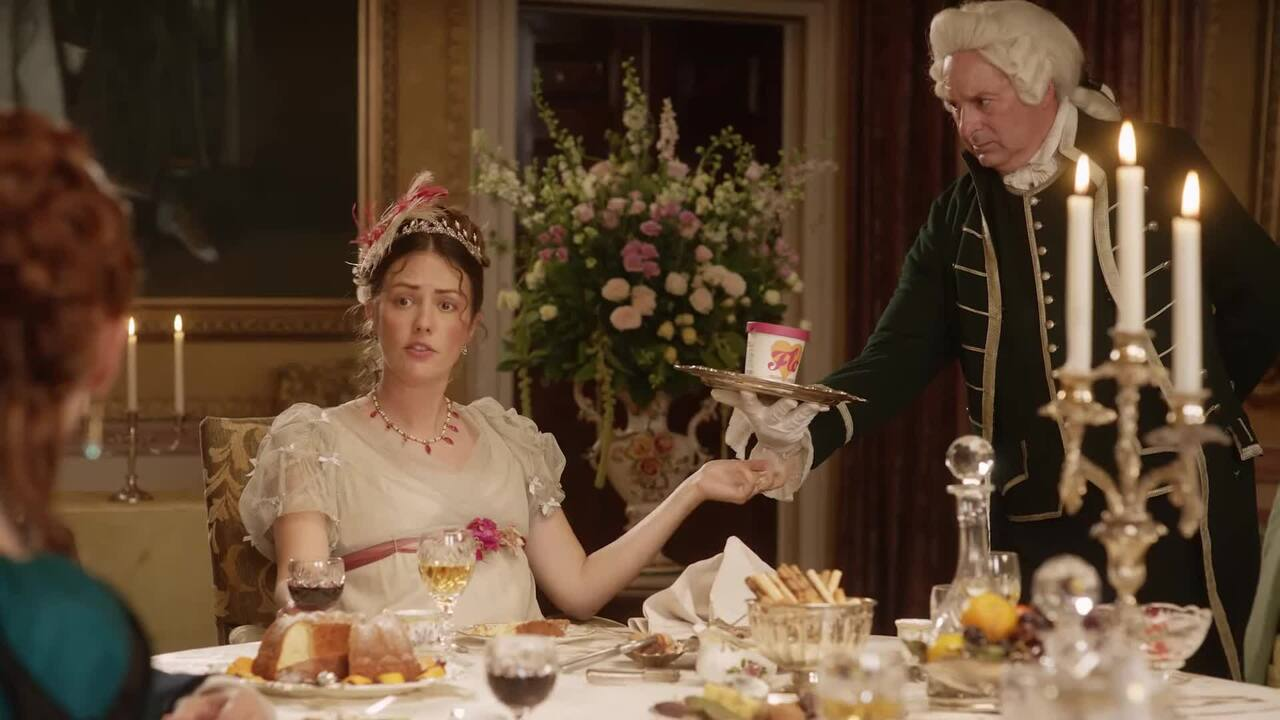
Here We Flo entered a period care market dominated by traditional feminine hygiene brands with minimal awareness and poor retail distribution. The campaign set ladies at a formal period-drama dinner table, where they discussed their periods with complete candour while the men recoiled. The idea was the comic collision between the world of Downton Abbey and the subject matter. Purchase consideration more than doubled for those exposed to the campaign. Website visits increased by over 1,000% year on year during the campaign.
The Red Plague by PERIOD (TBWA\Chiat\Day LA, 2021) used the same costume codes, with characters whispering about “menstrual linens”, then had actors, comedians and creators post period-poverty facts in 17th- to 19th-century dress. The older the setting, the more dated the taboo looks.
2. Horror for Real Threats
Package a real issue as a horror release, so people who avoid the subject press play for the genre.
Stop The Horror — Go Gentle Australia · Cummins&Partners Sydney · 2017
End-of-life stories are hard to watch. Most people look away, and younger voters did not see terminal suffering as their issue. In 2017, with Victoria about to vote on a Voluntary Assisted Dying law, Go Gentle Australia needed MPs to feel public support. Cummins&Partners seeded a “new horror film” by director Justin Kurzel as a Facebook premiere. It was the true last days of Greg Sims, a terminally ill man.
The film played in a bespoke player with a Stop the Horror button. Pressing it revealed that Greg could not stop his, and gave viewers their local MP’s contact details. The genre bought the attention; its escape button became the call to action. Average watch time was 3 minutes 15 seconds, and the law passed.
Sunshine by Queensland Health (CHEP Network Brisbane, 2023) cast the sun as a killer stalking four friends on a weekend away, with five sun-safe behaviours as the way to survive. Stay Down by the Social Mobility Foundation (Creature London, 2022) made workplace classism the sinister presence in the office.