

Politicians are skilled at not noticing things. But what does make them sit up and pay attention is the type of noise that makes ignoring something look worse than acting. The best campaigns in this category don't beg. They create a situation in which inaction becomes the more embarrassing option. Here are nine tactics from the Emotion Engine that make politicians the story, whether they like it or not.
Tactics in this article:
- Expose the Perk
- The Preemptive Thank You
- Make Inaction Speak
- Give the Problem a Voice
- The Absurd Alternative
- The Loophole Stunt
- Children as Messengers
- International Witness
- Build the Solution They Won't
1. Expose the Perk
Name the privilege publicly — and make refusing to act an admission of guilt.
Fly With Us — Flybondi, Grey, 2019
Flybondi needed to launch Argentina's first low-cost airline while the 2019 national budget was being debated in Congress. Each of Argentina's 329 senators and members of Congress could legally claim 20 plane tickets per month, and many used expensive airlines or sold the entitlement back, pocketing the difference. Flybondi ran a social media and billboard campaign suggesting that flying with them would save a large part of the parliamentary budget. The timing made ignoring it structurally difficult: to stay silent was to be seen as actively choosing to spend more. The campaign achieved brand awareness for a new airline and generated positive public opinion by making the brand's commercial interest and the public interest feel like the same thing.
Miles for the People — Reclame Aqui, Grey, 2019. Brazil's 600 congresspeople fly to Brasília weekly — 5,000 tickets per month, paid for by taxpayers who rarely fly. Reclame Aqui plastered each flight's accrued air miles onto social media and encouraged citizens to demand them back. The project reached Congress, prompted a change in the law, and returned miles to ordinary citizens — including some used for life-saving surgery.
2. The Preemptive Thank You
Thank the politician for the action they haven't taken yet — and make the awkwardness do the work.
Thanks, Chris — MindTheGap, Colenso BBDO, 2023
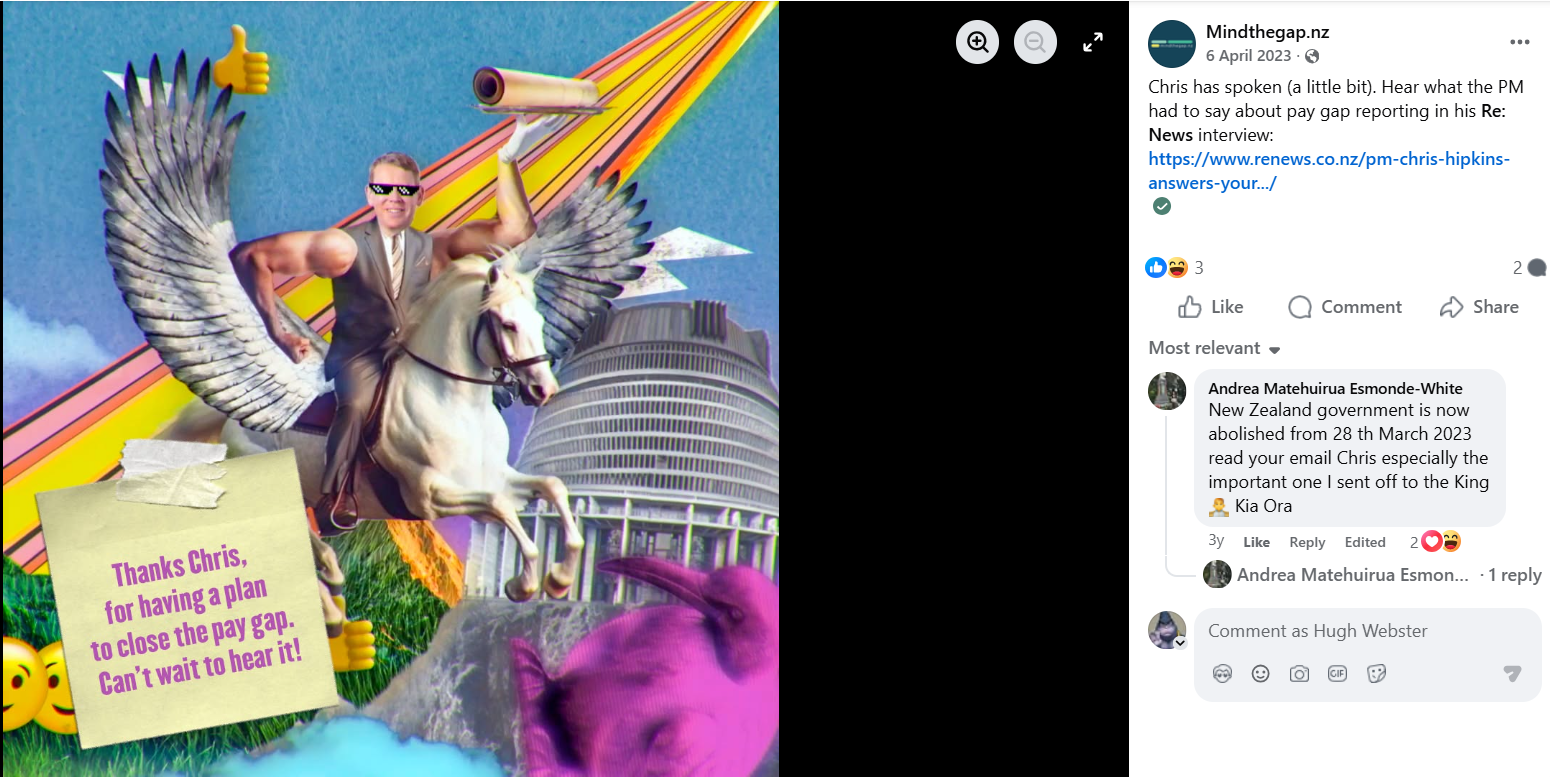
New Zealand's gender pay gap remained stubbornly in place fifty years after the Equal Pay Act, with men earning on average 10% more than women, according to 2022 government data. Advocacy group MindTheGap, partnering with Colenso BBDO, publicly and preemptively thanked Prime Minister Chris Hipkins for supporting a mandatory gender pay gap reporting bill — before he'd done anything of the sort. Over a week, the campaign ran a 15-second online video, a plane banner reading "Thanks Chris Hipkins from MindTheGap.nz," OOH executions, and a choir singing their thanks outside New Zealand Parliament. The social logic was airtight: there's nothing more awkward than being thanked for something you haven't done yet, especially in public. The New Zealand Government subsequently announced plans to introduce mandatory pay gap reporting. See campaign ->
3. Make Inaction Speak
Remove content to represent the content politicians are failing to create — and let the void land harder than any argument.
The Blank Edition — An Nahar Newspaper, Impact BBDO, 2019
Lebanese citizens had grown tired of politicians whose excuses filled every newspaper column while the country stalled. An Nahar, an independently owned newspaper, recognised that in a media landscape controlled by political parties, the act of printing nothing was itself a radical editorial statement. Impact BBDO helped them print an entirely blank newspaper — a physical embodiment of what politicians were doing. Once public interest had built, the paper called on the nation to fill the pages with the future they demanded.
4. Give the Problem a Voice
Make the neglected thing speak directly to the people who are supposed to fix it.
The Tweeting Pothole — Medcom, Ogilvy, 2015
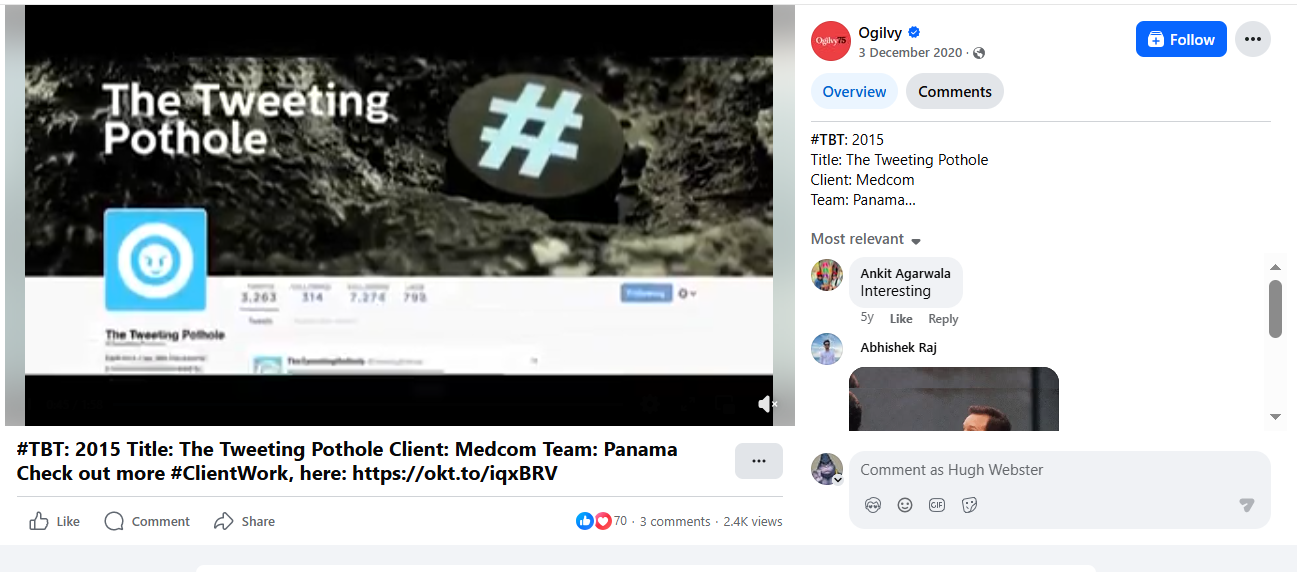
Panama City's damaged roads were a daily source of frustration for drivers, but authorities showed little urgency to act. Ogilvy installed devices inside potholes that tweeted a complaint message directly to the Department of Public Works' Twitter account every time a car ran over them. The handle @ElHuecoTwitero gained its own segment on a Panamanian news programme, broadcasting the complaints publicly on a platform that already drove political news coverage. The problem was given a persistent, undeniable voice that generated real-time evidence of the scale of the issue.
5. The Absurd Alternative
Invent a ridiculous solution to the problem politicians have ignored — and let the absurdity of it embarrass them into action.
Catapult Air — Sylt Marketing, Philipp und Keuntje, 2019
The island of Sylt in northern Germany had endured decades of bottlenecked rail access — nearly 5,000 daily commuters on a single-tracked railroad, with 150 trip cancellations in two months. Protests had been ignored for years. Sylt Marketing and Philipp und Keuntje responded by inventing Catapult Air: a fictional airline that would fling passengers to the island by catapult, faster and more reliably than the rail service. A two-minute film, featuring Sylt residents as airline staff and passengers, was released during the summer news slump, timed deliberately to reach people thinking about their own holiday travel. The film conquered social media and every major German news outlet organically. Four months after release, politicians approved the railroad expansion with a budget of €221 million.