
Reframe Meaning

Five ways to show how language can be the campaign.
Reframe Meaning

The best reframe campaigns don't invent language. They find a word, a phrase or an acronym that already exists inside the culture — loaded, familiar, often damaging — and change what it means. That shift can be as small as a different inflection or as large as a dictionary edit. Here are five advertising reframe tactics that show how language becomes the campaign.

  1. Change the Dictionary Definition to Change the Culture
  2. Flip a Gendered Phrase to Expose the Prejudice Inside It
  3. Reclaim a Phrase and Redefine It as a Rallying Cry
  4. Flip a Negative Phrase Into a Brand Positive
  5. Hijack a Cultural Occasion and Reframe Its Meaning

1. Change the Dictionary Definition to Change the Culture

Don't just challenge what a word means in conversation — change what it means on record. Make the reframe official.

Pilota: Woman Driver — Mitsubishi, Tech & Soul, 2024
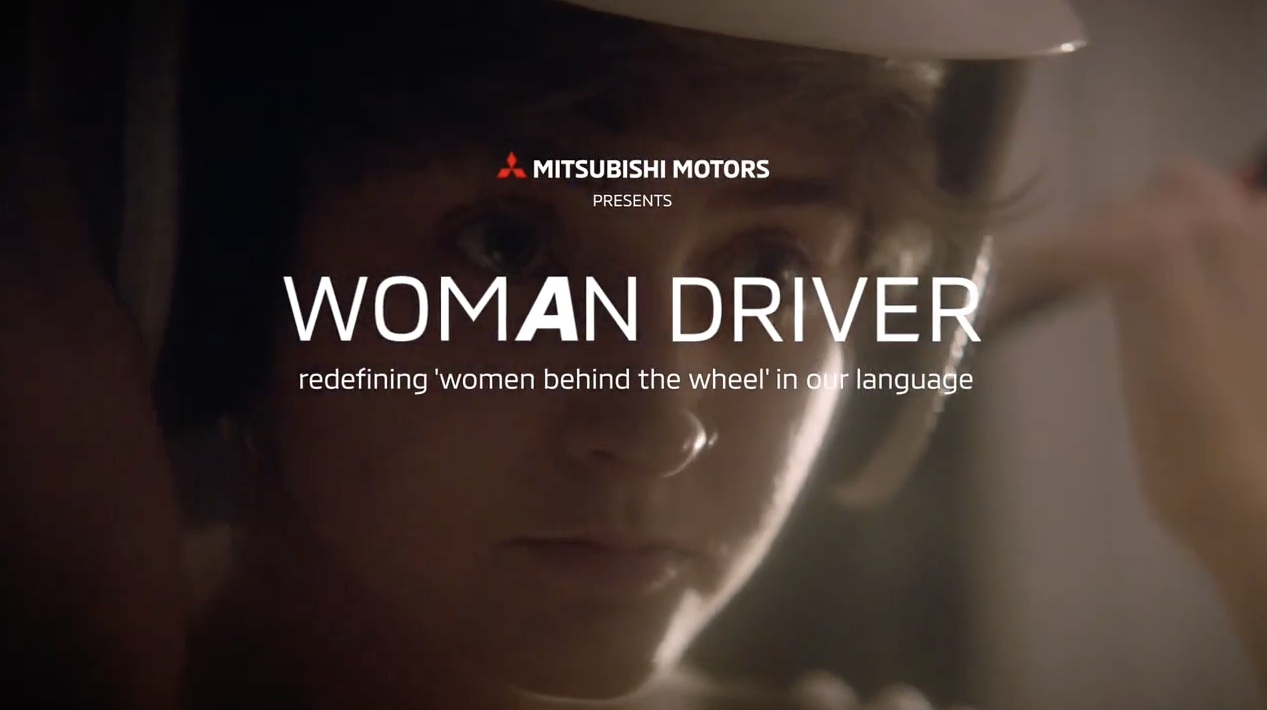
In Brazilian Portuguese, masculine words end in O and feminine words end in A. 'Piloto' means a driver or pilot. 'Pilota' — the feminine form — had previously been defined in the Michaelis dictionary as meaning defeat and loss. Mitsubishi Motors worked to change that. The campaign mobilised thousands on social media and succeeded in having the definition of 'pilota' officially updated to refer to women who drive vehicles in automotive competitions, pilot aircraft or boats, and lead in various fields. The change was not just semantic. It removed a definition that had placed failure at the linguistic centre of female achievement in a category the brand operates in.
2. Flip a Gendered Phrase to Expose the Prejudice Inside It

Take the patriarchal expression at face value — then return it, reversed, to the people who said it. The inversion does the argument.

Sister of Man — An-Nahar Newspaper, Grey UAE, 2019

In Arabic, the ultimate compliment given to a successful woman is "Sister of Man" — crediting her achievement not to her own ability but to a masculine quality she supposedly shares. An-Nahar decided to return the compliment. On Women's Day, the newspaper challenged the phrase live on air, directing "Brother of Woman" at basketball legends and TV personalities, igniting a public debate about a form of praise that had gone unexamined for decades. Celebrities, politicians and successful women joined the movement. By turning their newspaper into a protest poster, An-Nahar made the inversion itself the news. See campaign ->

UN Women Pakistan's #BeatMe (BBDO, 2016) invited men to beat women — at the things they excelled at — featuring a singer, a mountain climber, a chess champion and athletes, reframing a phrase associated with violence into a direct challenge that proved its own point. Buscopan Venus's Battle Cries (McCann, 2024) took "Man up", "Fight like a man" and "Take it like a man" and subverted each one to celebrate the endurance of Filipino women — before making the point that enduring pain was no longer something they needed to do. When Will She Be Right? (The Monkeys, 2021) flipped Australia's familiar "she'll be right" national optimism into a demand for gender equality, using a known cultural phrase to expose the complacency hiding inside it. The inversion is the argument. Once heard in reverse, the original never lands the same way again.


3. Reclaim a Phrase and Redefine It as a Rallying Cry

Find the expression that has been weaponised against your audience — and give it back to them with a completely different meaning attached.

#LikeAGirl — Always, Leo Burnett, 2014

"Like a girl" had long functioned as an insult — a shorthand for weakness, incompetence and limitation that most people used without examining what they were actually saying. Always and Leo Burnett exposed that damage by showing how children and teenagers interpreted the phrase, using a before-and-after format that asked the audience to confront their own unthinking use of it. The campaign went viral, sparked a global conversation about gender stereotypes and redefined the phrase as a symbol of strength. It remains one of the most cited examples of language-led brand activism, precisely because the reframe was the entire campaign rather than a line on a poster. See campaign ->

OkCupid's DTF (Wieden+Kennedy, 2018) operated on identical logic in a very different register. "Down to F---" was a phrase that reduced dating to a single transactional intent. OkCupid reframed the F as anything a user's profile suggested they actually cared about — "Down to Fire Up the Kiln", "Down to Farmers Market", "Down to Four Twenty" — turning a phrase associated with hook-up culture into a celebration of dating with depth and personality. In both cases, the phrase already existed, already had cultural weight, and already had a problem embedded in it. The brand that reclaims it doesn't need to explain the argument. The reframe makes it.


4. Flip a Negative Phrase Into a Brand Positive

Find the expression of frustration or dismissal that already exists in everyday language — and reverse its emotional charge by making the brand the reason it now means something good.

Not every reframe carries social stakes. Sometimes the most effective move is simply to find a phrase people already say when things go wrong and make it the thing they say when things go right. The association shift is the campaign.

Ahhh, Nuts — Planters, BBDO MW, 2024

"Ahhh, nuts" is what people say when something goes badly. Planters and BBDO MW made it what people say when something goes well — running four 15-second spots that took frustratingly negative moments and turned them around through timely Planters interventions. The campaign's logic was simple and self-reinforcing: every time someone says the phrase in real life after seeing the campaign, the brand is present. The negative exclamation becomes a positive one. The product isn't just the resolution in the ad — it's the thing that rewires the phrase in everyday use.

Smol's Sick of Plastic (Mother London, 2023) worked the same reframe in a more visceral register — building a campaign around the double meaning of "sick", using a washing machine that literally vomits plastic containers to dramatise what 70 million pieces of annual UK laundry plastic waste look like. "Sick of plastic" becomes both an emotional statement and a physical one. The phrase carries the disgust the brand needs the audience to feel. When the negative phrase already contains the right emotion, the reframe is already half-written.


5. Hijack a Cultural Occasion and Reframe Its Meaning

Take a moment the culture has already agreed to celebrate — then use it to expose the contradiction hiding underneath the celebration.

#UnhappyMothersDay — Pregnant Then Screwed, Wonderhood Studios, 2022

Mother's Day cards say thank you. The Pregnant Then Screwed campaign turned them into an indictment. Working with Wonderhood Studios, the advocacy group created satirical Mother's Day cards that detailed precisely how childcare costs limit women's careers, force them out of the workplace and penalise them for becoming the people the day was created to celebrate. The campaign used the occasion's own visual language — the card format, the familiar seasonal warmth — as the container for a message that directly contradicted it. The "unhappy" in the campaign title wasn't irony for its own sake. It was the point.

The cultural occasion is doing the targeting. Everyone already knows what Mother's Day is supposed to feel like — which is exactly what makes the reframe land.


The One Rule

Every campaign in this article found a piece of language the culture had already agreed on — an insult, a compliment, a definition, an acronym, a holiday, an exclamation — and changed what it meant. Find the phrase. Change who owns it.


Want Your AI to Think This Way?

These tactics come from the Reframe Anything Engine, one of a growing library of Thinking Engines built to make your AI more creative. Upload it to ChatGPT, Claude or Gemini and give your AI the campaign logic it needs to explore unexpected territories, reframe briefs, generate stronger ideas and pressure-test the ones worth pursuing.

Subscribe to Big Ideas That Work for free tools and updates.

Join today, and we’ll send you the awesome Reframe Value tool.
Great! Check your inbox and click the link to confirm your subscription.
Error! Please enter a valid email address!