

Many brands spend their lifetime trying to build recognition. The ones with genuine distinctive assets have a different problem. The asset already exists. People already know it. The brief isn't to create awareness. It's about continuing to find ways to access the consumer's mental availability. Here are five creative tactics from the Strategy Engine that make existing brand assets work harder and travel further.
- Visual Identity Rebuild
- Strategic Asset Absence
- Natural World Anchoring
- Interactive Brand Play
- Cultural Integration
1. Visual Identity Rebuild
Take the most recognisable part of the brand and stretch it into new formats, surfaces, and frames while leaving the recognition intact.
Kellogg's "The OG" — Kellogg's, 2025
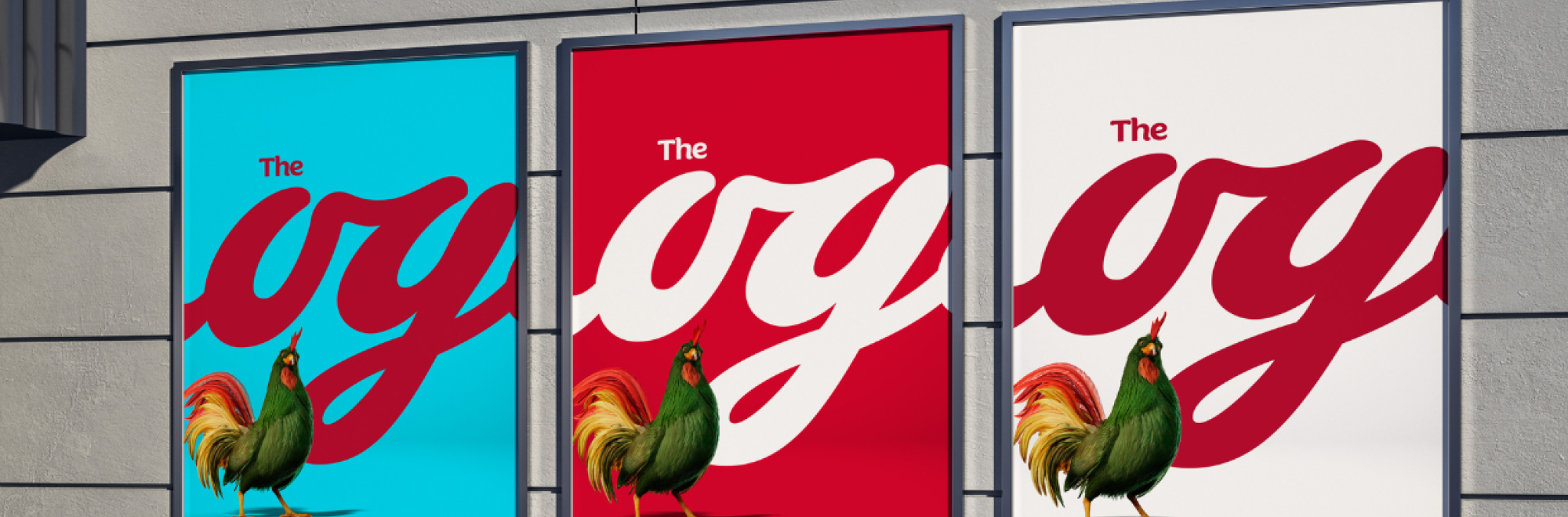
The Corn Flakes brand had been on breakfast tables for over a century. Rather than celebrate that heritage with a retrospective, Kellogg's found a specific visual truth hiding within the wordmark and made it the campaign: zooming in on "og" — the last two letters of "Kellogg's" — across OOH, playing the brand's age as both a punchline and a flex. The combination of heritage and wit made the brand feel current and confident without changing a single thing about what it actually was.
McDonald's "Fancy a McDonald's?" (2023) used eyebrow raises as a visual proxy for the Golden Arches — a human gesture that mirrors the brand's geometry, making the visual code physical and portable. KFC's Colonel BOLO Time (2024) transformed the Colonel's necktie into a giant bolo-style clock, turning a silhouette detail into a campaign mechanic. KitKat's "Have a… KitKat" (2024) built an interactive OOH billboard from the brand's tagline alone — negative space where the product name should be, the gap itself doing the work. In each case the creative brief was already inside the asset. The job was to find it.,
2. Strategic Asset Absence
Remove the thing the brand is most known for — and prove the recognition runs deeper than the symbol.
McDonald's "Minimalist Billboards" — McDonald's, TBWA\Paris, 2019
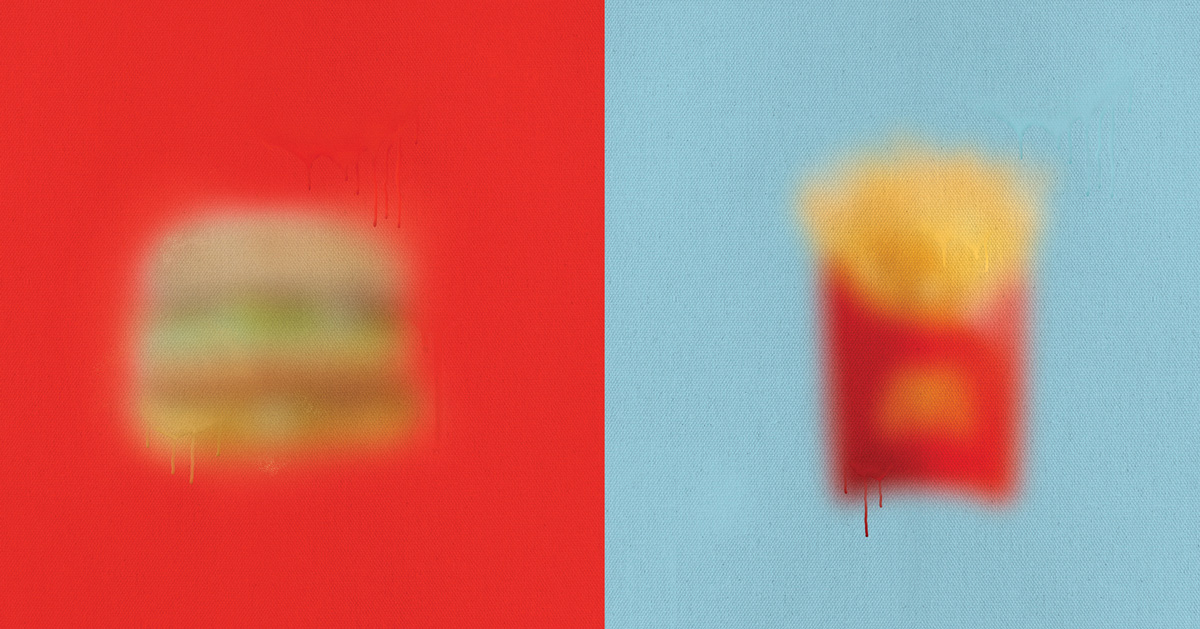
The brief was to prove McDonald's visual shorthand had reached a point where the logo was redundant. Extreme close-ups of product — bun, cheese, lettuce, sauce — appeared across outdoor with no logo, no tagline, no brand name. Just the colour palette and the product architecture, both of which had become brand code through decades of repetition. The visual shorthand was so strong the logo was surplus. The campaign didn't just earn attention — it demonstrated, in public, that the brand had achieved the rarest thing in advertising: recognition without identification.
Coca-Cola's Remove Labels (FP7/DXB, 2015) stripped the logo from cans during Ramadan — "Labels are for cans, not people" — turning brand absence into social message while proving the shape and colour carried the brand independently. Heinz's all-red Ketchup Puzzle (Rethink Canada, 2020) released a solid-red jigsaw puzzle with no logo, no label — colour alone carrying the brand identity. Lacoste's Save Our Species (BETC, 2018) replaced the iconic crocodile with endangered animals on limited-edition polos, substituting the brand's most sacred asset for impact.
3. Natural World Anchoring
Find the brand's shape or colour occurring in the wild — and claim it.
Guinness "#LooksLikeGuinness" — Guinness, AMV BBDO, 2021
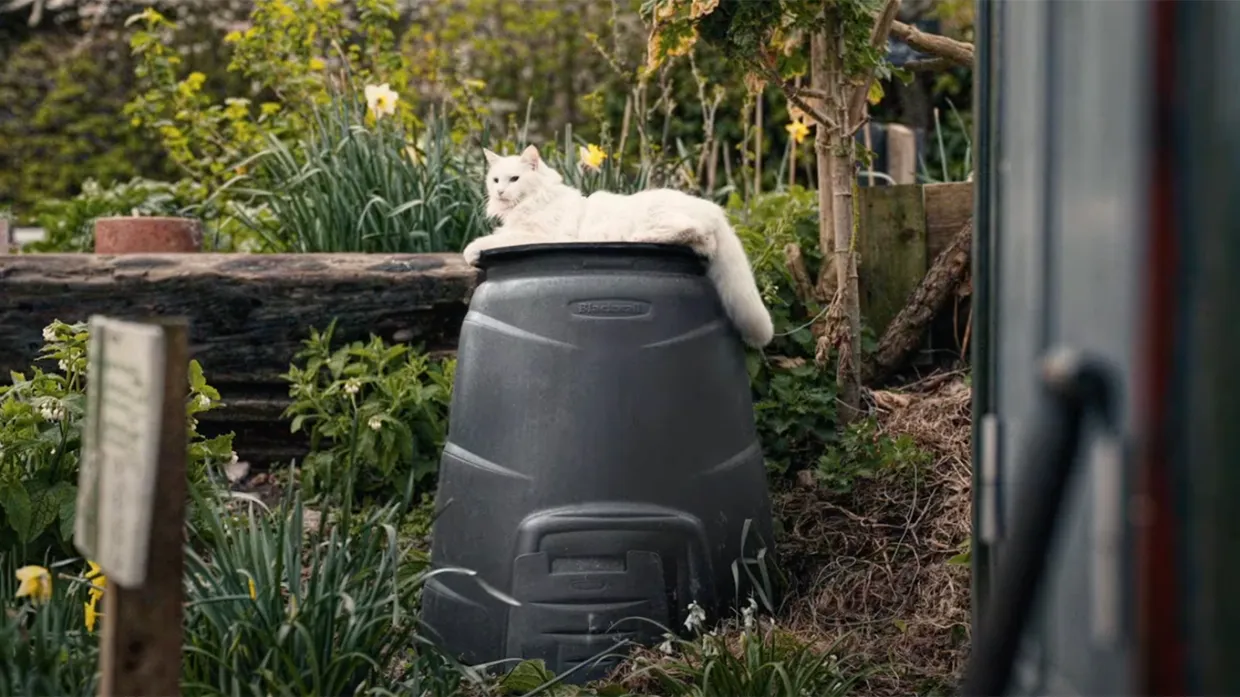
Launched during the pandemic when pubs were closed and pints were absent, the campaign highlighted everyday objects — snow-covered bins, socks on a line, shadows on walls — that accidentally resembled a Guinness pint. The campaign didn't manufacture the resemblance. It curated what was already out there in the world, using longing and recognition together to keep the brand present in people's consciousness. The world had been seeing Guinness in ordinary things for years. The campaign just gave people permission to say so.
Doritos' Triangle Tracker (Goodby Silverstein & Partners, 2023) invited fans to find triangles in everyday life and share them via Snapchat — turning the real world into a scavenger hunt for the brand's shape and cementing the triangle as brand shorthand. Taco Bell's Taco Moon (Deutsch LA, 2021) used a moon phase that resembled a taco to promote offers, linking a natural celestial rhythm to the product's shape. McDonald's "Follow the Arches" (Cossette, 2018) used only cropped fragments of the Golden Arches as directional signage in outdoor ads — navigation became branding because the fragments were already enough.
4. Interactive Brand Play
Turn the asset into something people can play with — and ownership follows participation.
Heinz "Draw Ketchup" — Heinz, Rethink Canada, 2021
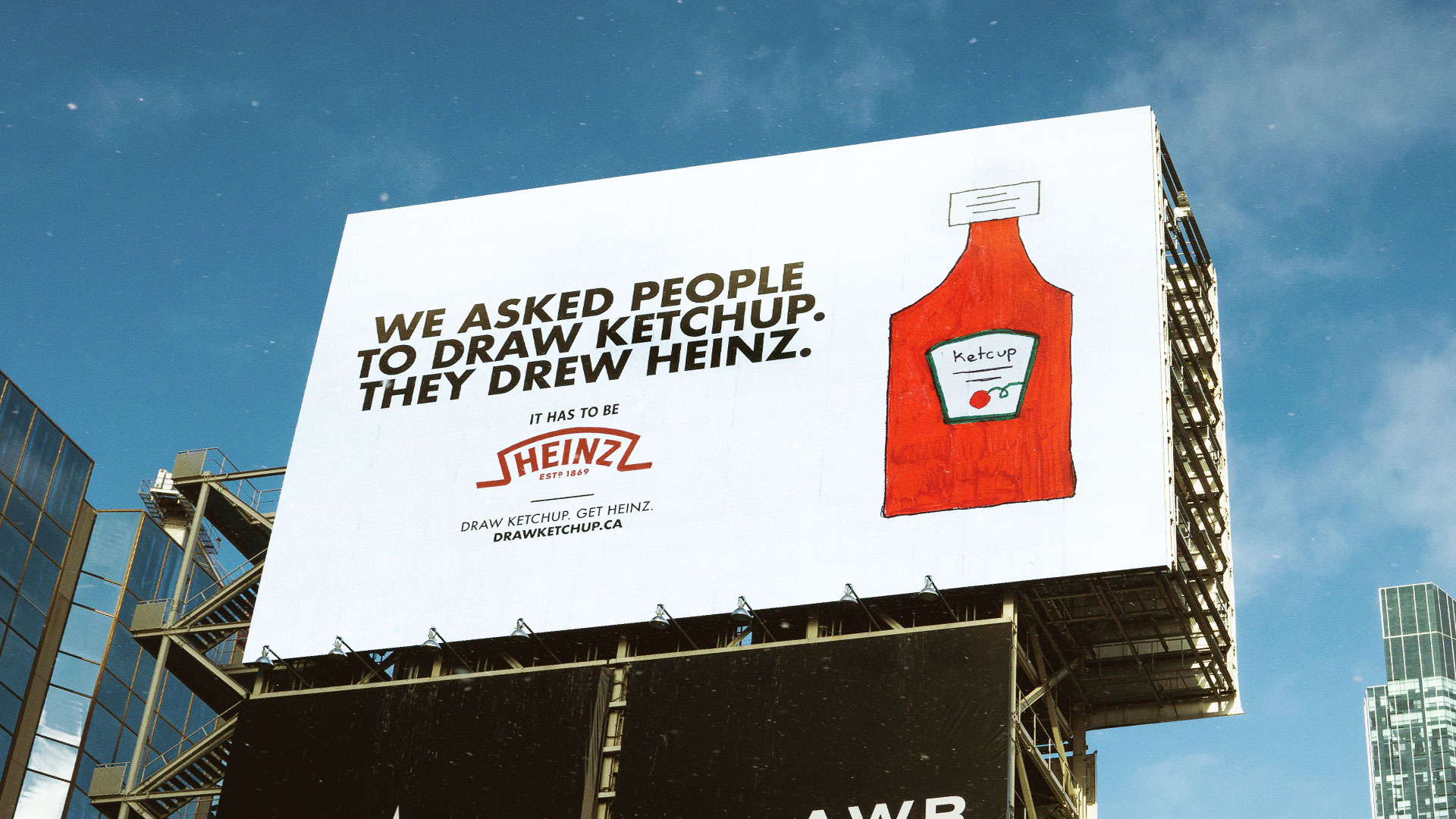
Heinz asked people around the world to draw "ketchup" from memory — no brand name, no prompting. Most drew Heinz: the shape of the bottle, the label, the colour. The campaign turned creative participation into the most credible brand dominance study ever conducted, because the evidence came from the audience rather than from the brand. Visual distinctiveness became an automatic choice, demonstrated publicly through a simple act of drawing.
Meow Mix's Meow-A-Thon (Publicis, 2024) turned a classic jingle into a 12-hour online endurance challenge — sonic memory reframed as entertainment, the asset used as an event rather than a line. Goldfish's "The Snack That Jingles Back" (Saatchi & Saatchi NY, 2022) brought back a 20-year-old jingle through TikTok challenges and remix contests, nostalgia becoming virality through participation. Skittles' Colouring Book (DDB, 2020) released a grey, brand-free pack during Pride and invited fans to create their own rainbow versions — absence invited creativity, and the audience became the campaign.
5. Cultural Integration
Translate the asset into how people actually speak, live, and celebrate — and the brand earns affection, not just recognition.
Share A Coke — Coca-Cola, Wieden+Kennedy, 2011-2025
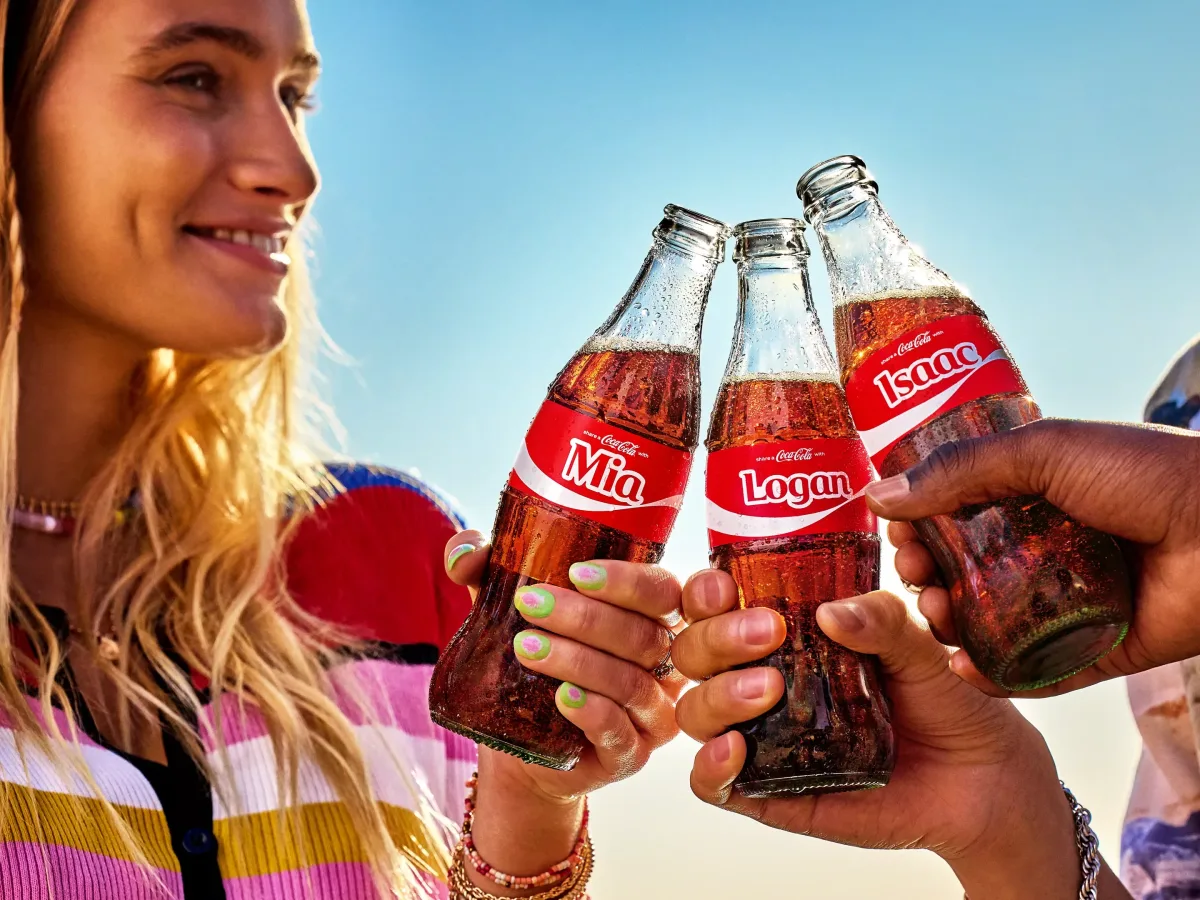
Rather than telling people how to feel about Coke, the long-running campaign listened to how people were already talking about each other — and put those words on the can. Local nicknames ("bro," "ma," "boss," "bestie" and their regional equivalents across different markets) replaced the brand name on packaging, adapting to how people actually speak. The brand didn't change. The expression of it did — and that flexibility made the asset feel locally relevant at a global scale.
Snickers' Hungerithm (Clemenger BBDO, 2016) adjusted product pricing in real time based on national mood — emotional tone became part of the brand, integrating into national behaviour rather than just national awareness. McDonald's "Golden Arches for M" (TBWA\Argentina, 2018) flipped one side of the arches into a "W" for International Women's Day — a minimal shift with maximum cultural gesture. Skittles' Give the Rainbow (DDB, 2016–present) removed the rainbow from packaging during Pride to let the community own it.
The One Rule
A distinctive asset earns its keep if it can survive being stretched. Does it still work when it has been cropped, removed, remixed, recoloured, or found in a snowdrift? Invest in the asset first. Then find what else it can do.
Want Your AI to Think This Way?
These tactics come from the Strategy Engine, one of a growing library of Thinking Engines built to make your AI more creative. Upload it to ChatGPT, Claude or Gemini and give your AI the campaign logic it needs to explore unexpected territories, reframe briefs, generate stronger ideas and pressure-test the ones worth pursuing.