

Brand loyalty is the goal every marketing strategy claims to be working toward. Consistent purchase, emotional attachment, the whole long-term relationship. The campaigns in this article went somewhere more interesting: disloyalty is entertaining, guilt is a mechanic, and an effective way to get someone to try something new is to give them permission to cheat. Nobody has ever queued for a loyalty card. Plenty of people have checked into a motel in secret. No judgement.
Here are seven creative tactics from the Emotion Engine that make disloyalty the whole idea.
- Make Disloyalty the Product Experience
- Imply the Other Side Is Already Cheating
- Give Rival Employees a Backdoor
- Position the Product as the Side Piece
- Protect Fans From Someone Else's Disloyalty
- Use the Rival's Territory Against Them
- Accept Their Loyalty Points and Declare Amnesty
1. Make Disloyalty the Product Experience
Build the physical and emotional infrastructure of an affair — and put your new product inside it.
Motel Burger King — Burger King, Colenso BBDO, 2015
New Zealanders loved the Whopper so much that asking them to try a new TenderCrisp Chicken Burger felt like a genuine act of infidelity. Colenso's answer was to lean into it completely. A real motel was repurposed into Motel Burger King — a venue where devoted Whopper fans could discreetly sample the new chicken burger in private booths, as though conducting an affair. The activation gave the product trial a narrative, a location and a reason to talk about it. Over 850 guests checked in, and Burger King's Facebook engagement rate increased by 587%.
2. Imply the Other Side Is Already Cheating
Use the idea of private disloyalty to make a competitive claim — and let the audience complete the accusation themselves.
McMansions — Burger King, David, 2018
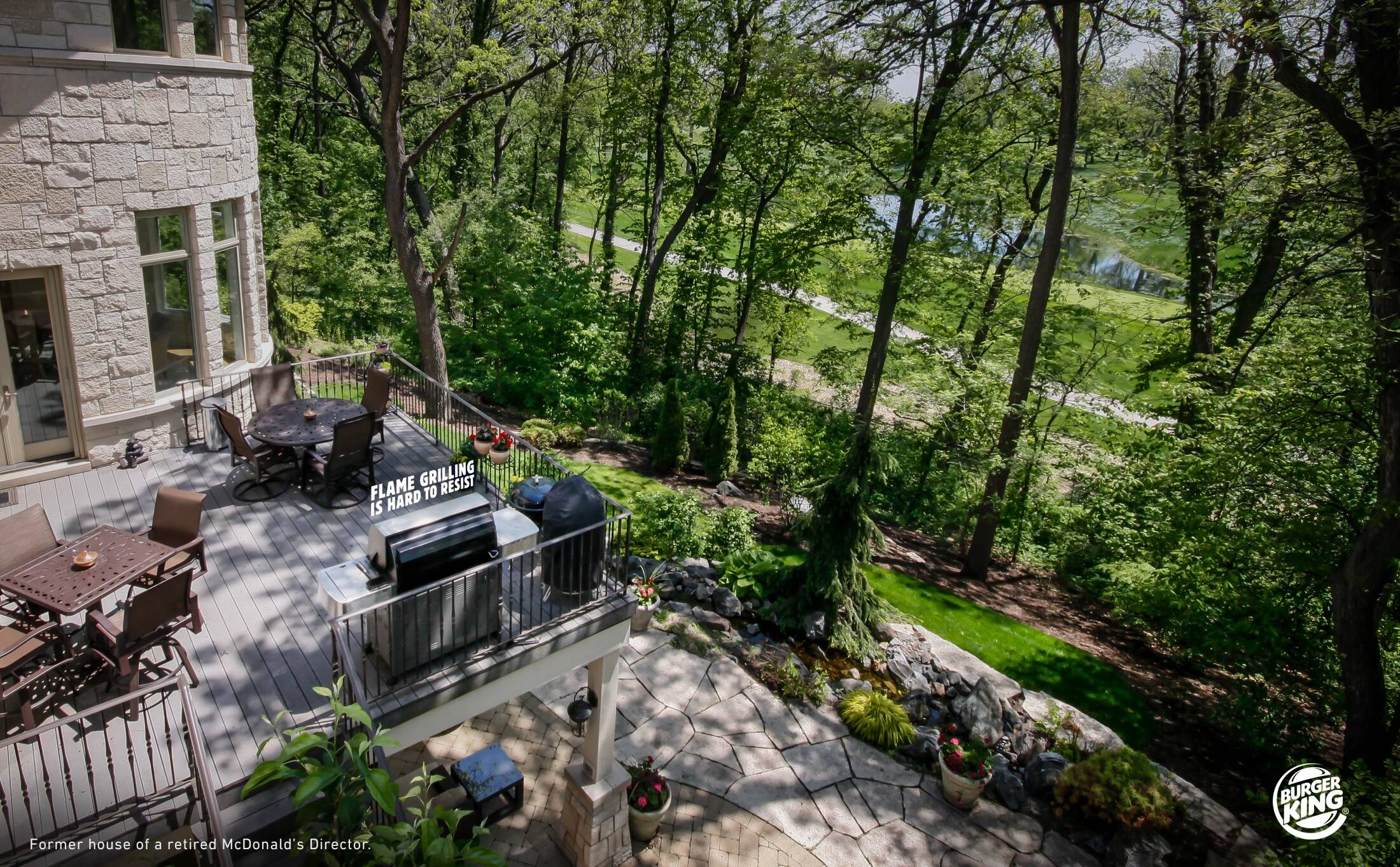
Burger King's flame-grilling point of difference needed to feel like more than a product claim — it needed to feel like an exposed truth. The print campaign showed the backyards of purported McDonald's executives' homes, each featuring a flame grill. The visual joke did the persuasion without a word of product copy: even the people running the competition apparently prefer flame-grilled food at home. Whether or not the houses genuinely belonged to McDonald's executives was beside the point. The insinuation was the message.