

The sports jersey is broadcast in close-up for 90 minutes. It's photographed, replicated, worn by millions, and read by commentators on live television. The campaigns in this article turned the shirt (and a few other things to) into a price tag, a payment terminal, a product delivery system, a cashback vehicle and more. None of them needed a naming rights deal. Here are six tactics from the Discount Engine that turn the sports kit into a commerce mechanic.
- Jersey-as-Price-Tag
- Jersey-as-Kit-Hijack
- Jersey-as-Payment
- Kit-as-Functional-Product
- Jersey-as-Anti-Sponsorship
- Kit-as-Conversion-Ritual
1. Jersey-as-Price-Tag
Replace the squad number with a price — and let the commentator become your media channel.
Price on the Jersey — Walmart, DDB, 2017
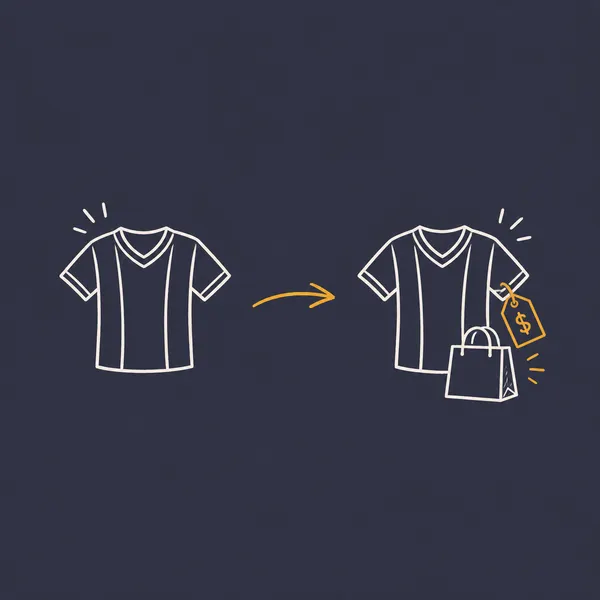
Walmart partnered with Fluminense de Feira, a popular club in Brazil's Bahia region, and replaced each player's squad number with a Walmart product price. A different offer appeared on each shirt. Each week brought new prices, new products, new reasons for fans to look. The commercial reach ran well beyond the stadium: commentators calling players by number were simultaneously announcing Walmart prices on live prime-time television and radio — unpaid broadcast coverage that cost Walmart nothing beyond the shirt deal. The jersey became the price tag. The commentator became the media channel. See campaign ->
Rexona's Pitvertising (Clemenger BBDO, 2021) applied the same logic to a different unused surface. In cricket's oversaturated sponsorship market — worth $750 million a year — Rexona placed their tick logo on the armpits of all Cricket Australia umpire uniforms across 61 Big Bash League matches. The logo was invisible until an umpire raised their arm to make a call. At that moment — the most watched instant in every delivery — the logo rotated into view facing the cameras, in a location no brand had ever occupied. Results: Over billion views and 10% sales increase during the BBL season.
2. Jersey-as-Kit-Hijack
Make the rival's shirt the one that carries your brand — and let their attempt to stop you do the marketing.
Cashback For Your Jersey's Back — Flash Benefícios, FCB Brasil, 2022
Flash offered 50% cashback to any fan who bought the Nike Seleção jersey, personalised the back with 'FLASH', and shared it on social media. Within a week, Nike blocked the brand name from their online customisation tool. Flash responded by extending the offer to fans who hand-customised their shirts instead. The block became the story — every news cycle covering Nike's attempt to shut the promotion simultaneously reported Flash's name, the jersey price, and the cashback offer. Nike's legal response was the amplification. A brand that couldn't afford a World Cup sponsorship ended up more talked about than brands that had paid for one. See campaign ->