

Smartphone Free Childhood · Arts & Sciences · June 2026
Smartphone Free Childhood takes the content children encounter online and relocates it to a place where parents can see exactly what they are allowing into their homes.
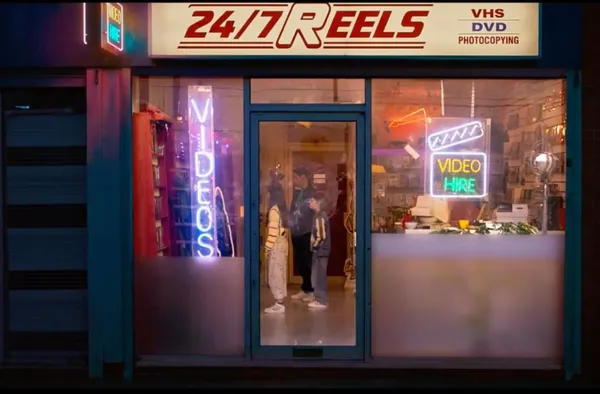
The film opens in a meticulously recreated 1990s video shop. A father and his two children browse for something to watch while the assistant cheerfully recommends titles promoting disordered eating, misogyny, bullying and contact with predators.
Presented as algorithmically delivered social content, these risks have become disturbingly easy to accept. Presented as VHS tapes deliberately chosen by a parent, they become indefensible.
The father’s growing discomfort provides the argument. He would never rent this material for his children, yet the smartphone in their pockets gives them access to versions of it every day. By replacing the invisible recommendation system with a smiling shop assistant, the campaign makes passive permission look like an active decision.
The lovely strategic move is that the film does not need to exaggerate the harm. It only changes the delivery system. Taking familiar online experiences out of the screen and placing them on a physical shelf is enough to make the audience see the status quo differently.
Campaigns That Used Similar Tactics
Self-Reflection Perspective: giving the hidden behaviour a public, physical form
The Fake News Stand printed fabricated online stories and sold them from a physical newsstand, applying the standards of print publishing to information people shared casually online.
Hello Real People gave everyday smartphone absorption a physical public form, allowing passers-by to recognise their own behaviour in the figures.
Role Reversal Protagonist: trading someone into the other participant's role
The Walk made a dog owner experience the abandonment and confusion normally suffered by his animal.
The Child Labour Experiment moved consumers closer to the role played by exploited children behind inexpensive fashion.
The Question That Could Get You Here
What online behaviour would become indefensible if people had to perform it in the physical world?