

IKEA Belgium · Ogilvy Social Lab Brussels · August 2026
Retailers shrink prices with charm pricing, $9.99 instead of $10. IKEA added zeros. Emotional Pricing divides its cost across the tiny moments it makes possible: every tail wag, bedtime story, butterfly, jump for joy. The furniture costs the same. Only the calculation changes. A price measured at the checkout becomes value measured across a life at home.
Challenge
Affordability has always been central to IKEA, but conventional price advertising makes that promise feel functional. The opportunity identified here was to show its products deliver more than a low purchase price. They remain in people's homes for years, quietly enabling thousands of emotional moments long after the transaction is forgotten.
Strategy
IKEA changed the unit through which value was calculated. A sofa could be measured in jumps for joy, a dog toy in tail wags and a lamp in bedtime stories. The strategy brought affordability and emotional value together. IKEA products are affordable not despite the life surrounding them, but because of how much life they contain.
Execution
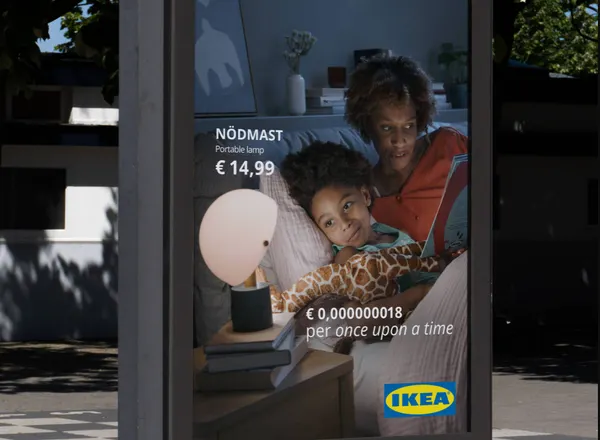
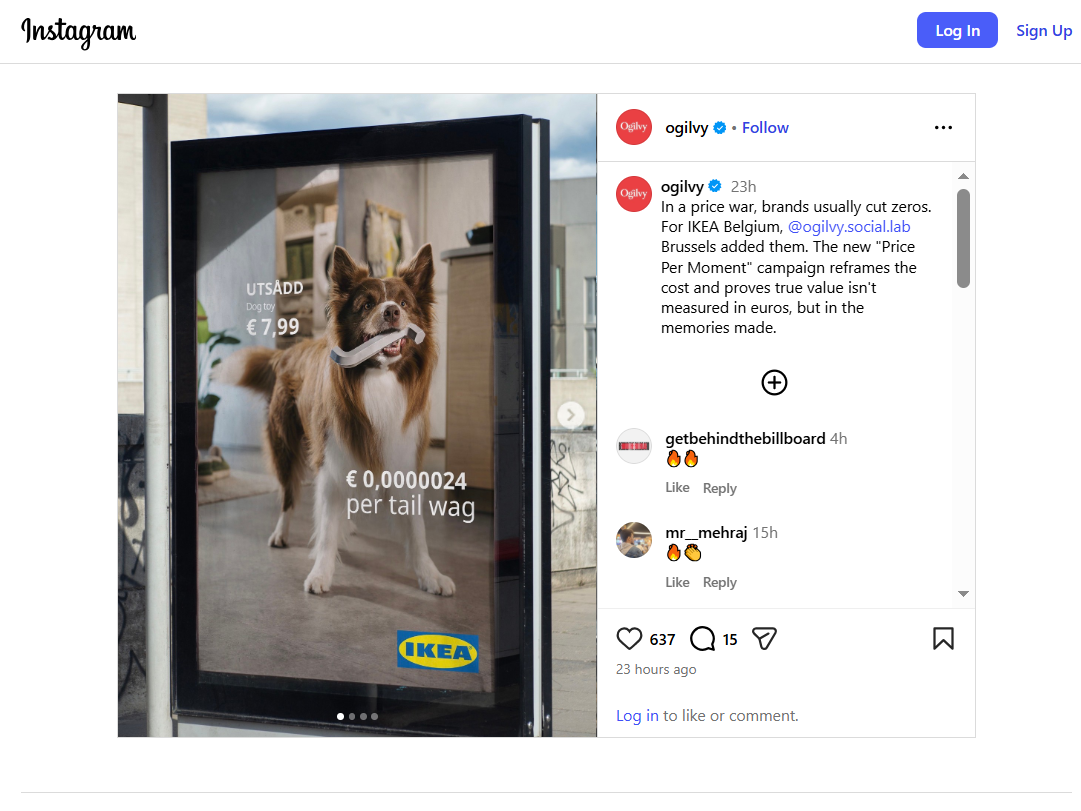
Each outdoor and print execution places a normal IKEA retail price beside the microscopic cost of an emotional return: €0.00000063 per jump for joy, €0.0000024 per tail wag, €0.000000018 per “once upon a time” and €0.00000000076 per butterfly.
The extended decimal places do more than make the numbers look small. They turn a conventional price tag into evidence of a much larger emotional return.
Campaigns That Used Similar Tactics
Comparative Value: changing the measure
Suzuki's Selling Cars by the Kilogram used the same underlying move. Rather than compare the Vitara with other cars, it expressed its price per kilogram and placed it alongside supermarket staples such as prawns, cheese and raspberries. The car did not become cheaper, the unfamiliar unit made its material value newly visible.
Reframe Value: turning cost into return
IKEA has used this territory often. It's That Affordable translated furniture prices into coffees, toothpaste tubes, carrots and cans of soft drink. A table that required consideration when priced in currency felt surprisingly accessible when compared with several forgettable everyday purchases.
The Question That Could Get You Here
What could we divide the price by to make the lifetime value of our products impossible to miss?