Mousoudi Pet Shop · Ogilvy Greece · 2026
Sometimes affection creates the very behaviour harming the thing we love. Food Scraps makes that contradiction impossible to miss, transforming dogs and cats into the bins their owners are effectively treating them as when they feed them leftovers. The victim and the harmful behaviour become one disturbing image.
The challenge
Many pet owners give dogs and cats scraps from their own meals as a gesture of affection. But human leftovers can harm animal health. Mousoudi Pet Shop wanted to challenge an ingrained behaviour that does not feel cruel to the people doing it. Quite the opposite: it often feels like love.
The strategy
Ogilvy Greece did not attack owners or question how much they love their pets.
It changed the perspective on the behaviour.
If you repeatedly dispose of unwanted human food by feeding it to your pet, what are you effectively turning your pet into?
A bin.
That reframes the owner without explicitly making them the villain. The loving behaviour becomes the source of harm, while the animal itself becomes visual evidence of what is being done to it.
The execution
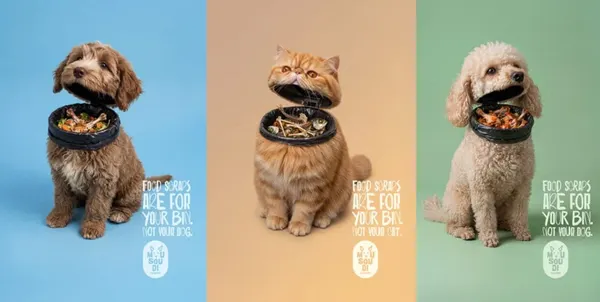
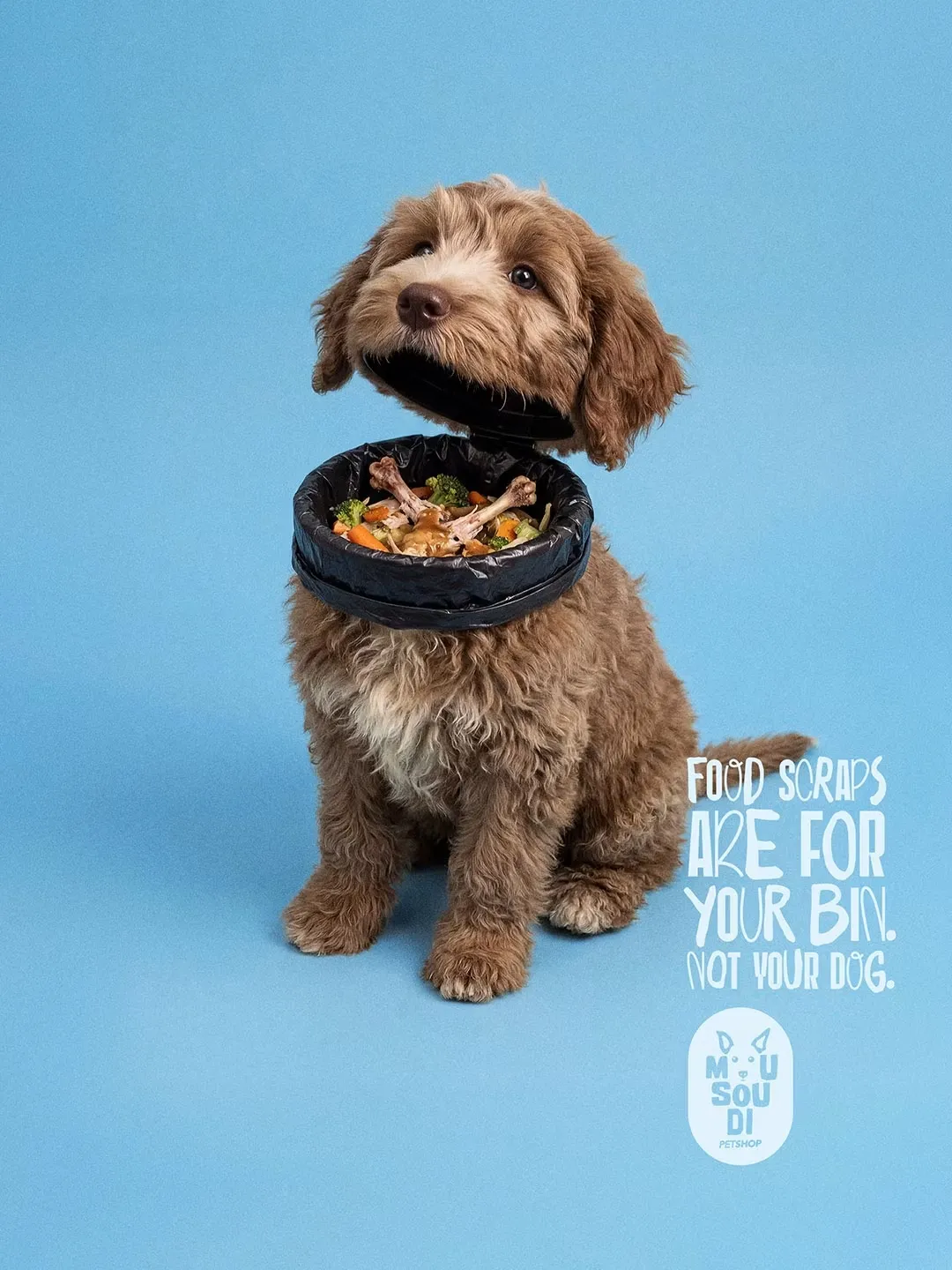
The three-print campaign depicts one dog and two cats fused with kitchen waste bins. Their mouths become bin lids, with bones, fish heads and other leftovers protruding from inside them.
The line completes the argument:
“Food scraps are for your bin. Not your dog.”
The images work because the animals remain recognisably cute. Then the second reading arrives: the pet has literally become the object its owner is unconsciously treating it as.
The visual does not illustrate the warning.
It makes the behaviour visible.
Campaigns That Used Similar Tactics
Victim Villain Juxtaposition - Put the victim and the thing harming them into the same frame so the relationship between cause and casualty becomes impossible to ignore.
Don’t Suck The Life From Our Oceans — Greenpeace / Rethink turned an everyday plastic straw into a weapon by showing it physically attacking marine animals. The familiar object did not change. Its relationship to the victim did, making an ordinary behaviour suddenly difficult to see innocently.
Deflatables — Thomas Cook / McCann showed animals entangled in abandoned inflatable pool toys, turning a harmless symbol of holiday fun into evidence of what tourists can leave behind. The audience becomes an unintentional villain through the objects associated with its behaviour.
Freakish Fusion Protagonist - Physically fuse the victim with the thing harming them so one impossible character carries the entire argument.
The Lost Camel — Emirates Development Bank / Living Room Communication built a camel from discarded plastic bottles, merging an animal with the material threatening it so cause and casualty became a single object.
Dead Whale — Greenpeace / Dentsu created a life-sized beached whale from plastic rubbish. Instead of showing pollution beside its victim, the campaign made the pollution become the victim’s body, collapsing the distance between environmental cause and consequence.
Make the Hidden Behaviour Literal - Translate what someone is effectively doing into a physical scene that makes the behaviour harder to rationalise.
The Unlevel Playing Field — Puma / BETC Havas São Paulo converted the familiar metaphor of an “unlevel playing field” into a sloping football pitch, letting people experience the inequality rather than merely hear it described.
The Question That Could Get You There
What are people effectively turning the victim into through the way they treat them?