


Desire doesn't respond well to persuasion. The harder a brand pushes, the less appealing it can be to an audience tired of being sold to. Campaigns that build deep premium equity often follow a counterintuitive logic: they create distance. They make the brand feel more desirable by suggesting it doesn't need you to want it. Here are three creative tactics that turn brands into things (the right) people desire.
- Anti-Sell Exclusivity
- Restraint-as-Premiumity
- Trade-Up Superiority
1. Anti-Sell Exclusivity
List every reason not to buy the product and watch the demand increase.
250 Reasons Not to Buy the Mercedes-AMG PureSpeed — Mercedes-AMG, antoni / team x / TLGG, 2025
The AMG PureSpeed is a roadster with no roof or windscreen, with production limited to 250 units. And these were the features Mercedes-AMG chose to advertise. The campaign catalogued every irrational, impractical, and uncompromising thing about the car and presented each one as proof of desirability. The brand felt more confident, more rebellious, and more exclusive precisely because it refused to persuade.
Dubai Properties' 1/JBR campaign (FP7, 2017) launched a luxury development with the line "It's Not for Everyone", explicitly excluding audiences who preferred ostentatious wealth, making understatement the badge of the right buyer. Marmite's long-running "Love It or Hate It" platform ran the same logic at mass scale: the brand's willingness to alienate half the market made the other half feel like they belonged to something worth belonging to.
2. Restraint-as-Premiumity
Say less, show less, sell less, and the brand feels worth more.
Don't Drink Hertog Jan — Hertog Jan, GUT Amsterdam, 2025
Hertog Jan told people, with complete sincerity, not to drink its beer, positioning it instead as something to value, appreciate, and hold onto rather than consume mindlessly. The contradiction was the creative engine. By treating a beer like something precious, the brand made quality feel like a point of view rather than a label claim. For a brand without the media budget of the category's biggest players, that mattered enormously. It gave Hertog Jan a memory structure and a personality that spending alone couldn't buy.
3. Trade-Up Superiority
Make the inferior choice visible, and the upgrade feels inevitable.
Mayo Exchange — Hellmann's, Edelman UK, 2025
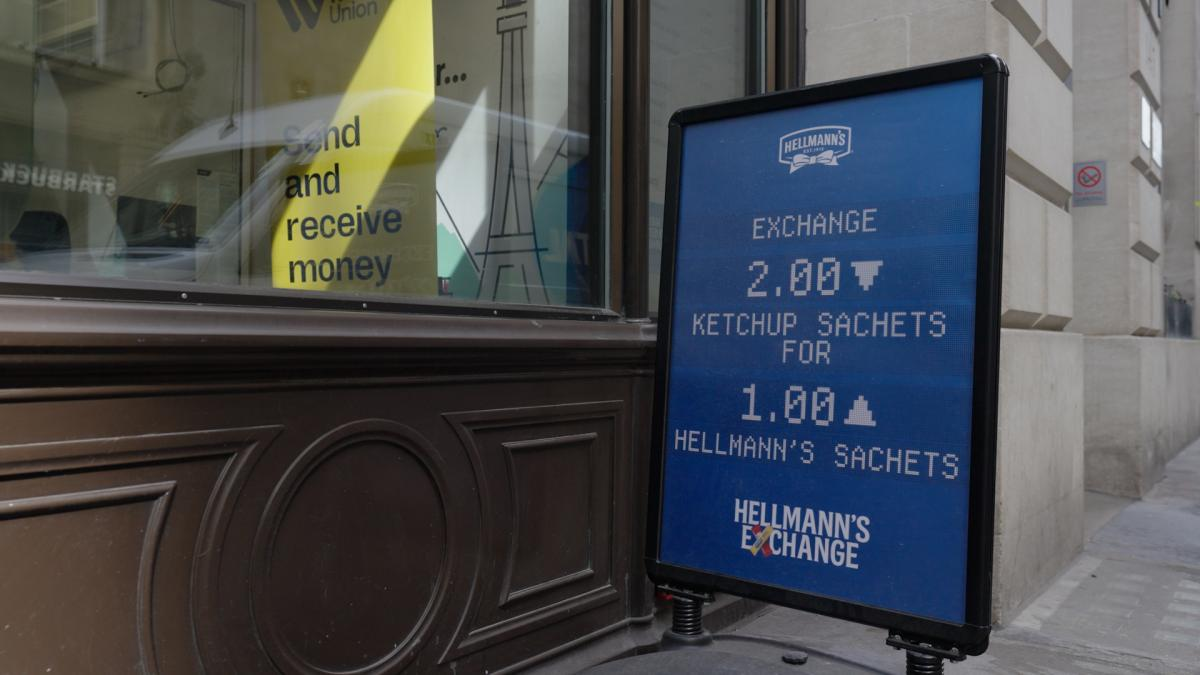
The insight was hiding in plain sight on every restaurant table: ketchup comes free. Mayo costs extra. Rather than treating that as a pricing problem, Hellmann's treated it as a proof point. The brand created real-world condiment exchanges where customers could swap unwanted ketchup sachets for Hellmann's mayo—dramatising the trade-up in a single, physical, undeniable gesture. The activation didn't need to argue that mayo was better. It made the argument self-evident by staging the choice directly.
Strong Roots' Cauliflower Hash Brown Diet (DCX, 2021) ran ads in which actors admitted their testimonials were paid-for lies — positioning the product as the only honest thing in a category built on false promises.
The One Rule
Craft a feeling of scarcity, confidence, or inevitability and let the audience arrive at desire on their own terms.
Want Your AI to Think Like This?
These tactics come from the Thinking Engines — a library of strategic and creative guides built to be uploaded into your AI. Drop one into Claude, ChatGPT or Gemini, and it becomes a thinking partner trained on real campaign logic: generating territories, reframing briefs, and pressure-testing ideas.