


Nowadays, the best showroom for your product might be nowhere near your store. Showrooming takes the selling experience into the places where customers already live, travel, browse, sleep, commute, research and dream. A hotel room becomes a catalogue. A bus becomes a dealership. A Pinterest board becomes an appliance showroom. Here are six tactics from the Commerce Engine that turn everyday spaces into persuasive retail environments.
- Cause-Driven Showrooms
- Technology-Enhanced Experiences
- Location-Transformed Showrooms
- Consumer Behaviour Adaptation
- Experiential Marketing Challenges
- Digital-Physical Hybrid Approaches
1. Cause-Driven Showrooms
Use the showroom format to make something invisible impossible to look away from.
The Giving Room — IKEA & MSF UAE, DDB, 2022
Inside IKEA, where everything is designed to feel desirable and purchasable, DDB built a replica MSF field hospital in Médecins Sans Frontières' style — using IKEA's own design language. The room was furnished not with sofas and shelving but with medical equipment, displayed with IKEA-style assembly manuals, price stickers showing the exact donation amounts needed, and IKEA naming conventions applied to surgical supplies. The showroom format made the absence of equipment feel as specific and purchasable as any product in the store. Shoppers who came to browse furniture left having donated to emergency medicine.
25m2 Syria by IKEA and POL in Norway rebuilt a Syrian refugee family's actual 25-square-metre apartment — concrete walls, makeshift furniture, plastic-covered windows — inside IKEA's Norwegian flagship, funded by the Red Cross partnership. Workwear For Kids by SOS Children's Villages placed actual work clothes for child labourers in a Stockholm showroom near upscale children's boutiques, priced to reflect annual earnings: £865 for mining, £290 for brick production. The showroom format took each cause from abstract to scandalously specific.
2. Technology-Enhanced Experiences
Use technology to take the showroom to the customer — before they ever visit a store.
From Chaos to Confidence — Whirlpool, Digitas, 2022
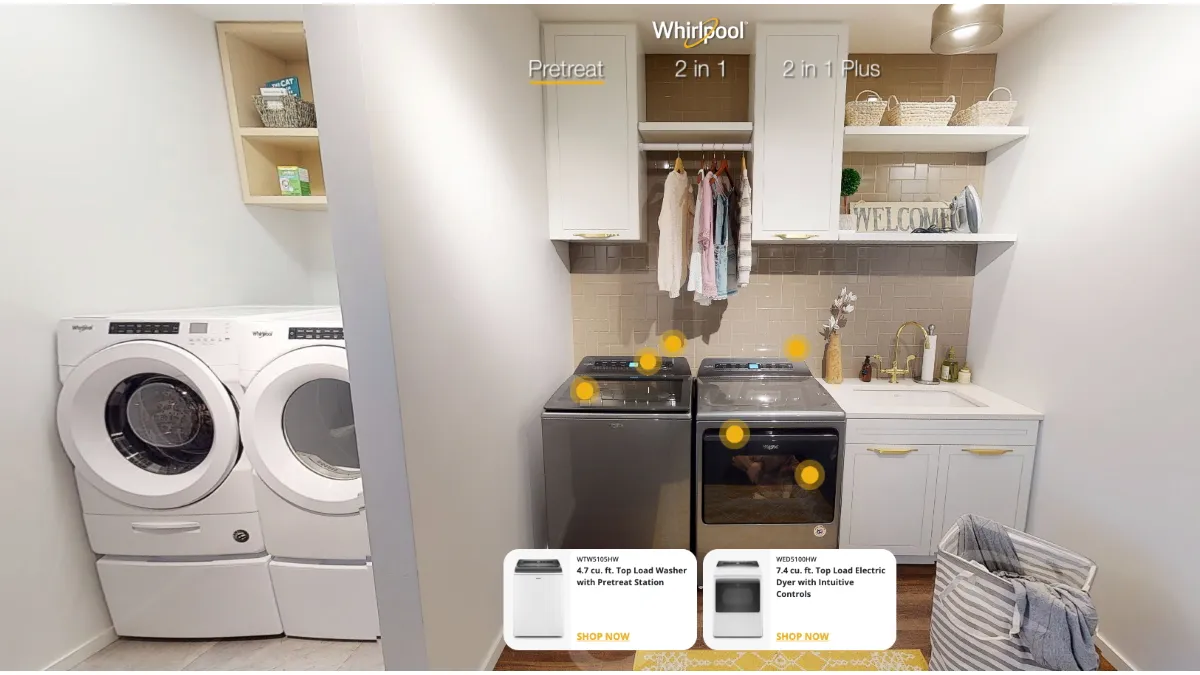
Appliance research was already happening on Pinterest. Whirlpool met it there — building a photorealistic, immersive replica of an appliance showroom that guided shoppers to products matching their needs, right inside the platform where they were already doing the research. The showroom went to the customer rather than requiring the customer to come to it. Return on ad spend increased by over £5 per pound. Brand consideration rose 4%. Pinterest-driven sales revenue grew by 773% to £5.2 million.
Volvo's Street Configurator used an AI-powered app that recognised the configuration of any Volvo spotted in the wild — photograph the car you're attracted to on the street, receive full details instantly, book a test drive in under 60 seconds. The showroom followed the customer rather than waiting for them to arrive. Audi's Showroom Home Delivery created a to-scale newspaper insert of a car that could be placed in a home to visualise fit, doubling as an AR marker that generated a 3D vehicle model on a smartphone.
3. Location-Transformed Showrooms
Turn the spaces the customer is already in into the showroom they didn't expect to walk into.
This Is An IKEA Store — IKEA, Ogilvy, 2024
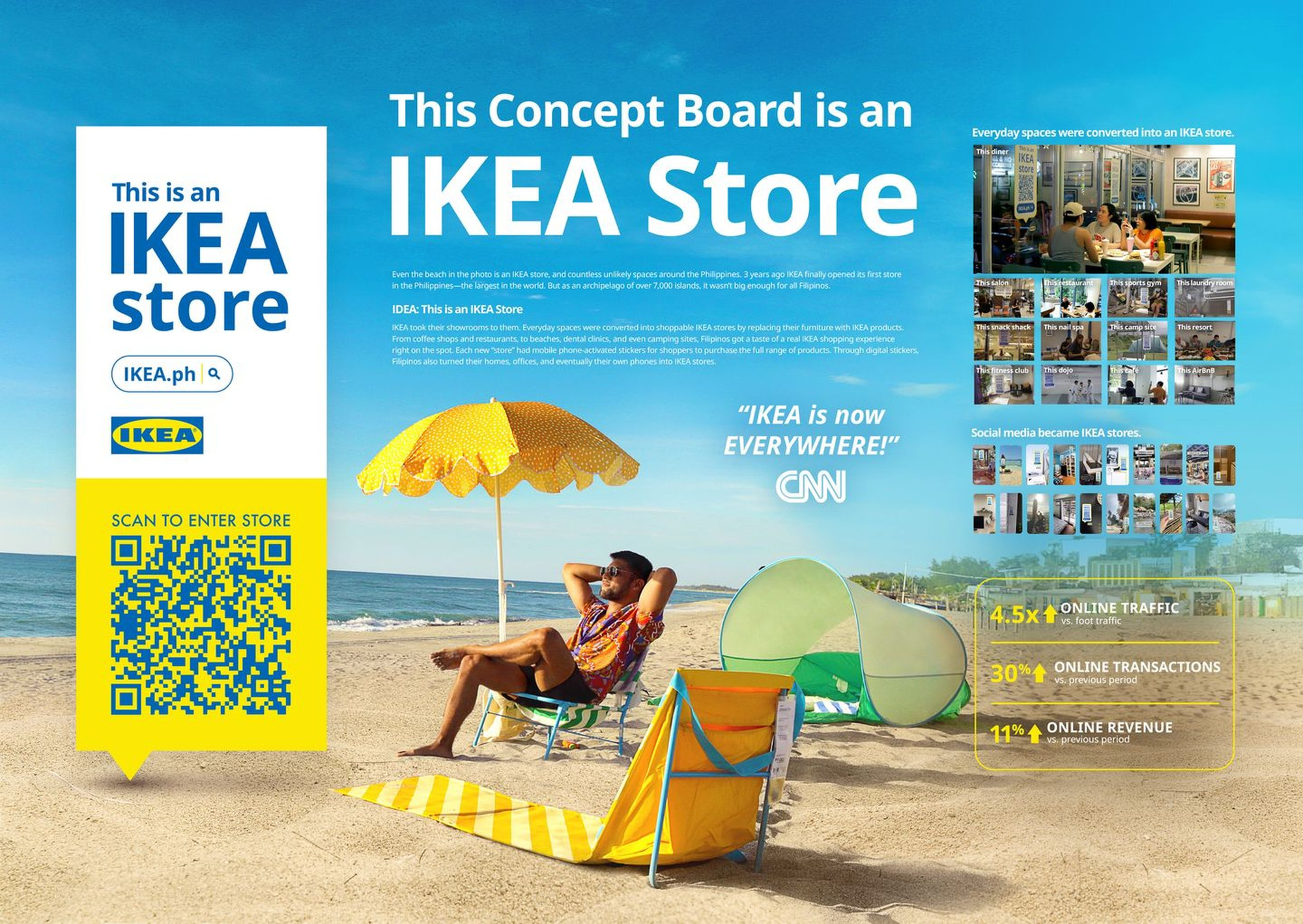
The Philippines has one IKEA store — the world's largest — but the country has 7,107 islands. Most Filipinos who wanted IKEA products couldn't reach it. Ogilvy transformed restaurants, gyms, cafes, beaches, and salons into IKEA showrooms: real furniture placed in real environments with price tags featuring QR codes for immediate online purchase. The showroom became the country itself. Frustrated fans with no access became active customers wherever they happened to be.
BMW Canada's Stage Your Driveway partnered with a property company to digitally superimpose BMW models onto upscale Toronto property listings — and when prospective buyers visited those homes, actual BMWs were parked in the driveway. The insight: major life events like home-buying prompt consideration of new car brands. IKEA's Window Shopping in Toronto fitted urban apartments with IKEA furnishings and placed window signage resembling catalogue pages, turning residents' homes into visible showrooms for the brand's city-centre expansion. Kia's First Car Showroom Inside A Bus transformed Salvadorean buses into mobile showrooms, meeting customers in their preferred environment — the commute — rather than at a dealership.
4. Consumer Behaviour Adaptation
Don't fight the way customers actually shop. Build the showroom around how they already behave.
The Showroom Hotels — La Redoute, Fred & Farid, 2021
Online retailer La Redoute had a 27% return rate — customers buying things they hadn't been able to physically experience before purchasing. The insight was that Ibis hotels already had that problem in reverse: guests slept in furnished rooms but couldn't buy anything they liked. La Redoute partnered with Ibis to showcase 14,000 products across 240 French hotel locations. Guests could test, experience, and purchase via QR code during their stay. Return rates dropped to 8%. Website traffic doubled. New customers increased by 13%. Six million media impressions at zero media spend. The showroom went where the customer was already sleeping.
Babyshop used hyper-local mobile targeting to detect when mothers were searching competitor prices on their phones while inside Babyshop or rival stores — and served targeted discounts at that exact decision moment. The showrooming behaviour that retailers feared became the trigger for conversion. The customer's own smartphone research became the hook.