

When money is tight and customer budgets are spread thin, brands face an awkward choice. Keep selling aspiration and risk sounding out of touch, or lead with discounts and risk teaching people to buy only when prices drop. The better campaigns find a third route. They deliver genuine value while protecting dignity, distinctiveness and brand equity. Some make savings feel like play. Some build partnerships that solve real problems. Some turn media spend into practical support for the communities they depend on. Here are six tactics that can help navigate a cost-of-living crunch with empathy and ingenuity.
- Reframing Value with Fun & Confidence
- Transforming Price Promotions into Experiences
- Leveraging Stunt Media & Guerrilla Tactics
- Using Partnerships to Extend Value Beyond Discounts
- Psychological & Behavioural-Based Discounts
- Community-Driven Generosity & Purpose-Led Campaigns
1. Reframing Value with Fun & Confidence
Reposition budget-conscious decisions as smart moves — not compromises.
Iceland Food Club — Iceland Foods, Ketchum, 2023
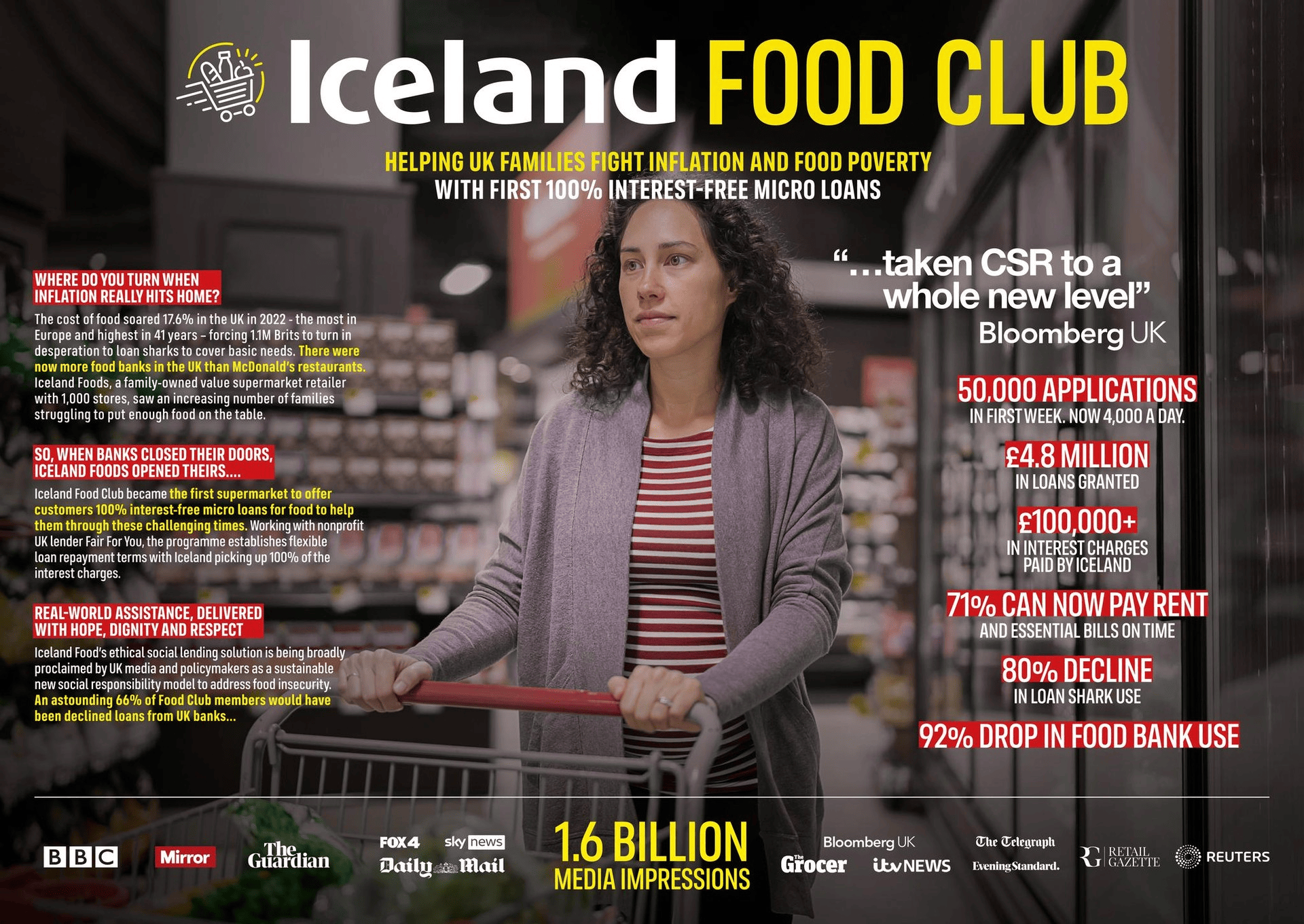
Rising grocery costs were pushing families towards loan sharks and high-interest credit to cover basics. Iceland launched an interest-free food loan scheme: loans of £25–£75, expandable to £100, with manageable £10 weekly repayments. The mechanic repositioned borrowing to eat as a dignified financial act rather than a crisis measure. 30,000 customers served. 74% reduction in loan shark usage among participants. 71% reported improved diets. Government-backed £2 million in lending capital secured. The value wasn't in a lower price — it was in a system that treated financial stress as a practical problem to solve rather than a personal failing.
IKEA's Do Try This At Home showcased diverse individuals — elderly gamers, teen musicians, martial arts enthusiasts — who pursue passions at home, enabled by affordable IKEA products, with specific price points shown throughout. 40% of people worry about finances; 52% view home as their favourite place. The campaign turned financial constraint into an invitation to do more with what you have. Barilla's Passive Cooking instructed pasta lovers to turn off the heat early and let pasta cook in residual heat — reducing energy bills without changing the meal.
2. Transforming Price Promotions into Experiences
Make the deal itself interesting enough that people seek it out rather than stumble across it.
Deals Stuck In Time — McDonald's, 2024
During Sweden's inflation crisis, rather than simply publishing lower prices, McDonald's turned the discount into a treasure hunt. Customers used Google Street View's time travel feature to find historical McDonald's ads from as far back as 2009 — then redeemed the prices from those old ads via the current McDonald's app. Old deals, frozen in time, suddenly valid again. The mechanic avoided devaluing the brand by making the low price feel like a discovery rather than a concession. Passive discount recipients became digital time-travellers. The inflation crisis became the brief, not the obstacle.
KFC's Checking For Chicken linked VAR reviews during football matches to instant app discounts — every frustrating video review became a moment of anticipation rather than annoyance. The Maccie Payment Scheme by McDonald's and TBWA\Neboko let Dutch users convert friend-to-friend small debts into McDonald's food treats via WhatsApp, turning the awkward social dynamic of requesting repayment into the warmth of offering food. Cerveza Aguila's Beer Lottery turned the national anthem performed before football matches into lottery numbers redeemable for beer discounts — a ritual converted into a reward.
3. Leveraging Stunt Media & Guerrilla Tactics
Use earned media to make the brand's response to economic pressure the story.
Hang Your Rent — Minipreço / Nossa Portugal, 2021
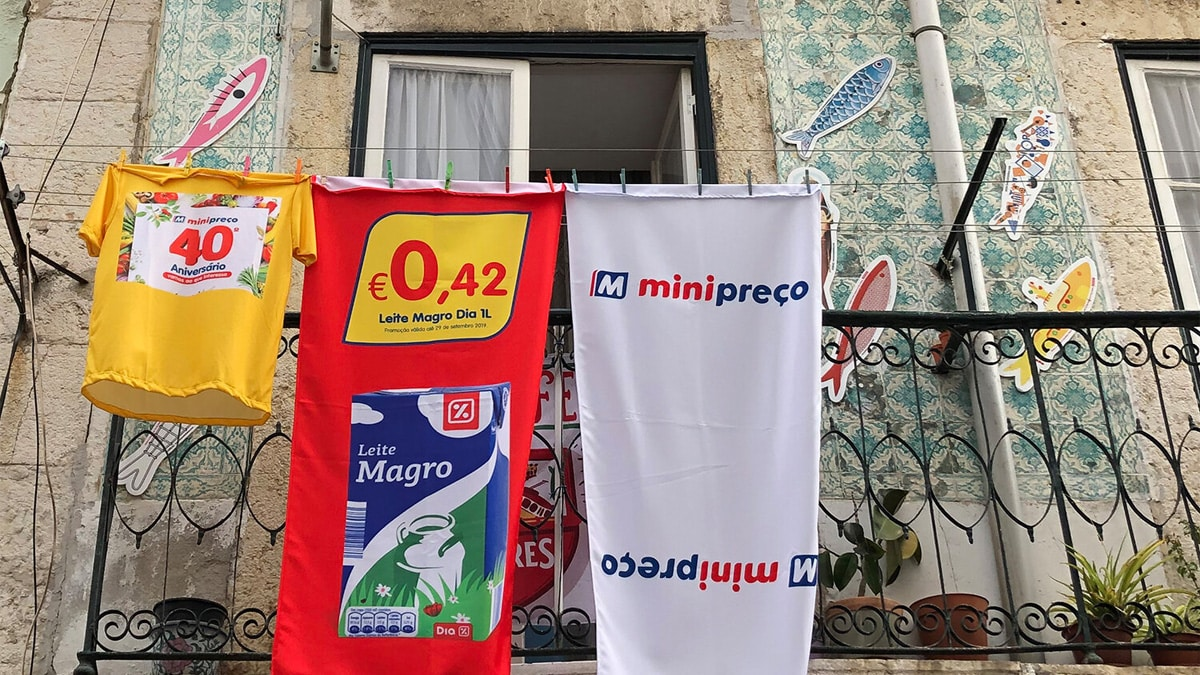
In Portugal and Italy, residents in dense urban apartments hang laundry lines outside their windows above the street — a domestic habit so visible it forms part of the visual landscape of certain cities. Minipreço paid residents OOH advertising rates to turn their laundry lines into branded advertising space, directly subsidising their rent. The stunt took a distinctive urban environment, a rising housing cost story, and a discount retailer's natural positioning and fused them into a single earned media moment. The residents got paid. The brand got the story. The media got an image worth running.
Heineken's Shutter Ads during COVID lockdowns redirected media spend to the closed metal shutters of bars — paying bar owners directly rather than media companies, distributing €7.5 million to over 5,000 bars worldwide. 100% of participating bars reopened. The campaign delivered 40% more media value than traditional outdoor advertising while funding the survival of the outlets the brand depended on.
4. Using Partnerships to Extend Value Beyond Discounts
Find the partnership that creates value the brand couldn't generate alone — and make the collaboration do the work that a discount never could.
Lettuce Preservation — CookDo / Dentsu, 2023

Lettuce prices in Japan had spiked. CookDo oyster sauce, which pairs naturally with fresh vegetables, partnered with local celebrity newspaper ads: the print ads featuring popular actors were distributed with instructions to wrap lettuce heads inside them for preservation. The newspaper became a practical tool for food saving. The partnership turned disposable media into a household utility, solved a genuinely irritating kitchen problem, positioned the oyster sauce as a complement to the preserved lettuce, and created multiple touchpoints from a single creative act. Value without a single price cut.
Renault's Cars To Work helped people access vehicles for new jobs through delayed-payment plans — 50 dealerships, 300 service centres, microcredit partnerships, and government collaboration — addressing 20% of the French population's transport barrier to employment. The partnership extended Renault's product into a genuine social infrastructure role.
5. Psychological & Behavioural-Based Discounts
Build the discount mechanic around human behaviour — so getting the deal feels earned, surprising, or amusing.
Hungerithm — Snickers, Clemenger BBDO, 2016
The internet's collective mood was monitored in real time. The angrier social media became, the cheaper Snickers got at 7-Eleven stores. The brand's core insight — hunger makes you irrational — was made live and verifiable. Prices fluctuated with public mood. The discount felt like a diagnosis and a prescription simultaneously. The mechanic was shareable because it was absurd, credible, and coherent with everything Snickers had always stood for.
Islazul Shopping Mall installed a magistrate who heard shoppers' tales of personal misfortune — cheating spouses, cracked phone screens, difficult weeks — and granted retail discounts proportional to their troubles. Misfortune became currency. The mechanic personalised discounting in a way that no algorithm could replicate, making the act of receiving a deal feel like justice rather than charity.
6. Community-Driven Generosity & Purpose-Led Campaigns
Build the cost-of-living response around a community — so the brand's value offer is felt collectively rather than individually.
Everybody Eats — DDB Aotearoa, 2023
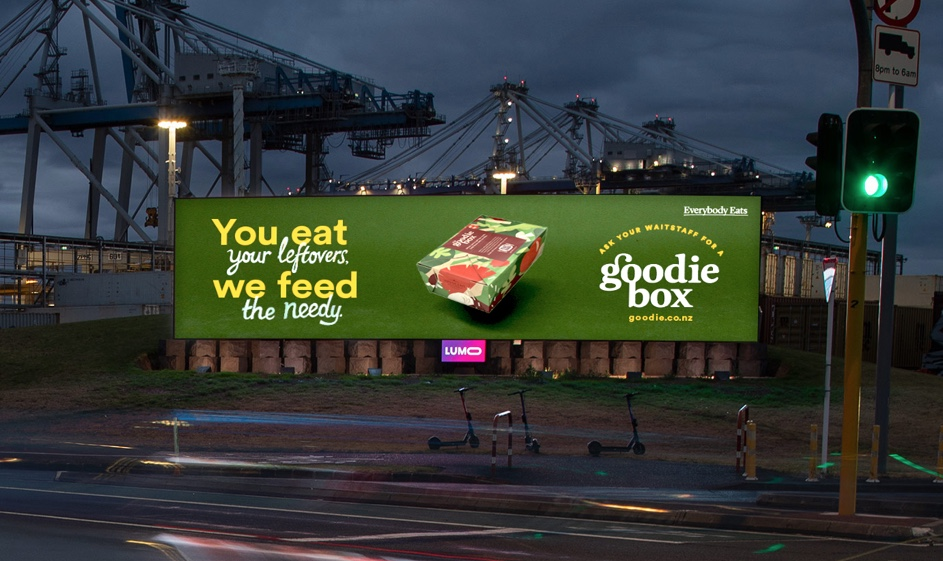
New Zealand restaurants were struggling with cost pressures while food insecurity was rising simultaneously. Everybody Eats connected the two problems: restaurants offered discounted or pay-what-you-can meals to people in need, and the campaign built awareness and participation across the restaurant community. Food waste was reduced. Restaurant sustainability supported. Local communities fed. The brand's role was to create the infrastructure for generosity that was already there — to make it organised, visible, and easy to participate in.
Heineken's Shutter Ads (also covered above) also belongs here: the campaign was simultaneously a media stunt and a community act, directly funding bar survival in a way the bar community experienced collectively.
The One Rule
The economic context changes the emotional register of every marketing claim. The campaigns here found the exact point where the brand's natural assets met the audience's real situation — and built something useful, surprising, or genuinely generous there.
Want Your AI to Think Like This?
Cost of Living is one of the tactics in the Commerce Engine. Drop it into your preferred AI with your brief and get sharp questions, creative mechanics, and value strategies your competitors haven't found.